
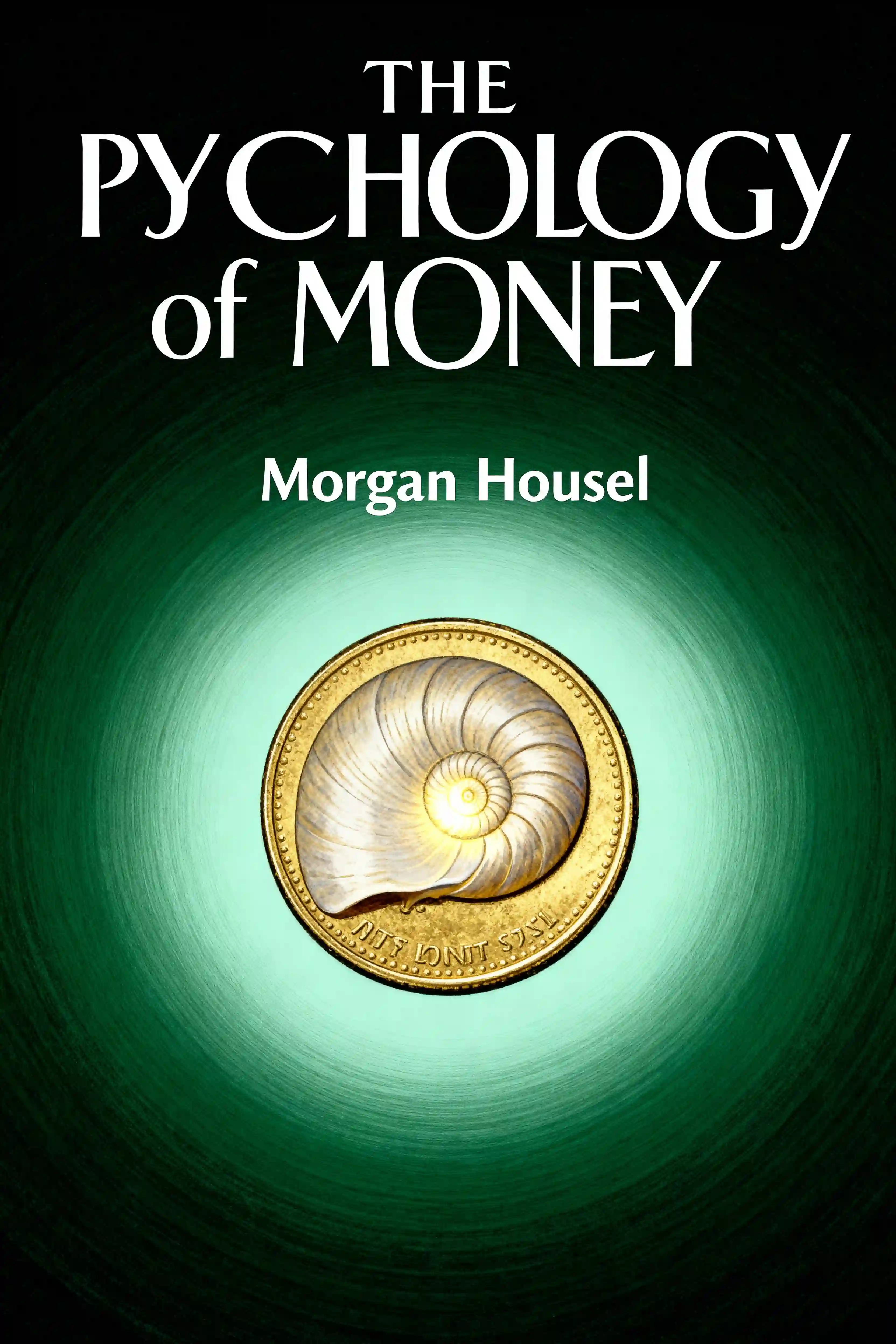
The Psychology of Money: Beyond the Numbers
Explore why money feels so personal and how our shared beliefs, evolutionary instincts, and invisible scripts shape the value of every dollar in our wallets.

Best quote from The Psychology of Money: Beyond the Numbers
When you look at your spending, you aren't seeing a list of transactions—you’re seeing a map of your insecurities and your dreams.

This audio lesson was created by a BeFreed community member
Money

Frequently Asked Questions
Money scripts are unconscious, internalized beliefs about money that individuals typically pick up during childhood. These scripts are often formed by observing how parents handled finances or reacted to economic stress. For example, a child who saw their parents argue over credit card bills may grow up believing that money is a primary source of conflict, leading them to become a "money avoider" or a chronic hoarder. These scripts dictate adult reactions to market dips, job offers, and spending habits, often overriding logical or mathematical reasoning until a person develops the self-awareness to challenge them.
Financial experiences trigger deep-seated biological and evolutionary responses. Neuroscience shows that financial loss activates the amygdala, the brain's fear center, creating a sense of physical distress similar to facing a predator in the wild. Conversely, earning money or anticipating a bonus releases dopamine, the same neurotransmitter associated with survival rewards like food. Additionally, humans suffer from "loss aversion," where the pain of losing a specific amount of money is psychologically twice as powerful as the joy of gaining that same amount, a survival mechanism designed to protect scarce resources.
Choice architecture refers to how the environment is designed to influence decision-making. In the digital age, financial tools are often designed to reduce "psychological friction," making it easier to spend impulsively. For instance, swiping a credit card or using auto-pay apps removes the physical "pain of paying" associated with handing over cash. Features like "one-click" shopping, subscription models that rely on consumer inertia, and gamified investing apps exploit cognitive biases like "present bias" to encourage constant consumption over long-term saving.
Temporal discounting is the human tendency to value immediate rewards more highly than future ones because the "future self" feels like a stranger to the brain. This evolutionary trait made sense when survival was not guaranteed, but it makes long-term saving difficult today. To combat this, experts suggest using "behavioral nudges" such as automating savings so the money is moved before the "present self" can spend it. Creating a "cage" for impulses—such as the 24-hour rule for non-essential purchases—helps the rational prefrontal cortex catch up with emotional impulses.
Money has transitioned from "commodity money" (like gold) to "fiat currency" and digital entries, meaning it no longer has intrinsic physical value. It functions as a social contract or a "shared illusion" because its power relies entirely on the collective belief that it can be exchanged for goods and services. This system is built on trust in institutions and central banks. When this trust wobbles—due to factors like high inflation—the illusion feels like a trick, leading people to seek "hard assets" like real estate or gold to find a sense of physical certainty.
Discover more

Money, psychology and human behavior
Money, psychology and human behavior
This learning plan bridges the gap between knowing what to do with money and actually doing it by addressing the psychological roots of financial behavior. It's ideal for anyone who has struggled with money decisions despite understanding basic financial principles, professionals seeking to improve their financial outcomes, and individuals curious about why they repeat the same financial patterns. Whether you're an investor, saver, or simply want to make smarter money choices, understanding the psychology behind your decisions is the key to lasting financial transformation.

Behavior, Culture, Psych & Financial Freedom
Behavior, Culture, Psych & Financial Freedom
This learning plan bridges the gap between behavioral science and personal finance to reveal why we act the way we do with money. It is ideal for individuals seeking to master their financial future by understanding the deep-rooted psychological and cultural forces that drive human behavior.

Behavior, Desire & Personal Finance Study
Behavior, Desire & Personal Finance Study
This study is essential for anyone looking to bridge the gap between financial knowledge and actual behavior. It is designed for individuals who want to master their spending impulses and build a resilient wealth-building psychology by understanding the neurological roots of consumer desire.

Mind, Money, Habits & Human History
Mind, Money, Habits & Human History
This plan bridges the gap between psychological theory and practical life mastery by exploring the forces that shape our choices. It is ideal for individuals seeking to optimize their personal finances, habits, and mental clarity through the lens of human history.
Finance, Self-Improvement & Psychology Study
Finance, Self-Improvement & Psychology Study
This plan bridges the gap between behavioral science and financial literacy, addressing why we often act against our own best interests. It is ideal for individuals seeking to master their internal psychology to achieve both mental clarity and long-term financial prosperity.
Psychology, Finance, Economics & Investing
Psychology, Finance, Economics & Investing
This learning plan bridges the gap between psychological behavior and financial success, offering a holistic view of how our minds influence our wealth. It is ideal for investors and professionals looking to master both the technical foundations of economics and the mental discipline required for long-term growth.
Money
Money
This comprehensive curriculum is designed for individuals seeking to transition from basic financial literacy to sophisticated wealth management. It provides a structured roadmap for anyone looking to master the psychology of money, investment markets, and long-term legacy building.
From Columbia University alumni built in San Francisco
"Instead of endless scrolling, I just hit play on BeFreed. It saves me so much time."


"I never knew where to start with nonfiction—BeFreed’s book lists turned into podcasts gave me a clear path."


"Perfect balance between learning and entertainment. Finished ‘Thinking, Fast and Slow’ on my commute this week."
"Crazy how much I learned while walking the dog. BeFreed = small habits → big gains."
"Reading used to feel like a chore. Now it’s just part of my lifestyle."

"Feels effortless compared to reading. I’ve finished 6 books this month already."
"BeFreed turned my guilty doomscrolling into something that feels productive and inspiring."

"BeFreed turned my commute into learning time. 20-min podcasts are perfect for finishing books I never had time for."
"BeFreed replaced my podcast queue. Imagine Spotify for books — that’s it. 🙌"

"It is great for me to learn something from the book without reading it."
"The themed book list podcasts help me connect ideas across authors—like a guided audio journey."
"Makes me feel smarter every time before going to work"
From Columbia University alumni built in San Francisco
"Instead of endless scrolling, I just hit play on BeFreed. It saves me so much time."
"I never knew where to start with nonfiction—BeFreed’s book lists turned into podcasts gave me a clear path."
"Perfect balance between learning and entertainment. Finished ‘Thinking, Fast and Slow’ on my commute this week."
"Crazy how much I learned while walking the dog. BeFreed = small habits → big gains."
"Reading used to feel like a chore. Now it’s just part of my lifestyle."
"Feels effortless compared to reading. I’ve finished 6 books this month already."
"BeFreed turned my guilty doomscrolling into something that feels productive and inspiring."
"BeFreed turned my commute into learning time. 20-min podcasts are perfect for finishing books I never had time for."
"BeFreed replaced my podcast queue. Imagine Spotify for books — that’s it. 🙌"
"It is great for me to learn something from the book without reading it."
"The themed book list podcasts help me connect ideas across authors—like a guided audio journey."
"Makes me feel smarter every time before going to work"
"Instead of endless scrolling, I just hit play on BeFreed. It saves me so much time."
"I never knew where to start with nonfiction—BeFreed’s book lists turned into podcasts gave me a clear path."
"Perfect balance between learning and entertainment. Finished ‘Thinking, Fast and Slow’ on my commute this week."
"Crazy how much I learned while walking the dog. BeFreed = small habits → big gains."
"Reading used to feel like a chore. Now it’s just part of my lifestyle."
"Feels effortless compared to reading. I’ve finished 6 books this month already."
"BeFreed turned my guilty doomscrolling into something that feels productive and inspiring."
"BeFreed turned my commute into learning time. 20-min podcasts are perfect for finishing books I never had time for."
"BeFreed replaced my podcast queue. Imagine Spotify for books — that’s it. 🙌"
"It is great for me to learn something from the book without reading it."
"The themed book list podcasts help me connect ideas across authors—like a guided audio journey."
"Makes me feel smarter every time before going to work"
"Instead of endless scrolling, I just hit play on BeFreed. It saves me so much time."
"I never knew where to start with nonfiction—BeFreed’s book lists turned into podcasts gave me a clear path."
"Perfect balance between learning and entertainment. Finished ‘Thinking, Fast and Slow’ on my commute this week."
"Crazy how much I learned while walking the dog. BeFreed = small habits → big gains."
"Reading used to feel like a chore. Now it’s just part of my lifestyle."
"Feels effortless compared to reading. I’ve finished 6 books this month already."
"BeFreed turned my guilty doomscrolling into something that feels productive and inspiring."
"BeFreed turned my commute into learning time. 20-min podcasts are perfect for finishing books I never had time for."
"BeFreed replaced my podcast queue. Imagine Spotify for books — that’s it. 🙌"
"It is great for me to learn something from the book without reading it."
"The themed book list podcasts help me connect ideas across authors—like a guided audio journey."
"Makes me feel smarter every time before going to work"


