
Carlos Castaneda and the Warrior’s Way of Learning
Struggling with rigid ways of thinking? Explore how don Juan’s shamanic teachings dismantle your worldview to achieve a breakthrough in deep perception.

Best quote from Carlos Castaneda and the Warrior’s Way of Learning
Learning isn't about accumulating data; it’s a revolution in cognition. It’s about dismantling your entire worldview to achieve a different way of seeing the world as something fluid and ever-changing.

This audio lesson was created by a BeFreed community member
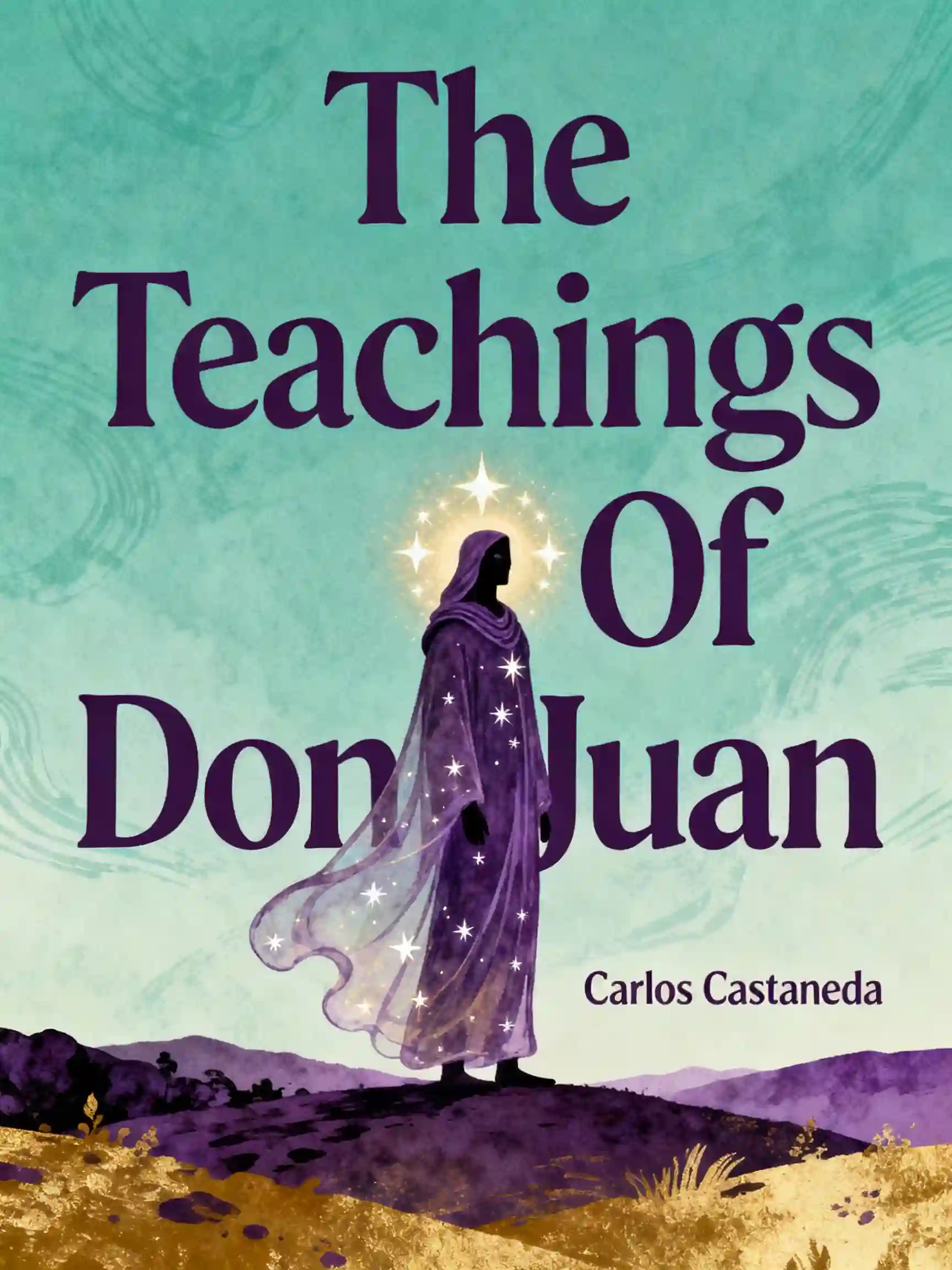
How to learn and memorize anything according to Carlos Castaneda in the book the teaching of Don Juan and the alternative reality


Frequently Asked Questions
Erasing personal history is a strategy to dismantle the mental baggage and rigid self-narratives that prevent us from perceiving new information clearly. By letting go of past labels—such as "I am bad at math" or "I failed this subject before"—a learner removes the ego-driven filters that create noise during the encoding process. This creates a state of "unwavering gaze" where the individual is no longer performing a character based on past successes or failures, but is instead fully present and fluid enough to perceive the "true essence" of a subject.
"Stopping the world" refers to the practice of silencing the "internal talk" or the constant mental narration that labels and categorizes everything we see. When we stop this internal dialogue, we strip away conventional labels, allowing the brain's "attention gate" to focus entirely on raw data rather than habitual interpretations. This creates the high signal-to-noise ratio necessary for deep work and neuroplasticity, ensuring that information is marked as important enough for long-term consolidation rather than being lost to the "Ebbinghaus forgetting curve."
Don Juan teaches that death is the only wise adviser because it acts as the ultimate deadline, stripping away procrastination and self-obsession. When a learner treats their study as a "warrior’s gesture" with the awareness that time is limited, they naturally shift from passive strategies like highlighting to high-effort, effective methods like active recall and deliberate practice. This sense of urgency releases epinephrine and dopamine, which are biological triggers that alert the brain to prioritize and store information as a matter of "life and death."
The Hunter’s Discipline is a metaphor for deliberate practice, where a learner works at the precise edge of their ability and seeks immediate feedback. Just as a hunter must be silent and acutely aware of their environment, a student must embrace "desirable difficulties" like interleaving different topics and attempting problems before reading the solutions. This approach also includes the necessity of "The Power of Silence," or post-session rest, which mirrors the neuroscience-backed need for quiet periods to allow the brain to replay neural sequences and consolidate new memories.
Discover more

To be come a warrior
To be come a warrior
This curriculum bridges the gap between ancient wisdom and modern psychological elite training to build a complete leader. It is designed for individuals seeking to cultivate extreme discipline, strategic intelligence, and physical resilience in both professional and personal arenas.

Learn Carl Jung’s teachings
Learn Carl Jung’s teachings
This learning plan offers a structured path into analytical psychology for anyone seeking profound self-discovery and mental clarity. It is ideal for individuals looking to bridge the gap between their conscious actions and unconscious motivations to achieve a more integrated life.

Mastering Consciousness & Identity Shift
Mastering Consciousness & Identity Shift
This plan bridges the gap between ancient mindfulness and modern neuroscience for those seeking profound personal evolution. It is ideal for individuals ready to move beyond surface-level habits to fundamentally rewire their sense of self.

Consciousness and inner growth
Consciousness and inner growth
This learning plan is essential for anyone seeking genuine inner transformation beyond surface-level self-help approaches. It combines ancient wisdom with modern neuroscience to provide a comprehensive path from understanding consciousness intellectually to experiencing profound shifts in awareness. Ideal for meditators, spiritual seekers, personal development enthusiasts, and anyone feeling called to explore the depths of their own consciousness and break free from limiting patterns.
Deep thinking & philosophy
Deep thinking & philosophy
This learning plan offers a comprehensive journey through philosophy's most transformative ideas, from ancient wisdom to contemporary thought. It's ideal for curious minds seeking to think more deeply, question assumptions, and develop a coherent worldview that integrates rigorous intellectual inquiry with practical wisdom for navigating life's complexities and finding authentic meaning.
Finish Awareness by Anthony De Mello
Finish Awareness by Anthony De Mello
This plan is essential for anyone seeking to break free from habitual suffering and mental fog. It is ideal for individuals interested in spiritual growth, mindfulness, and the profound psychological insights of Anthony De Mello.
Explore Culture, Mindfulness & Philosophy
Explore Culture, Mindfulness & Philosophy
This learning plan bridges the gap between ancient traditions and modern practical living, offering a holistic approach to mental clarity and social awareness. It is ideal for lifelong learners, leaders, and travelers seeking to deepen their emotional intelligence and cultural competence.
Study Mind, Self, and Philosophy
Study Mind, Self, and Philosophy
This learning plan bridges the gap between abstract metaphysics and practical living, offering a comprehensive look at the human condition. It is ideal for thinkers and seekers looking to build mental resilience and clarity through the study of consciousness and identity.
From Columbia University alumni built in San Francisco
"Instead of endless scrolling, I just hit play on BeFreed. It saves me so much time."


"I never knew where to start with nonfiction—BeFreed’s book lists turned into podcasts gave me a clear path."


"Perfect balance between learning and entertainment. Finished ‘Thinking, Fast and Slow’ on my commute this week."
"Crazy how much I learned while walking the dog. BeFreed = small habits → big gains."
"Reading used to feel like a chore. Now it’s just part of my lifestyle."

"Feels effortless compared to reading. I’ve finished 6 books this month already."
"BeFreed turned my guilty doomscrolling into something that feels productive and inspiring."

"BeFreed turned my commute into learning time. 20-min podcasts are perfect for finishing books I never had time for."
"BeFreed replaced my podcast queue. Imagine Spotify for books — that’s it. 🙌"

"It is great for me to learn something from the book without reading it."
"The themed book list podcasts help me connect ideas across authors—like a guided audio journey."
"Makes me feel smarter every time before going to work"
From Columbia University alumni built in San Francisco
"Instead of endless scrolling, I just hit play on BeFreed. It saves me so much time."
"I never knew where to start with nonfiction—BeFreed’s book lists turned into podcasts gave me a clear path."
"Perfect balance between learning and entertainment. Finished ‘Thinking, Fast and Slow’ on my commute this week."
"Crazy how much I learned while walking the dog. BeFreed = small habits → big gains."
"Reading used to feel like a chore. Now it’s just part of my lifestyle."
"Feels effortless compared to reading. I’ve finished 6 books this month already."
"BeFreed turned my guilty doomscrolling into something that feels productive and inspiring."
"BeFreed turned my commute into learning time. 20-min podcasts are perfect for finishing books I never had time for."
"BeFreed replaced my podcast queue. Imagine Spotify for books — that’s it. 🙌"
"It is great for me to learn something from the book without reading it."
"The themed book list podcasts help me connect ideas across authors—like a guided audio journey."
"Makes me feel smarter every time before going to work"
"Instead of endless scrolling, I just hit play on BeFreed. It saves me so much time."
"I never knew where to start with nonfiction—BeFreed’s book lists turned into podcasts gave me a clear path."
"Perfect balance between learning and entertainment. Finished ‘Thinking, Fast and Slow’ on my commute this week."
"Crazy how much I learned while walking the dog. BeFreed = small habits → big gains."
"Reading used to feel like a chore. Now it’s just part of my lifestyle."
"Feels effortless compared to reading. I’ve finished 6 books this month already."
"BeFreed turned my guilty doomscrolling into something that feels productive and inspiring."
"BeFreed turned my commute into learning time. 20-min podcasts are perfect for finishing books I never had time for."
"BeFreed replaced my podcast queue. Imagine Spotify for books — that’s it. 🙌"
"It is great for me to learn something from the book without reading it."
"The themed book list podcasts help me connect ideas across authors—like a guided audio journey."
"Makes me feel smarter every time before going to work"
"Instead of endless scrolling, I just hit play on BeFreed. It saves me so much time."
"I never knew where to start with nonfiction—BeFreed’s book lists turned into podcasts gave me a clear path."
"Perfect balance between learning and entertainment. Finished ‘Thinking, Fast and Slow’ on my commute this week."
"Crazy how much I learned while walking the dog. BeFreed = small habits → big gains."
"Reading used to feel like a chore. Now it’s just part of my lifestyle."
"Feels effortless compared to reading. I’ve finished 6 books this month already."
"BeFreed turned my guilty doomscrolling into something that feels productive and inspiring."
"BeFreed turned my commute into learning time. 20-min podcasts are perfect for finishing books I never had time for."
"BeFreed replaced my podcast queue. Imagine Spotify for books — that’s it. 🙌"
"It is great for me to learn something from the book without reading it."
"The themed book list podcasts help me connect ideas across authors—like a guided audio journey."
"Makes me feel smarter every time before going to work"


