
What Happened to You Is More Important Than What’s Wrong
Stop judging your reactions and start understanding your past. Learn how early brain development shapes your behavior and how to find a path to healing.

Best quote from What Happened to You Is More Important Than What’s Wrong
What if we stopped asking 'What's wrong with you?' and started asking 'What happened to you?' It’s a subtle shift, but it’s the key to everything because our brains are literally wired by what we go through.

This audio lesson was created by a BeFreed community member
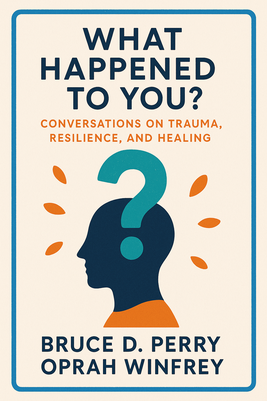
What happened to you

Frequently Asked Questions
Shifting the focus to "What happened to you?" moves the conversation from judgment to empathy and science. It acknowledges that difficult behaviors, such as lashing out or shutting down, are often biological adaptations to past experiences rather than character flaws. By understanding the events that shaped a person's brain, especially during highly sensitive developmental periods, we can view their current struggles as survival strategies that were once necessary.
The brain develops from the bottom up, starting with the brainstem (survival) and ending with the cortex (complex thinking). Because a fetal brain creates 20,000 new neurons every second, early environments of chaos or threat cause the brain to organize itself around survival. This results in a highly sensitive "fire alarm" system where the lower brain constantly scans for danger, often bypassing the logical cortex and making it difficult for an individual to focus or stay calm in adulthood.
This sequence is a biological necessity for processing stress and learning. Because the brain processes information from the bottom up, a person who is dysregulated or in a state of fear cannot access the "smart" part of their brain (the cortex). Healing must begin with "Regulating" the brainstem through rhythmic, sensory activities like walking or music, then "Relating" through social connection, and only then can the person "Reason" or engage in logical problem-solving and talk therapy.
Research suggests that a person's current connectedness to family, community, and culture is a stronger predictor of mental health than their past trauma. Human beings are biologically hardwired for connection, and relationships act as the "currency of change." Having a reliable support system or "clan" provides the regulating rhythm and safety necessary to rewire the brain’s internal map, proving that while we cannot change the past, we can change our current state of connection to foster resilience.
Discover more

How do I heal my inner child?
How do I heal my inner child?
This plan is essential for anyone feeling stuck in repetitive emotional cycles or struggling with low self-worth rooted in the past. It provides a structured path for individuals ready to break generational trauma and build a more compassionate relationship with themselves.

Healing from childhood trauma
Healing from childhood trauma
This plan is essential for individuals seeking to break free from the lasting impact of early life adversity. It provides a structured path for those ready to move beyond survival mode toward emotional regulation and authentic self-reclamation.

Heal childhood patterns and master emotions
Heal childhood patterns and master emotions
This plan is designed for individuals seeking to break cycles of reactive behavior and heal from past emotional wounds. It bridges the gap between scientific emotional regulation and deep psychological healing for anyone ready to build a resilient, compassionate identity.

Let go of past trauma
Let go of past trauma
This learning plan is designed for individuals seeking to move beyond traditional talk therapy by addressing the somatic and neurological roots of trauma. It provides a comprehensive roadmap for anyone feeling stuck in survival mode who wants to reclaim their sense of safety and emotional wholeness.
Heal trauma for better bonds
Heal trauma for better bonds
This learning plan is essential for anyone whose past experiences—whether childhood wounds, past relationships, or other traumas—continue to impact their ability to form healthy, secure connections. It's particularly valuable for those struggling with relationship anxiety, emotional avoidance, or repeating unhealthy patterns, offering a science-backed roadmap from understanding trauma's effects to building the secure, intimate relationships they deserve.
Be a Better Parent
Be a Better Parent
This learning plan is essential for caregivers seeking to move beyond traditional reactive discipline toward a more mindful, connection-based approach. It is designed for parents and guardians who want to foster emotional intelligence while healing their own generational patterns.

Improve mental health and move on from past
Improve mental health and move on from past
This learning plan is designed for individuals seeking to break free from the weight of past experiences and build a more resilient mindset. It combines emotional awareness with practical cognitive tools, making it ideal for anyone ready to transform their mental health and move forward with purpose.

Prove them wrong: Overcome brain injury
Prove them wrong: Overcome brain injury
This learning plan is essential for survivors and caregivers navigating the complexities of neurological recovery. It combines cutting-edge neuroscience with mindset coaching to help individuals move beyond their diagnosis and reclaim their full potential.
From Columbia University alumni built in San Francisco
"Instead of endless scrolling, I just hit play on BeFreed. It saves me so much time."


"I never knew where to start with nonfiction—BeFreed’s book lists turned into podcasts gave me a clear path."


"Perfect balance between learning and entertainment. Finished ‘Thinking, Fast and Slow’ on my commute this week."
"Crazy how much I learned while walking the dog. BeFreed = small habits → big gains."
"Reading used to feel like a chore. Now it’s just part of my lifestyle."

"Feels effortless compared to reading. I’ve finished 6 books this month already."
"BeFreed turned my guilty doomscrolling into something that feels productive and inspiring."

"BeFreed turned my commute into learning time. 20-min podcasts are perfect for finishing books I never had time for."
"BeFreed replaced my podcast queue. Imagine Spotify for books — that’s it. 🙌"

"It is great for me to learn something from the book without reading it."
"The themed book list podcasts help me connect ideas across authors—like a guided audio journey."
"Makes me feel smarter every time before going to work"
From Columbia University alumni built in San Francisco
"Instead of endless scrolling, I just hit play on BeFreed. It saves me so much time."
"I never knew where to start with nonfiction—BeFreed’s book lists turned into podcasts gave me a clear path."
"Perfect balance between learning and entertainment. Finished ‘Thinking, Fast and Slow’ on my commute this week."
"Crazy how much I learned while walking the dog. BeFreed = small habits → big gains."
"Reading used to feel like a chore. Now it’s just part of my lifestyle."
"Feels effortless compared to reading. I’ve finished 6 books this month already."
"BeFreed turned my guilty doomscrolling into something that feels productive and inspiring."
"BeFreed turned my commute into learning time. 20-min podcasts are perfect for finishing books I never had time for."
"BeFreed replaced my podcast queue. Imagine Spotify for books — that’s it. 🙌"
"It is great for me to learn something from the book without reading it."
"The themed book list podcasts help me connect ideas across authors—like a guided audio journey."
"Makes me feel smarter every time before going to work"
"Instead of endless scrolling, I just hit play on BeFreed. It saves me so much time."
"I never knew where to start with nonfiction—BeFreed’s book lists turned into podcasts gave me a clear path."
"Perfect balance between learning and entertainment. Finished ‘Thinking, Fast and Slow’ on my commute this week."
"Crazy how much I learned while walking the dog. BeFreed = small habits → big gains."
"Reading used to feel like a chore. Now it’s just part of my lifestyle."
"Feels effortless compared to reading. I’ve finished 6 books this month already."
"BeFreed turned my guilty doomscrolling into something that feels productive and inspiring."
"BeFreed turned my commute into learning time. 20-min podcasts are perfect for finishing books I never had time for."
"BeFreed replaced my podcast queue. Imagine Spotify for books — that’s it. 🙌"
"It is great for me to learn something from the book without reading it."
"The themed book list podcasts help me connect ideas across authors—like a guided audio journey."
"Makes me feel smarter every time before going to work"
"Instead of endless scrolling, I just hit play on BeFreed. It saves me so much time."
"I never knew where to start with nonfiction—BeFreed’s book lists turned into podcasts gave me a clear path."
"Perfect balance between learning and entertainment. Finished ‘Thinking, Fast and Slow’ on my commute this week."
"Crazy how much I learned while walking the dog. BeFreed = small habits → big gains."
"Reading used to feel like a chore. Now it’s just part of my lifestyle."
"Feels effortless compared to reading. I’ve finished 6 books this month already."
"BeFreed turned my guilty doomscrolling into something that feels productive and inspiring."
"BeFreed turned my commute into learning time. 20-min podcasts are perfect for finishing books I never had time for."
"BeFreed replaced my podcast queue. Imagine Spotify for books — that’s it. 🙌"
"It is great for me to learn something from the book without reading it."
"The themed book list podcasts help me connect ideas across authors—like a guided audio journey."
"Makes me feel smarter every time before going to work"


