
Time management is easier with time blocking
Stop letting your to-do list control your day. Learn how to use time blocking and deep work to reclaim your focus and turn intentions into results.

Best quote from Time management is easier with time blocking
Structure actually creates more freedom—not less. If you don't tell your money where to go, it just disappears; time is the same, and every minute of your day should be assigned a job.

This audio lesson was created by a BeFreed community member
Time management

Frequently Asked Questions
To-do lists often function as a "procrastination in a productivity costume" because they encourage reacting to tasks rather than intentional planning. Without a specific home on a calendar, tasks lack boundaries, leading to shallow work crowding out high-impact projects. Furthermore, the "refocus penalty" means that every time a person is interrupted by a minor task from their list, it takes an average of twenty-three minutes to fully regain deep focus.
Time blocking is the act of assigning every minute of the day a specific job by dragging boxes onto a calendar to create a structured schedule. Timeboxing is a stricter variation used to combat perfectionism and "scope creep" by setting a hard maximum time limit for a task. While time blocking tells you when to do a task, timeboxing dictates exactly how long you are allowed to spend on it before stopping.
Most people fall victim to the "Planning Fallacy," which is the tendency to imagine a best-case scenario rather than reality. To fix this, you should use "Reference Class Forecasting" by looking at how long similar tasks actually took you in the past rather than relying on a "vibe." A practical rule of thumb is the "25 Percent Rule," where you add an extra quarter of time to your initial estimate to create a reality buffer for invisible delays.
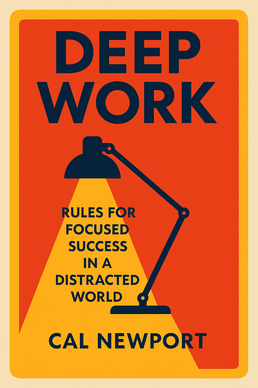
Deep Work blocks are dedicated periods for cognitively demanding tasks, scheduled during your "Peak Hours" when your energy is highest. Based on human biological "ultradian rhythms," the most effective length for these blocks is approximately ninety minutes. To protect these blocks, you should use "Task Batching" to group shallow activities like emails into separate windows, ensuring the deep work period remains a zero-interruption environment.
A shutdown ritual is a ten-to-fifteen-minute routine at the end of the workday where you review finished tasks, schedule incomplete ones for the next day, and close all browser tabs. This practice is designed to counter the "Zeigarnik Effect," a psychological phenomenon where the brain remains anxious and preoccupied with unfinished tasks. By formalizing the end of the day, you clear your mental cache and allow yourself to be fully present during non-work hours.
Discover more

Improve Time Management · 05-12 02:03:09
Improve Time Management · 05-12 02:03:09
In an era of constant digital distractions, mastering the alignment of time and energy is essential for professional growth. This plan is designed for ambitious professionals and students who need to move beyond basic to-do lists toward a sustainable system of deep focus and habit integration.

I want to manage my time better.
I want to manage my time better.
Time management is one of the most critical skills for personal and professional success, yet most people struggle with feeling overwhelmed and constantly behind. This learning plan is ideal for anyone who feels busy but unproductive, struggles to focus on important work, or wants to gain control over their schedule and create more space for what truly matters in their life.

Be more productive
Be more productive
In an age of constant distraction, mastering your time and attention is the ultimate competitive advantage. This plan is designed for professionals and creators who want to move beyond busyness toward high-leverage output and sustainable energy management.
Time tracking
Time tracking
Time tracking is the foundation of effective productivity, yet most people operate on autopilot without understanding where their hours actually disappear. This learning plan is essential for professionals, entrepreneurs, and anyone feeling overwhelmed by competing demands who wants to regain control of their schedule and accomplish what truly matters. By combining awareness, practical tools, and optimization strategies, you'll transform from reactive to intentional in how you spend your most valuable resource.

Work on getting work done on time
Work on getting work done on time
In an era of constant distraction, the ability to execute tasks reliably is a critical professional differentiator. This plan is designed for professionals and students who struggle with procrastination and need a systematic, science-based approach to managing their time and energy effectively.

Use time wisely
Use time wisely
In an era of constant distraction, mastering one's schedule is the ultimate competitive advantage. This plan is designed for professionals and students who want to move beyond basic to-do lists toward a holistic system of focus and energy management.
Learn more and don’t waste time
Learn more and don’t waste time
In today's distraction-filled world, the ability to manage time effectively while learning efficiently has become a critical skill. This learning plan helps busy professionals, students, and lifelong learners maximize their productivity through proven time management techniques, focus strategies, and accelerated learning methods.
Create in small time blocks (24 characters)
Create in small time blocks (24 characters)
In today's fragmented world, the ability to create meaningful work in small time blocks is essential for professionals with busy schedules. This learning plan provides practical systems for maximizing limited windows of time, helping anyone who struggles with finding large blocks of uninterrupted time to still make significant progress on important work.
From Columbia University alumni built in San Francisco
"Instead of endless scrolling, I just hit play on BeFreed. It saves me so much time."


"I never knew where to start with nonfiction—BeFreed’s book lists turned into podcasts gave me a clear path."


"Perfect balance between learning and entertainment. Finished ‘Thinking, Fast and Slow’ on my commute this week."
"Crazy how much I learned while walking the dog. BeFreed = small habits → big gains."
"Reading used to feel like a chore. Now it’s just part of my lifestyle."

"Feels effortless compared to reading. I’ve finished 6 books this month already."
"BeFreed turned my guilty doomscrolling into something that feels productive and inspiring."

"BeFreed turned my commute into learning time. 20-min podcasts are perfect for finishing books I never had time for."
"BeFreed replaced my podcast queue. Imagine Spotify for books — that’s it. 🙌"

"It is great for me to learn something from the book without reading it."
"The themed book list podcasts help me connect ideas across authors—like a guided audio journey."
"Makes me feel smarter every time before going to work"
From Columbia University alumni built in San Francisco
"Instead of endless scrolling, I just hit play on BeFreed. It saves me so much time."
"I never knew where to start with nonfiction—BeFreed’s book lists turned into podcasts gave me a clear path."
"Perfect balance between learning and entertainment. Finished ‘Thinking, Fast and Slow’ on my commute this week."
"Crazy how much I learned while walking the dog. BeFreed = small habits → big gains."
"Reading used to feel like a chore. Now it’s just part of my lifestyle."
"Feels effortless compared to reading. I’ve finished 6 books this month already."
"BeFreed turned my guilty doomscrolling into something that feels productive and inspiring."
"BeFreed turned my commute into learning time. 20-min podcasts are perfect for finishing books I never had time for."
"BeFreed replaced my podcast queue. Imagine Spotify for books — that’s it. 🙌"
"It is great for me to learn something from the book without reading it."
"The themed book list podcasts help me connect ideas across authors—like a guided audio journey."
"Makes me feel smarter every time before going to work"
"Instead of endless scrolling, I just hit play on BeFreed. It saves me so much time."
"I never knew where to start with nonfiction—BeFreed’s book lists turned into podcasts gave me a clear path."
"Perfect balance between learning and entertainment. Finished ‘Thinking, Fast and Slow’ on my commute this week."
"Crazy how much I learned while walking the dog. BeFreed = small habits → big gains."
"Reading used to feel like a chore. Now it’s just part of my lifestyle."
"Feels effortless compared to reading. I’ve finished 6 books this month already."
"BeFreed turned my guilty doomscrolling into something that feels productive and inspiring."
"BeFreed turned my commute into learning time. 20-min podcasts are perfect for finishing books I never had time for."
"BeFreed replaced my podcast queue. Imagine Spotify for books — that’s it. 🙌"
"It is great for me to learn something from the book without reading it."
"The themed book list podcasts help me connect ideas across authors—like a guided audio journey."
"Makes me feel smarter every time before going to work"
"Instead of endless scrolling, I just hit play on BeFreed. It saves me so much time."
"I never knew where to start with nonfiction—BeFreed’s book lists turned into podcasts gave me a clear path."
"Perfect balance between learning and entertainment. Finished ‘Thinking, Fast and Slow’ on my commute this week."
"Crazy how much I learned while walking the dog. BeFreed = small habits → big gains."
"Reading used to feel like a chore. Now it’s just part of my lifestyle."
"Feels effortless compared to reading. I’ve finished 6 books this month already."
"BeFreed turned my guilty doomscrolling into something that feels productive and inspiring."
"BeFreed turned my commute into learning time. 20-min podcasts are perfect for finishing books I never had time for."
"BeFreed replaced my podcast queue. Imagine Spotify for books — that’s it. 🙌"
"It is great for me to learn something from the book without reading it."
"The themed book list podcasts help me connect ideas across authors—like a guided audio journey."
"Makes me feel smarter every time before going to work"


![[url_d03702a8:c0000] Time management - Wikipedia p1-1](/_next/image?url=https%3A%2F%2Fd1y2du6z1jfm9e.cloudfront.net%2Fassets%2Fpodcast%2Fpurple.png&w=1024&q=50)
![[url_d03702a8:c0001] Time management - Wikipedia p1-1](/_next/image?url=https%3A%2F%2Fd1y2du6z1jfm9e.cloudfront.net%2Fassets%2Fpodcast%2Fblue.png&w=1024&q=50)


![[url_d03702a8:c0000] Time management - Wikipedia p1-1](/_next/image?url=https%3A%2F%2Fd1y2du6z1jfm9e.cloudfront.net%2Fassets%2Fpodcast%2Fyellow.png&w=1024&q=50)
![[url_d03702a8:c0001] Time management - Wikipedia p1-1](/_next/image?url=https%3A%2F%2Fd1y2du6z1jfm9e.cloudfront.net%2Fassets%2Fpodcast%2Fgreen.png&w=1024&q=50)


