
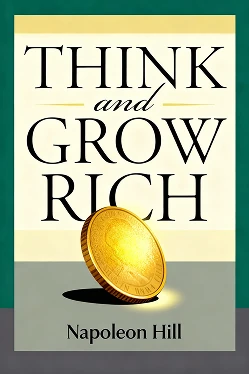
Think and Grow Rich: The Psychology of Wealth
Discover why financial success starts in the mind as we break down Napoleon Hill’s legendary thirteen steps to transforming desire into reality.

Best quote from Think and Grow Rich: The Psychology of Wealth
Success comes to those who become success conscious. Failure comes to those who indifferently allow themselves to become failure conscious.

This audio lesson was created by a BeFreed community member
Think and grow rich




Frequently Asked Questions
A burning desire is the psychological foundation of wealth creation that goes beyond passive wishing. While everyone wishes for money, a burning desire is a state of "money consciousness" where a goal becomes an obsessive, singular focus. The script illustrates this through the story of Edwin C. Barnes, who was willing to "burn all bridges" and leave himself no "Plan B" to achieve his goal. Unlike a vague wish, this intensity of desire consumes all other options and persists through years of effort and temporary setbacks.
Napoleon Hill provides a specific six-step formula to ground thoughts into reality. First, you must fix in your mind the exact amount of money you desire. Second, determine exactly what you intend to give in return for that money, as there is no "something for nothing." Third, establish a definite date for possession. Fourth, create a definite plan and begin immediately. Fifth, write out a clear statement encompassing these details. Finally, read this statement aloud twice daily—once upon waking and once before bed—while visualizing and feeling yourself already in possession of the money to program your subconscious mind.
The Master Mind principle is the coordination of knowledge and effort between two or more people who work toward a definite purpose in a spirit of harmony. Because no single individual has sufficient experience or ability to ensure great success alone, Hill suggests surrounding yourself with a group that possesses the skills you lack. This collective effort creates a "sum greater than its parts," much like Andrew Carnegie did by surrounding himself with experts to build his steel empire.
Autosuggestion is the process of self-suggestion that acts as a bridge between the conscious and subconscious mind. It involves manually programming the brain's filters—specifically the Reticular Activating System—to notice opportunities aligned with your goals. However, simply repeating words is ineffective; the subconscious only acts upon thoughts that are "well-mixed with emotion." Positive emotions like faith, enthusiasm, and hope act as the "yeast" that makes the thought impulse actionable for the subconscious mind.
The Six Basic Fears are mental habits—specifically the fears of poverty, criticism, ill health, loss of love, old age, and death—that paralyze logic and destroy imagination. The fear of poverty is cited as the most destructive because it leads to indecision and a gambling mindset. Hill argues that because these fears are merely thoughts, they can be controlled and replaced. Overcoming them requires a firm decision to ignore the opinions of others and a "burning desire" that leaves no room for fearful vibrations in the mind.
Discover more

Master Think and Grow Rich teachings
Master Think and Grow Rich teachings
This plan bridges the gap between historical success philosophy and modern financial execution, making it essential for aspiring entrepreneurs and professionals. It is designed for anyone seeking to master their mental discipline and implement a proven system for wealth accumulation.

Grow Mind, Knowledge, and Wealth
Grow Mind, Knowledge, and Wealth
This plan is designed for ambitious individuals seeking to break through plateaus by aligning their psychology with practical financial and cognitive systems. It provides a holistic roadmap for anyone looking to optimize their mental performance while building a foundation for lasting prosperity.

Grow wealth mindset
Grow wealth mindset
This learning plan is essential for anyone who feels trapped by limiting beliefs about money or struggles to build lasting wealth despite working hard. It's particularly valuable for professionals, entrepreneurs, and aspiring investors who want to break through financial plateaus by addressing both the psychological and practical dimensions of wealth creation. Whether you're starting your wealth journey or looking to scale existing success, this plan provides the mindset shifts and actionable strategies needed to achieve financial freedom.

How to get rich
How to get rich
This plan provides a comprehensive roadmap for anyone seeking financial independence by combining psychology with practical investing and business strategies. It is ideal for aspiring entrepreneurs and individuals ready to transition from a fixed salary to scalable wealth creation.

Master wealth, psychology & human potential
Master wealth, psychology & human potential
This learning plan bridges the critical gap between financial success and personal fulfillment, recognizing that true wealth encompasses both material prosperity and psychological well-being. It's designed for ambitious individuals who refuse to choose between making money and living meaningfully, offering a comprehensive roadmap to build lasting wealth while cultivating the mindset, habits, and philosophical foundation needed to thrive at the highest levels of human potential.
Mind, Habits, Science & Financial Freedom
Mind, Habits, Science & Financial Freedom
This plan bridges the gap between cognitive science and practical wealth building for anyone seeking a systematic approach to success. It is ideal for professionals and lifelong learners who want to master their internal psychology to achieve external financial freedom.
Lead, Mindset, Wealth & Business Growth
Lead, Mindset, Wealth & Business Growth
This learning plan bridges the gap between personal psychology and professional scaling. It is designed for aspiring entrepreneurs and executives who want to align their financial intelligence with advanced leadership tactics to drive massive business results.
Mastering Life, Mind, Wealth & Innovation
Mastering Life, Mind, Wealth & Innovation
This comprehensive plan integrates psychology, productivity, and finance to provide a holistic framework for peak performance. It is designed for ambitious individuals and aspiring leaders seeking to align their mental habits with tangible wealth and innovation strategies.
From Columbia University alumni built in San Francisco
"Instead of endless scrolling, I just hit play on BeFreed. It saves me so much time."


"I never knew where to start with nonfiction—BeFreed’s book lists turned into podcasts gave me a clear path."


"Perfect balance between learning and entertainment. Finished ‘Thinking, Fast and Slow’ on my commute this week."
"Crazy how much I learned while walking the dog. BeFreed = small habits → big gains."
"Reading used to feel like a chore. Now it’s just part of my lifestyle."

"Feels effortless compared to reading. I’ve finished 6 books this month already."
"BeFreed turned my guilty doomscrolling into something that feels productive and inspiring."

"BeFreed turned my commute into learning time. 20-min podcasts are perfect for finishing books I never had time for."
"BeFreed replaced my podcast queue. Imagine Spotify for books — that’s it. 🙌"

"It is great for me to learn something from the book without reading it."
"The themed book list podcasts help me connect ideas across authors—like a guided audio journey."
"Makes me feel smarter every time before going to work"
From Columbia University alumni built in San Francisco
"Instead of endless scrolling, I just hit play on BeFreed. It saves me so much time."
"I never knew where to start with nonfiction—BeFreed’s book lists turned into podcasts gave me a clear path."
"Perfect balance between learning and entertainment. Finished ‘Thinking, Fast and Slow’ on my commute this week."
"Crazy how much I learned while walking the dog. BeFreed = small habits → big gains."
"Reading used to feel like a chore. Now it’s just part of my lifestyle."
"Feels effortless compared to reading. I’ve finished 6 books this month already."
"BeFreed turned my guilty doomscrolling into something that feels productive and inspiring."
"BeFreed turned my commute into learning time. 20-min podcasts are perfect for finishing books I never had time for."
"BeFreed replaced my podcast queue. Imagine Spotify for books — that’s it. 🙌"
"It is great for me to learn something from the book without reading it."
"The themed book list podcasts help me connect ideas across authors—like a guided audio journey."
"Makes me feel smarter every time before going to work"
"Instead of endless scrolling, I just hit play on BeFreed. It saves me so much time."
"I never knew where to start with nonfiction—BeFreed’s book lists turned into podcasts gave me a clear path."
"Perfect balance between learning and entertainment. Finished ‘Thinking, Fast and Slow’ on my commute this week."
"Crazy how much I learned while walking the dog. BeFreed = small habits → big gains."
"Reading used to feel like a chore. Now it’s just part of my lifestyle."
"Feels effortless compared to reading. I’ve finished 6 books this month already."
"BeFreed turned my guilty doomscrolling into something that feels productive and inspiring."
"BeFreed turned my commute into learning time. 20-min podcasts are perfect for finishing books I never had time for."
"BeFreed replaced my podcast queue. Imagine Spotify for books — that’s it. 🙌"
"It is great for me to learn something from the book without reading it."
"The themed book list podcasts help me connect ideas across authors—like a guided audio journey."
"Makes me feel smarter every time before going to work"
"Instead of endless scrolling, I just hit play on BeFreed. It saves me so much time."
"I never knew where to start with nonfiction—BeFreed’s book lists turned into podcasts gave me a clear path."
"Perfect balance between learning and entertainment. Finished ‘Thinking, Fast and Slow’ on my commute this week."
"Crazy how much I learned while walking the dog. BeFreed = small habits → big gains."
"Reading used to feel like a chore. Now it’s just part of my lifestyle."
"Feels effortless compared to reading. I’ve finished 6 books this month already."
"BeFreed turned my guilty doomscrolling into something that feels productive and inspiring."
"BeFreed turned my commute into learning time. 20-min podcasts are perfect for finishing books I never had time for."
"BeFreed replaced my podcast queue. Imagine Spotify for books — that’s it. 🙌"
"It is great for me to learn something from the book without reading it."
"The themed book list podcasts help me connect ideas across authors—like a guided audio journey."
"Makes me feel smarter every time before going to work"


