
The Selfish Gene and why we are survival machines
Do genes control our behavior? Explore why evolution is really about genetic survival and how this shift in perspective explains human cooperation.

Best quote from The Selfish Gene and why we are survival machines
We, alone on earth, can rebel against the tyranny of the selfish replicators. We are the authors of the next chapter.

This audio lesson was created by a BeFreed community member
Book summary

Frequently Asked Questions
This perspective, popularized by Richard Dawkins in The Selfish Gene, suggests that the primary driver of life is the gene rather than the individual or the species. From this "gene’s eye view," biological organisms are essentially elaborate vehicles built by genes to ensure their own replication and immortality. Even behaviors that appear selfless, such as a bee sacrificing itself for the hive, can be seen as a form of "genetic accounting" where the action serves to protect the shared genetic interests of the group.
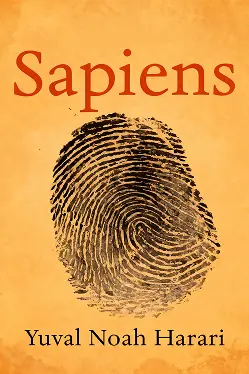
According to Yuval Noah Harari in Sapiens, the "secret sauce" of human success is the ability to create and believe in "imagined realities" or myths. While chimpanzees can only cooperate in small groups based on personal acquaintance, humans can coordinate by the millions because they share belief in abstract concepts like nations, money, human rights, and corporations. These stories act as a "mythical glue" that enables flexible, large-scale cooperation among complete strangers, allowing Homo sapiens to build complex global systems.
The script explores Harari’s argument that the transition from foraging to farming was a "luxury trap" that didn't necessarily improve the life of the individual. While the Agricultural Revolution allowed the human population to skyrocket—a success from a "gene’s eye view"—it forced individuals into lives of backbreaking labor, narrower diets, and rigid social hierarchies. Humans became "domesticated" by crops like wheat, trading the relative freedom and leisure of the Stone Age for the stress and toil of settled society.
To avoid being mere "survival machines" pushed around by digital distractions and evolutionary instincts, the script suggests reclaiming the "attention muscle" through "Deep Work." This involves "ritualizing depth" by setting habit systems that prioritize focus over "shallow work" like emails and social media. By being "proactive" rather than "reactive," individuals can choose to live by their own "personal myths" and mission statements rather than falling into the "hedonic treadmill" of constant consumption and status-seeking.
The script outlines a practical guide for navigating the complexities of 2026: 1) Prioritize physical health (sleep, exercise, connection); 2) Audit your internal "mental myths" through Cognitive Behavioral Therapy; 3) Set "input goals" rather than just "output goals"; 4) Batch your time to avoid "attention residue"; 5) Surround yourself with inclusive networks and "hubs"; 6) Master AI as a tool for growth; 7) Practice rationality by being humble and realistic; and 8) Build character by seeking "Win-Win" interactions and "sharpening the saw" through continuous self-investment.
Discover more

Explore Human Nature, Science & Culture
Explore Human Nature, Science & Culture
This plan offers a profound synthesis of biology and sociology to explain why we act, organize, and innovate as we do. It is ideal for curious minds and professionals seeking to understand the deep-seated drivers of human behavior in an era of rapid technological change.

Self-Improvement, Science & Human Culture
Self-Improvement, Science & Human Culture
This plan bridges the gap between biological evolution and modern psychology to explain why we act the way we do. It is ideal for lifelong learners and professionals seeking to master their habits while gaining a deeper perspective on human civilization.

Evolution beyond human being
Evolution beyond human being
As we approach a technological singularity, understanding the intersection of biology and artificial intelligence is critical for future-proofing our species. This plan is designed for futurists, ethicists, and tech enthusiasts eager to lead the transition into the next stage of human evolution.
Human Nature, Identity & Self-Improvement
Human Nature, Identity & Self-Improvement
This plan is essential for anyone seeking to understand the 'why' behind their behavior and take control of their personal growth. It is designed for lifelong learners and professionals who want to bridge the gap between scientific theory and practical self-mastery.

Body, Habits, Psychology & Culture Study
Body, Habits, Psychology & Culture Study
This plan bridges the gap between biological systems and social influences to explain why we act the way we do. It is ideal for individuals seeking to master self-regulation and professionals looking to understand human behavior in a cultural context.

Dna engineering
Dna engineering
This learning plan provides a comprehensive bridge between fundamental genetics and the cutting-edge tools reshaping our biological world. It is ideal for aspiring biotechnologists, researchers, or curious minds looking to understand the technical and ethical frontiers of human evolution.
Study History, Behavior & Fitness
Study History, Behavior & Fitness
This plan bridges the gap between our biological past and modern lifestyle demands. It is ideal for fitness enthusiasts, coaches, or anyone curious about how evolutionary psychology and movement science can be leveraged to optimize human behavior and health.
Future of Prosthetics, DNA & Cyborg Bodies
Future of Prosthetics, DNA & Cyborg Bodies
As we stand on the brink of a transhumanist era, understanding the intersection of biology and technology is essential for tech enthusiasts, bioethicists, and innovators. This plan provides a comprehensive roadmap for anyone looking to grasp how genetic engineering and cybernetics will redefine the human experience.
From Columbia University alumni built in San Francisco
"Instead of endless scrolling, I just hit play on BeFreed. It saves me so much time."


"I never knew where to start with nonfiction—BeFreed’s book lists turned into podcasts gave me a clear path."


"Perfect balance between learning and entertainment. Finished ‘Thinking, Fast and Slow’ on my commute this week."
"Crazy how much I learned while walking the dog. BeFreed = small habits → big gains."
"Reading used to feel like a chore. Now it’s just part of my lifestyle."

"Feels effortless compared to reading. I’ve finished 6 books this month already."
"BeFreed turned my guilty doomscrolling into something that feels productive and inspiring."

"BeFreed turned my commute into learning time. 20-min podcasts are perfect for finishing books I never had time for."
"BeFreed replaced my podcast queue. Imagine Spotify for books — that’s it. 🙌"

"It is great for me to learn something from the book without reading it."
"The themed book list podcasts help me connect ideas across authors—like a guided audio journey."
"Makes me feel smarter every time before going to work"
From Columbia University alumni built in San Francisco
"Instead of endless scrolling, I just hit play on BeFreed. It saves me so much time."
"I never knew where to start with nonfiction—BeFreed’s book lists turned into podcasts gave me a clear path."
"Perfect balance between learning and entertainment. Finished ‘Thinking, Fast and Slow’ on my commute this week."
"Crazy how much I learned while walking the dog. BeFreed = small habits → big gains."
"Reading used to feel like a chore. Now it’s just part of my lifestyle."
"Feels effortless compared to reading. I’ve finished 6 books this month already."
"BeFreed turned my guilty doomscrolling into something that feels productive and inspiring."
"BeFreed turned my commute into learning time. 20-min podcasts are perfect for finishing books I never had time for."
"BeFreed replaced my podcast queue. Imagine Spotify for books — that’s it. 🙌"
"It is great for me to learn something from the book without reading it."
"The themed book list podcasts help me connect ideas across authors—like a guided audio journey."
"Makes me feel smarter every time before going to work"
"Instead of endless scrolling, I just hit play on BeFreed. It saves me so much time."
"I never knew where to start with nonfiction—BeFreed’s book lists turned into podcasts gave me a clear path."
"Perfect balance between learning and entertainment. Finished ‘Thinking, Fast and Slow’ on my commute this week."
"Crazy how much I learned while walking the dog. BeFreed = small habits → big gains."
"Reading used to feel like a chore. Now it’s just part of my lifestyle."
"Feels effortless compared to reading. I’ve finished 6 books this month already."
"BeFreed turned my guilty doomscrolling into something that feels productive and inspiring."
"BeFreed turned my commute into learning time. 20-min podcasts are perfect for finishing books I never had time for."
"BeFreed replaced my podcast queue. Imagine Spotify for books — that’s it. 🙌"
"It is great for me to learn something from the book without reading it."
"The themed book list podcasts help me connect ideas across authors—like a guided audio journey."
"Makes me feel smarter every time before going to work"
"Instead of endless scrolling, I just hit play on BeFreed. It saves me so much time."
"I never knew where to start with nonfiction—BeFreed’s book lists turned into podcasts gave me a clear path."
"Perfect balance between learning and entertainment. Finished ‘Thinking, Fast and Slow’ on my commute this week."
"Crazy how much I learned while walking the dog. BeFreed = small habits → big gains."
"Reading used to feel like a chore. Now it’s just part of my lifestyle."
"Feels effortless compared to reading. I’ve finished 6 books this month already."
"BeFreed turned my guilty doomscrolling into something that feels productive and inspiring."
"BeFreed turned my commute into learning time. 20-min podcasts are perfect for finishing books I never had time for."
"BeFreed replaced my podcast queue. Imagine Spotify for books — that’s it. 🙌"
"It is great for me to learn something from the book without reading it."
"The themed book list podcasts help me connect ideas across authors—like a guided audio journey."
"Makes me feel smarter every time before going to work"


