
The Robert Greene Playbook: Mastering Power and Perception
Explore why Robert Greene’s controversial frameworks are banned in prisons yet embraced by icons. This episode breaks down his amoral laws of power into a practical survival kit for navigating modern social hierarchies.

Best quote from The Robert Greene Playbook: Mastering Power and Perception
Power is like gravity—you don't have to like it, but you definitely have to account for it if you don't want to fall on your face. It is an amoral reality of human relationships, not a matter of good or evil, but a tool for leverage and survival.

This audio lesson was created by a BeFreed community member
Robert Greene

Frequently Asked Questions
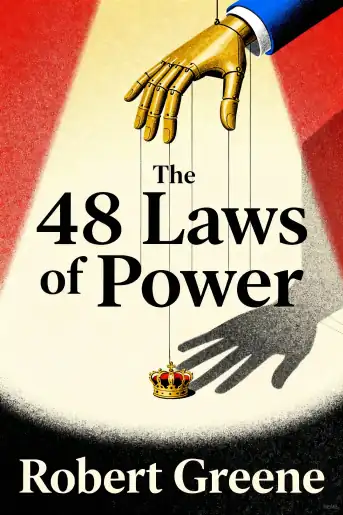
Robert Greene’s work is frequently restricted in correctional facilities because authorities consider his writings to be a significant security risk. His books, such as The 48 Laws of Power, provide frameworks for understanding manipulation, ego, and social hierarchy. Because these "laws" can be used to navigate and subvert power structures, prison officials often view them as tools that could be used to undermine institutional control.
This concept, known as Law 1, suggests that you should avoid appearing too brilliant or talented in front of your superiors. While many people believe that working hard and showing off their best skills will lead to a promotion, Greene argues that leaders often have fragile egos. If a subordinate appears too charming or intelligent, it can trigger a leader's insecurities, causing them to view the subordinate as a threat rather than an asset. To gain power, one must make the "master" appear more brilliant than they actually are.
According to the "Law of Saying Less Than Necessary," silence is a tool used to keep others off-balance and gain information. In meetings or negotiations, silence often makes people uncomfortable, leading them to talk excessively to fill the gap. When others talk too much, they inadvertently reveal their weaknesses, intentions, and hidden biases. By remaining "sphinx-like" and saying less, you maintain an air of mystery and protect yourself from saying something foolish or predictable.
The Mirror Effect involves reflecting the actions, values, or desires of others back at them. Defensively, it can be used to distract an opponent or teach them a lesson by mimicking their behavior, which often unnerves them. Offensively, it is used to manage the "Narcissus Effect," where you mirror a person’s desires so closely that they fall in love with the reflection you are providing. This strategy allows you to control how others perceive you while keeping your true intentions hidden.
While Greene’s laws of power focus on the social games played with others to navigate hierarchies, "Mastery" is the internal game played with oneself and one's craft. Mastery involves discovering a "calling" or higher sense of purpose and committing to a long-term apprenticeship to develop unique, interconnected skills. While power is about leverage and influence over outcomes in the world, mastery is about the disciplined path to becoming a genius in a specific field.
Discover more

Robert Greene: The Power & Human Nature Pod
Robert Greene: The Power & Human Nature Pod
This plan distills Robert Greene's deep research into actionable insights for anyone seeking to navigate office politics or social hierarchies. It is essential for aspiring leaders and strategists who want to master the art of influence and long-term planning.

Master Machiavellianism & 48 Laws of Power
Master Machiavellianism & 48 Laws of Power
This plan distills centuries of political philosophy and psychological strategy into actionable professional skills. It is essential for leaders, negotiators, and ambitious professionals who need to navigate complex social hierarchies and protect themselves from manipulation.

Laws of power
Laws of power
This plan bridges the gap between historical statecraft and modern psychological influence, offering a blueprint for navigating competitive environments. It is essential for aspiring leaders and professionals who want to master the art of ethical persuasion and strategic decision-making.

Master Persuasion and Machiavellian Tactics
Master Persuasion and Machiavellian Tactics
In a competitive world, understanding the mechanics of power and human psychology is essential for leadership and self-defense. This plan is designed for professionals and negotiators who want to master high-stakes influence while remaining ethically grounded.
Become a Manipulator like Johan liebert.
Become a Manipulator like Johan liebert.
This curriculum is designed for those seeking an elite understanding of the darkest corners of human behavior and power dynamics. It provides a comprehensive framework for anyone looking to master the art of psychological dominance and strategic social control.

To manipulate others
To manipulate others
This plan is essential for leaders and professionals who need to navigate complex social hierarchies and master the art of persuasion. It provides a comprehensive toolkit for understanding human motivation and protecting oneself from covert influence.
Podcast: 500 Dark Psychology Books Audio
Podcast: 500 Dark Psychology Books Audio
In an era of information overload and subtle coercion, understanding the mechanics of influence is a vital survival skill. This plan is designed for individuals seeking to safeguard their mental autonomy and recognize predatory behaviors in any social context.
Be a genius manipulative clever person
Be a genius manipulative clever person
This plan is designed for individuals looking to master high-stakes social navigation and strategic decision-making. It provides a deep dive into human psychology and power dynamics for those who want to influence outcomes with precision.
From Columbia University alumni built in San Francisco
"Instead of endless scrolling, I just hit play on BeFreed. It saves me so much time."


"I never knew where to start with nonfiction—BeFreed’s book lists turned into podcasts gave me a clear path."


"Perfect balance between learning and entertainment. Finished ‘Thinking, Fast and Slow’ on my commute this week."
"Crazy how much I learned while walking the dog. BeFreed = small habits → big gains."
"Reading used to feel like a chore. Now it’s just part of my lifestyle."

"Feels effortless compared to reading. I’ve finished 6 books this month already."
"BeFreed turned my guilty doomscrolling into something that feels productive and inspiring."

"BeFreed turned my commute into learning time. 20-min podcasts are perfect for finishing books I never had time for."
"BeFreed replaced my podcast queue. Imagine Spotify for books — that’s it. 🙌"

"It is great for me to learn something from the book without reading it."
"The themed book list podcasts help me connect ideas across authors—like a guided audio journey."
"Makes me feel smarter every time before going to work"
From Columbia University alumni built in San Francisco
"Instead of endless scrolling, I just hit play on BeFreed. It saves me so much time."
"I never knew where to start with nonfiction—BeFreed’s book lists turned into podcasts gave me a clear path."
"Perfect balance between learning and entertainment. Finished ‘Thinking, Fast and Slow’ on my commute this week."
"Crazy how much I learned while walking the dog. BeFreed = small habits → big gains."
"Reading used to feel like a chore. Now it’s just part of my lifestyle."
"Feels effortless compared to reading. I’ve finished 6 books this month already."
"BeFreed turned my guilty doomscrolling into something that feels productive and inspiring."
"BeFreed turned my commute into learning time. 20-min podcasts are perfect for finishing books I never had time for."
"BeFreed replaced my podcast queue. Imagine Spotify for books — that’s it. 🙌"
"It is great for me to learn something from the book without reading it."
"The themed book list podcasts help me connect ideas across authors—like a guided audio journey."
"Makes me feel smarter every time before going to work"
"Instead of endless scrolling, I just hit play on BeFreed. It saves me so much time."
"I never knew where to start with nonfiction—BeFreed’s book lists turned into podcasts gave me a clear path."
"Perfect balance between learning and entertainment. Finished ‘Thinking, Fast and Slow’ on my commute this week."
"Crazy how much I learned while walking the dog. BeFreed = small habits → big gains."
"Reading used to feel like a chore. Now it’s just part of my lifestyle."
"Feels effortless compared to reading. I’ve finished 6 books this month already."
"BeFreed turned my guilty doomscrolling into something that feels productive and inspiring."
"BeFreed turned my commute into learning time. 20-min podcasts are perfect for finishing books I never had time for."
"BeFreed replaced my podcast queue. Imagine Spotify for books — that’s it. 🙌"
"It is great for me to learn something from the book without reading it."
"The themed book list podcasts help me connect ideas across authors—like a guided audio journey."
"Makes me feel smarter every time before going to work"
"Instead of endless scrolling, I just hit play on BeFreed. It saves me so much time."
"I never knew where to start with nonfiction—BeFreed’s book lists turned into podcasts gave me a clear path."
"Perfect balance between learning and entertainment. Finished ‘Thinking, Fast and Slow’ on my commute this week."
"Crazy how much I learned while walking the dog. BeFreed = small habits → big gains."
"Reading used to feel like a chore. Now it’s just part of my lifestyle."
"Feels effortless compared to reading. I’ve finished 6 books this month already."
"BeFreed turned my guilty doomscrolling into something that feels productive and inspiring."
"BeFreed turned my commute into learning time. 20-min podcasts are perfect for finishing books I never had time for."
"BeFreed replaced my podcast queue. Imagine Spotify for books — that’s it. 🙌"
"It is great for me to learn something from the book without reading it."
"The themed book list podcasts help me connect ideas across authors—like a guided audio journey."
"Makes me feel smarter every time before going to work"


