
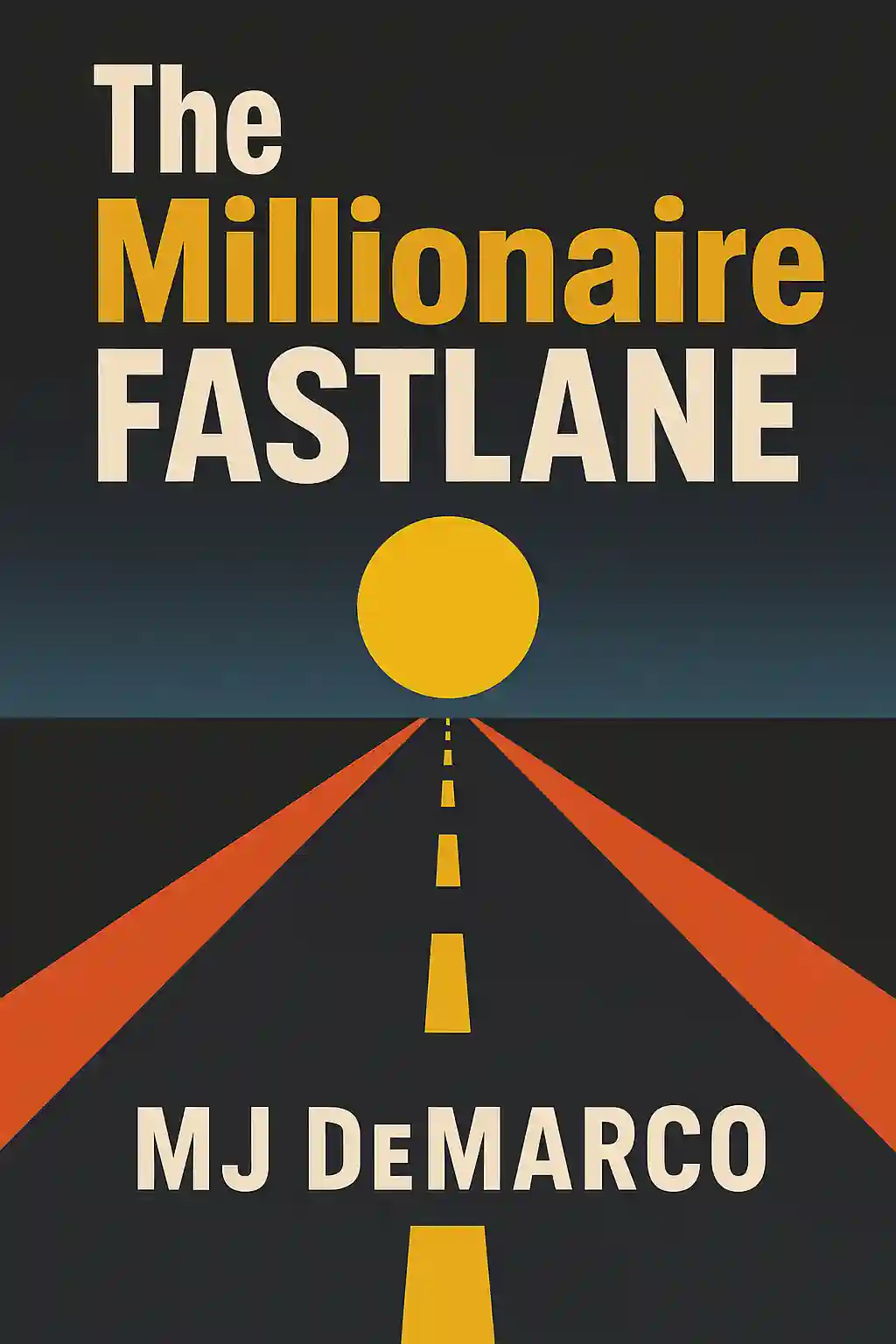
The Millionaire Fastlane: Escaping the Forty-Year Grind
Stop trading your youth for a retirement you're too old to enjoy. Learn how to pivot from consumer to producer using the CENTS framework to accelerate wealth and achieve financial freedom long before age sixty-five.

Best quote from The Millionaire Fastlane: Escaping the Forty-Year Grind
The Fastlane is 'Get Rich Big,' not necessarily easy. It might take five years of intense, sixteen-hour days to build the machine, but at the end of those five years, you own a machine that prints money while you’re at the beach.

This audio lesson was created by a BeFreed community member
the millionaire fastlane


Frequently Asked Questions
The Slowlane is the conventional financial roadmap where individuals trade their youth and time for the hope of freedom at age sixty-five. It relies on a "five-for-two" exchange—working five days for two days of freedom—and depends on variables like hourly wages and stock market returns. The script argues this math is broken because your wealth is limited by the number of hours you can physically work, often resulting in "wealth in a wheelchair" rather than true financial freedom during your prime years.
A consumer looks at a product and thinks about how to buy or use it, whereas a producer looks at the same product and asks how it was built, how it is distributed, and what specific need it solves. Shifting to a producer mindset means moving from the passenger seat to the driver’s seat of the economy. Instead of looking for a job or taking a class, a producer looks to hire others or offer a class, focusing on creating value that others are willing to purchase.
The CENTS framework is a five-part litmus test used to determine if a business idea has "Fastlane" potential. It stands for Control (owning the platform and customer list), Entry (having high barriers to entry to keep competition low), Need (solving a legitimate market problem rather than chasing a personal passion), Time (detaching income from personal labor through automation), and Scale (the ability to reach millions of people or provide high-magnitude value). If a business violates these commandments, it is likely just a high-stress job rather than a scalable wealth-building system.
No, the script explicitly distinguishes "Get Rich Quick" from "Get Rich Big." While the Fastlane aims to compress forty years of wealth building into a much shorter period, such as five years, it requires intense hard work, often involving sixteen-hour days to build the initial "machine." The difference is that after the initial grueling process, the entrepreneur owns a system—or "Money Tree"—that continues to generate income passively, whereas a Slowlane path requires continuous labor for decades.
The script suggests that the stock market is a poor tool for creating wealth from scratch but an excellent tool for preserving wealth and generating passive income once you are already rich. The recommended strategy is to use a Fastlane business to create massive capital first, then move that capital into dividend-paying stocks or real estate to provide a stable, long-term lifestyle. Trying to build a fortune by saving small monthly amounts from a paycheck is viewed as an inefficient, lifelong gamble.
Discover more

Millionaire by 57
Millionaire by 57
This plan is designed for mid-career professionals and aspiring entrepreneurs who want a structured path to wealth before retirement. It bridges the gap between psychological preparation and practical asset management to ensure long-term financial security.

How to be a millionaire quick
How to be a millionaire quick
This plan is designed for aspiring entrepreneurs and professionals looking to break free from slow-growth financial models. It provides a comprehensive roadmap for those ready to combine psychological shifts with aggressive, actionable business and investment strategies.

Millionaire Mindset, Maturity & Wealth at 17
Millionaire Mindset, Maturity & Wealth at 17
This plan is essential for ambitious young adults who want to bridge the gap between teenage life and financial independence. It combines psychological maturity with practical wealth-building strategies to create a holistic roadmap for early success.

Millionaire Mindset: Live Now, Plan Later
Millionaire Mindset: Live Now, Plan Later
This plan is essential for individuals who feel trapped between saving for the future and enjoying the present. It targets aspiring entrepreneurs and professionals who want to master the psychological and systemic habits of the wealthy while prioritizing immediate quality of life.

Master Financial Freedom & Investing
Master Financial Freedom & Investing
This learning plan is essential for anyone seeking to break free from paycheck-to-paycheck living and build sustainable wealth. It is designed for motivated individuals who want to transition from basic saving to sophisticated, multi-stream investing and strategic early retirement.
Healthy & retired in 5yrs
Healthy & retired in 5yrs
This learning plan is essential for ambitious professionals who refuse to wait until their 60s to enjoy life and want to take control of their financial and physical future now. It's particularly valuable for those in their 30s-50s who are tired of traditional retirement timelines and ready to combine aggressive wealth-building with proactive health optimization. Whether you're seeking early financial independence, worried about declining health in later years, or simply want to design a retirement worth rushing toward, this roadmap provides the strategic framework to make it happen.

Getting wealthy
Getting wealthy
This comprehensive guide bridges the gap between basic financial literacy and elite wealth management. It is designed for ambitious individuals ready to transition from traditional employment to scalable entrepreneurship and sophisticated investing.
Master Investing, Stocks & Passive Income
Master Investing, Stocks & Passive Income
This comprehensive roadmap is designed for individuals seeking to transition from active earners to strategic wealth builders. It bridges the gap between basic market literacy and sophisticated value investing, making it ideal for anyone aiming for long-term financial freedom.
From Columbia University alumni built in San Francisco
"Instead of endless scrolling, I just hit play on BeFreed. It saves me so much time."


"I never knew where to start with nonfiction—BeFreed’s book lists turned into podcasts gave me a clear path."


"Perfect balance between learning and entertainment. Finished ‘Thinking, Fast and Slow’ on my commute this week."
"Crazy how much I learned while walking the dog. BeFreed = small habits → big gains."
"Reading used to feel like a chore. Now it’s just part of my lifestyle."

"Feels effortless compared to reading. I’ve finished 6 books this month already."
"BeFreed turned my guilty doomscrolling into something that feels productive and inspiring."

"BeFreed turned my commute into learning time. 20-min podcasts are perfect for finishing books I never had time for."
"BeFreed replaced my podcast queue. Imagine Spotify for books — that’s it. 🙌"

"It is great for me to learn something from the book without reading it."
"The themed book list podcasts help me connect ideas across authors—like a guided audio journey."
"Makes me feel smarter every time before going to work"
From Columbia University alumni built in San Francisco
"Instead of endless scrolling, I just hit play on BeFreed. It saves me so much time."
"I never knew where to start with nonfiction—BeFreed’s book lists turned into podcasts gave me a clear path."
"Perfect balance between learning and entertainment. Finished ‘Thinking, Fast and Slow’ on my commute this week."
"Crazy how much I learned while walking the dog. BeFreed = small habits → big gains."
"Reading used to feel like a chore. Now it’s just part of my lifestyle."
"Feels effortless compared to reading. I’ve finished 6 books this month already."
"BeFreed turned my guilty doomscrolling into something that feels productive and inspiring."
"BeFreed turned my commute into learning time. 20-min podcasts are perfect for finishing books I never had time for."
"BeFreed replaced my podcast queue. Imagine Spotify for books — that’s it. 🙌"
"It is great for me to learn something from the book without reading it."
"The themed book list podcasts help me connect ideas across authors—like a guided audio journey."
"Makes me feel smarter every time before going to work"
"Instead of endless scrolling, I just hit play on BeFreed. It saves me so much time."
"I never knew where to start with nonfiction—BeFreed’s book lists turned into podcasts gave me a clear path."
"Perfect balance between learning and entertainment. Finished ‘Thinking, Fast and Slow’ on my commute this week."
"Crazy how much I learned while walking the dog. BeFreed = small habits → big gains."
"Reading used to feel like a chore. Now it’s just part of my lifestyle."
"Feels effortless compared to reading. I’ve finished 6 books this month already."
"BeFreed turned my guilty doomscrolling into something that feels productive and inspiring."
"BeFreed turned my commute into learning time. 20-min podcasts are perfect for finishing books I never had time for."
"BeFreed replaced my podcast queue. Imagine Spotify for books — that’s it. 🙌"
"It is great for me to learn something from the book without reading it."
"The themed book list podcasts help me connect ideas across authors—like a guided audio journey."
"Makes me feel smarter every time before going to work"
"Instead of endless scrolling, I just hit play on BeFreed. It saves me so much time."
"I never knew where to start with nonfiction—BeFreed’s book lists turned into podcasts gave me a clear path."
"Perfect balance between learning and entertainment. Finished ‘Thinking, Fast and Slow’ on my commute this week."
"Crazy how much I learned while walking the dog. BeFreed = small habits → big gains."
"Reading used to feel like a chore. Now it’s just part of my lifestyle."
"Feels effortless compared to reading. I’ve finished 6 books this month already."
"BeFreed turned my guilty doomscrolling into something that feels productive and inspiring."
"BeFreed turned my commute into learning time. 20-min podcasts are perfect for finishing books I never had time for."
"BeFreed replaced my podcast queue. Imagine Spotify for books — that’s it. 🙌"
"It is great for me to learn something from the book without reading it."
"The themed book list podcasts help me connect ideas across authors—like a guided audio journey."
"Makes me feel smarter every time before going to work"


