
The Lesser Key of Solomon is not what you think
Think this 17th-century manual is just about demons? Explore the five hidden books of this mysterious library to see how it actually maps the spirit world.

Best quote from The Lesser Key of Solomon is not what you think
The Lesser Key of Solomon isn't just a book of black magic; it is a complete map of the universe as those 17th-century practitioners saw it, structured as an upward climb from the lowest pits to the highest wisdom.

This audio lesson was created by a BeFreed community member
The lesser keys of Soloman


Frequently Asked Questions
The Lesser Key of Solomon is a 17th-century grimoire, with the most famous compilation dating back to 1641. Despite its title, King Solomon did not write the text. It is a "pseudepigraphic" work, meaning anonymous authors in the 1600s used the legendary king’s name to provide the book with instant authority and "street cred." The collection actually bundles together various texts from different eras, including some parts that date back to the 13th century.
The Lesser Key is structured as a spiritual ladder consisting of five books. It begins with the Ars Goetia, which catalogues 72 demons and their hierarchy. The second is the Ars Theurgia-Goetia, focusing on aerial spirits tied to the points of the compass. The third, Ars Paulina, deals with the angels of the hours and zodiac signs. The fourth is the Ars Almadel, which describes the creation of a wax tablet to contact benevolent angels. Finally, the Ars Notoria is a system of prayers and visual figures intended to grant the practitioner divine illumination and instant mastery of the arts and sciences.
The Ars Goetia organizes 72 demons into a rigid social and professional structure mirrored after European royal courts. Spirits are assigned specific noble titles such as Kings, Dukes, Princes, Marquises, Earls, Knights, and Presidents. Each rank governs a specific number of "legions" and requires different ritual materials; for example, a King’s seal must be made of gold, while a Marquis requires silver. This system was designed to give the magician a sense of legalistic control over the entities they summoned.
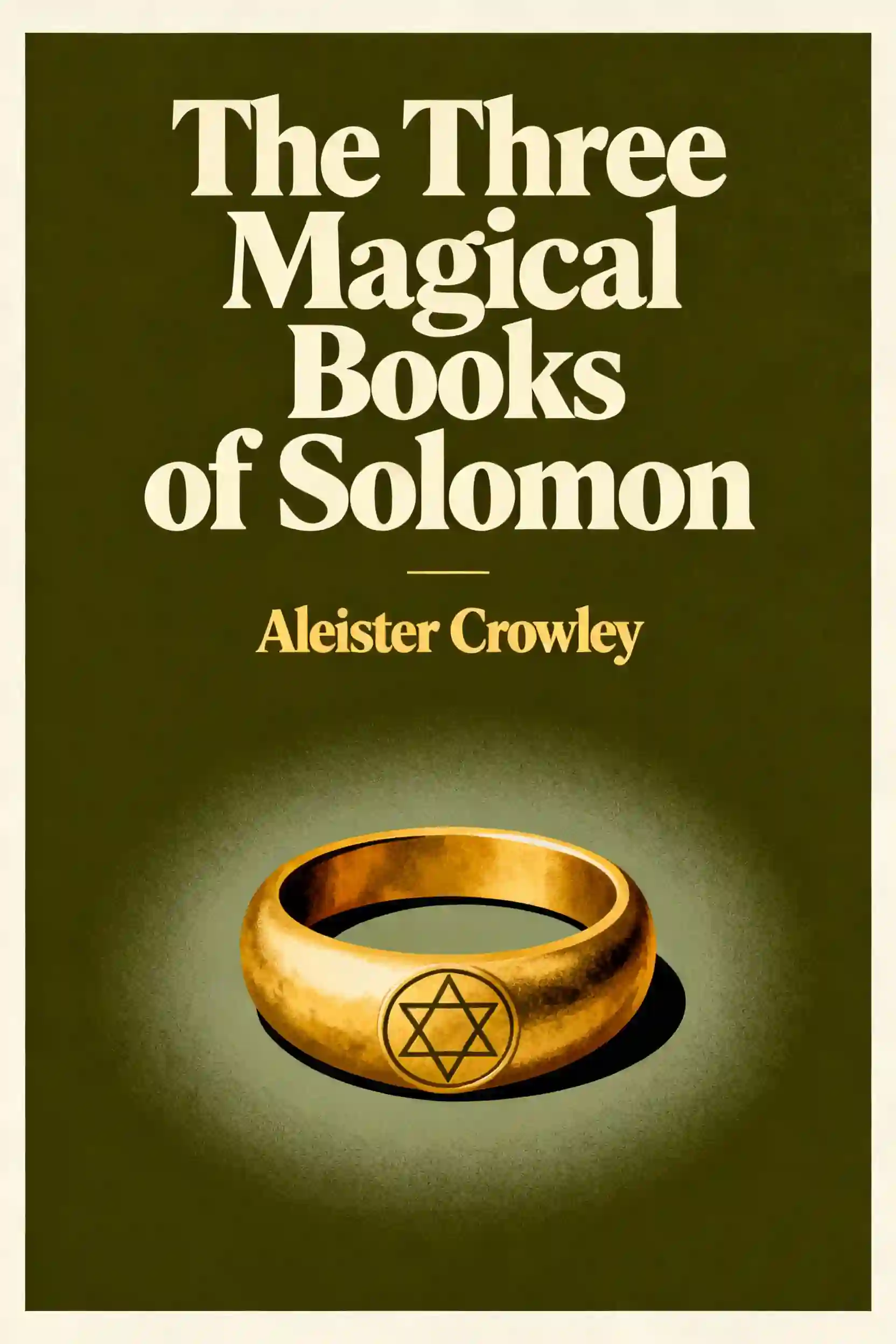
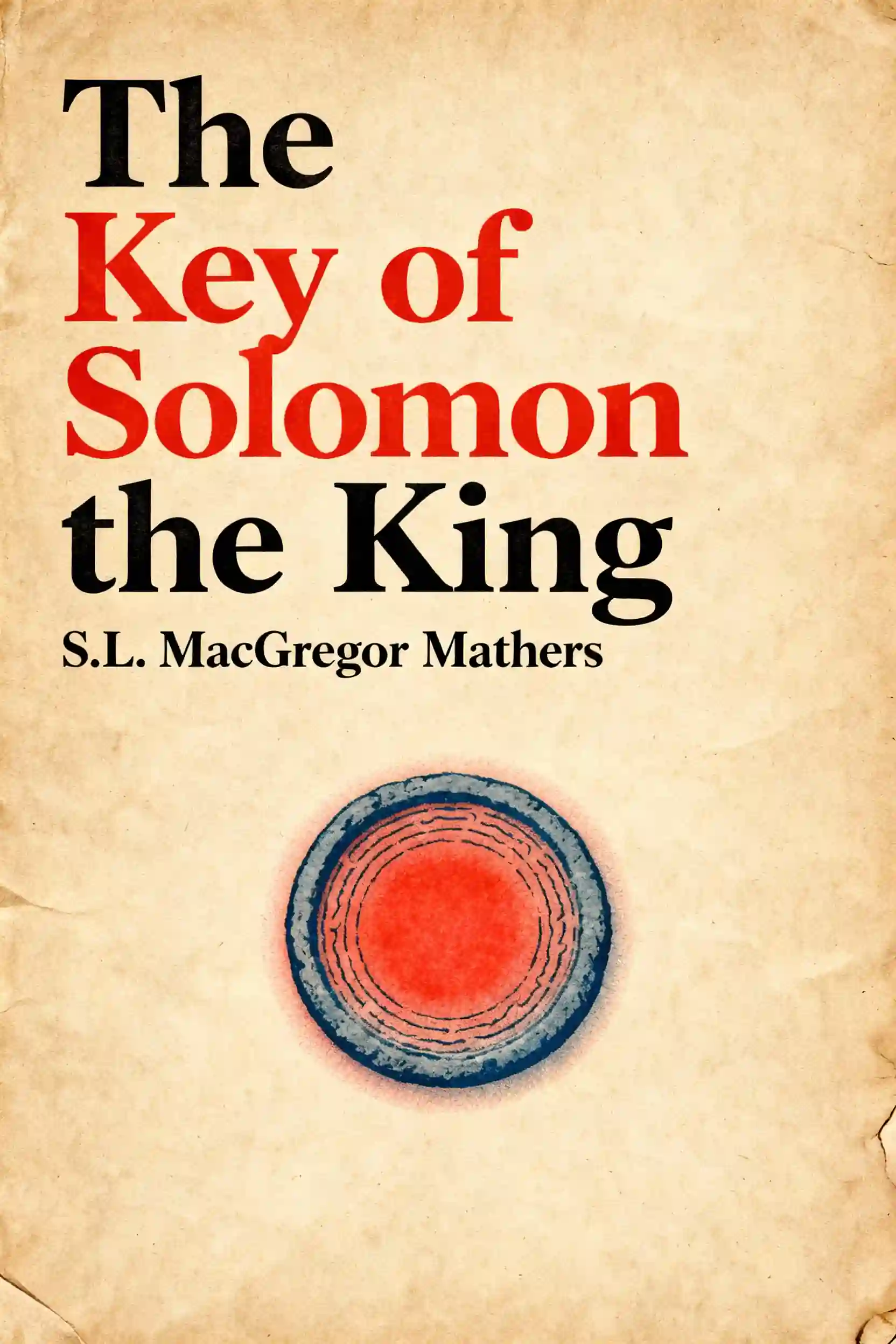
In 1904, Aleister Crowley and S. L. MacGregor Mathers published an edition of the Ars Goetia that introduced a major psychological shift in occultism. Crowley argued in his preface that the 72 demons were not external monsters or literal spirits, but rather "portions of the human brain." This interpretation transformed the grimoire from a supernatural manual into a tool for self-exploration, where summoning a demon became a metaphor for accessing latent potential or hidden parts of the subconscious mind.
The "Authority of the Operator" refers to the specific power dynamic between the magician and the spirits. Unlike popular tropes of "selling one's soul," the Solomonic practitioner acts as a divine officer or a "police officer with a warrant." They do not make pacts with demons; instead, they command them using the authority of God and specific divine names. The magician stands above the spirits not through evil, but through purification, knowledge, and the delegated authority of the heavens.
Discover more

Solomonic Goetic demonology
Solomonic Goetic demonology
This learning plan provides essential knowledge for serious students of Western ceremonial magic, occult history, and comparative religion who seek to understand one of the most influential magical traditions in European esotericism. It benefits scholars, practitioners, and researchers interested in medieval grimoire traditions, the history of demonology, and the intersection of Jewish, Christian, and hermetic magical systems.

Occult knowledge seeker
Occult knowledge seeker
This learning path is designed for spiritual seekers, philosophers, and practitioners interested in Western esoteric traditions and hidden knowledge systems. It's ideal for those who want to move beyond surface-level spirituality into the deeper, often controversial wisdom traditions that have been preserved in mystery schools and occult teachings throughout history.
Occult History: Ancient Greece to Crowley
Occult History: Ancient Greece to Crowley
This plan provides a scholarly bridge between historical mysticism and modern practice, essential for understanding the roots of Western thought. It is ideal for history enthusiasts and practitioners seeking to ground their knowledge in authentic lineage.
Study occult lore to spark creativity
Study occult lore to spark creativity
This plan bridges the gap between ancient mysticism and modern artistry, offering a unique toolkit for those feeling creatively stagnant. It is ideal for writers, artists, and designers looking to deepen their work through archetypal psychology and symbolic depth.
Self-Discovery via Esotericism & Psychology
Self-Discovery via Esotericism & Psychology
This plan bridges the gap between empirical psychology and ancient mystical traditions for a holistic approach to self-realization. It is ideal for seekers who want to combine analytical depth work with symbolic esoteric wisdom to live more authentically.
Master reality & psychology via hermetics
Master reality & psychology via hermetics
This plan bridges the gap between ancient esoteric wisdom and modern depth psychology for holistic self-mastery. It is ideal for seekers and practitioners looking to integrate Jungian archetypes with Hermetic laws to consciously engineer their life experience.

Study Gnosticism, Mysticism and Wicca
Study Gnosticism, Mysticism and Wicca
This plan bridges ancient wisdom with modern practice, offering a structured path for seekers of hidden truths. It is ideal for those looking to deepen their spiritual journey through Gnostic philosophy, Wiccan earth-wisdom, and hermetic mastery.

Master the Mind of Sherlock Holmes
Master the Mind of Sherlock Holmes
This plan is essential for anyone looking to enhance their critical thinking and problem-solving abilities through the lens of classical detection. It is designed for professionals, students, and curious minds who want to transform how they perceive, process, and act on information.
From Columbia University alumni built in San Francisco
"Instead of endless scrolling, I just hit play on BeFreed. It saves me so much time."


"I never knew where to start with nonfiction—BeFreed’s book lists turned into podcasts gave me a clear path."


"Perfect balance between learning and entertainment. Finished ‘Thinking, Fast and Slow’ on my commute this week."
"Crazy how much I learned while walking the dog. BeFreed = small habits → big gains."
"Reading used to feel like a chore. Now it’s just part of my lifestyle."

"Feels effortless compared to reading. I’ve finished 6 books this month already."
"BeFreed turned my guilty doomscrolling into something that feels productive and inspiring."

"BeFreed turned my commute into learning time. 20-min podcasts are perfect for finishing books I never had time for."
"BeFreed replaced my podcast queue. Imagine Spotify for books — that’s it. 🙌"

"It is great for me to learn something from the book without reading it."
"The themed book list podcasts help me connect ideas across authors—like a guided audio journey."
"Makes me feel smarter every time before going to work"
From Columbia University alumni built in San Francisco
"Instead of endless scrolling, I just hit play on BeFreed. It saves me so much time."
"I never knew where to start with nonfiction—BeFreed’s book lists turned into podcasts gave me a clear path."
"Perfect balance between learning and entertainment. Finished ‘Thinking, Fast and Slow’ on my commute this week."
"Crazy how much I learned while walking the dog. BeFreed = small habits → big gains."
"Reading used to feel like a chore. Now it’s just part of my lifestyle."
"Feels effortless compared to reading. I’ve finished 6 books this month already."
"BeFreed turned my guilty doomscrolling into something that feels productive and inspiring."
"BeFreed turned my commute into learning time. 20-min podcasts are perfect for finishing books I never had time for."
"BeFreed replaced my podcast queue. Imagine Spotify for books — that’s it. 🙌"
"It is great for me to learn something from the book without reading it."
"The themed book list podcasts help me connect ideas across authors—like a guided audio journey."
"Makes me feel smarter every time before going to work"
"Instead of endless scrolling, I just hit play on BeFreed. It saves me so much time."
"I never knew where to start with nonfiction—BeFreed’s book lists turned into podcasts gave me a clear path."
"Perfect balance between learning and entertainment. Finished ‘Thinking, Fast and Slow’ on my commute this week."
"Crazy how much I learned while walking the dog. BeFreed = small habits → big gains."
"Reading used to feel like a chore. Now it’s just part of my lifestyle."
"Feels effortless compared to reading. I’ve finished 6 books this month already."
"BeFreed turned my guilty doomscrolling into something that feels productive and inspiring."
"BeFreed turned my commute into learning time. 20-min podcasts are perfect for finishing books I never had time for."
"BeFreed replaced my podcast queue. Imagine Spotify for books — that’s it. 🙌"
"It is great for me to learn something from the book without reading it."
"The themed book list podcasts help me connect ideas across authors—like a guided audio journey."
"Makes me feel smarter every time before going to work"
"Instead of endless scrolling, I just hit play on BeFreed. It saves me so much time."
"I never knew where to start with nonfiction—BeFreed’s book lists turned into podcasts gave me a clear path."
"Perfect balance between learning and entertainment. Finished ‘Thinking, Fast and Slow’ on my commute this week."
"Crazy how much I learned while walking the dog. BeFreed = small habits → big gains."
"Reading used to feel like a chore. Now it’s just part of my lifestyle."
"Feels effortless compared to reading. I’ve finished 6 books this month already."
"BeFreed turned my guilty doomscrolling into something that feels productive and inspiring."
"BeFreed turned my commute into learning time. 20-min podcasts are perfect for finishing books I never had time for."
"BeFreed replaced my podcast queue. Imagine Spotify for books — that’s it. 🙌"
"It is great for me to learn something from the book without reading it."
"The themed book list podcasts help me connect ideas across authors—like a guided audio journey."
"Makes me feel smarter every time before going to work"


