
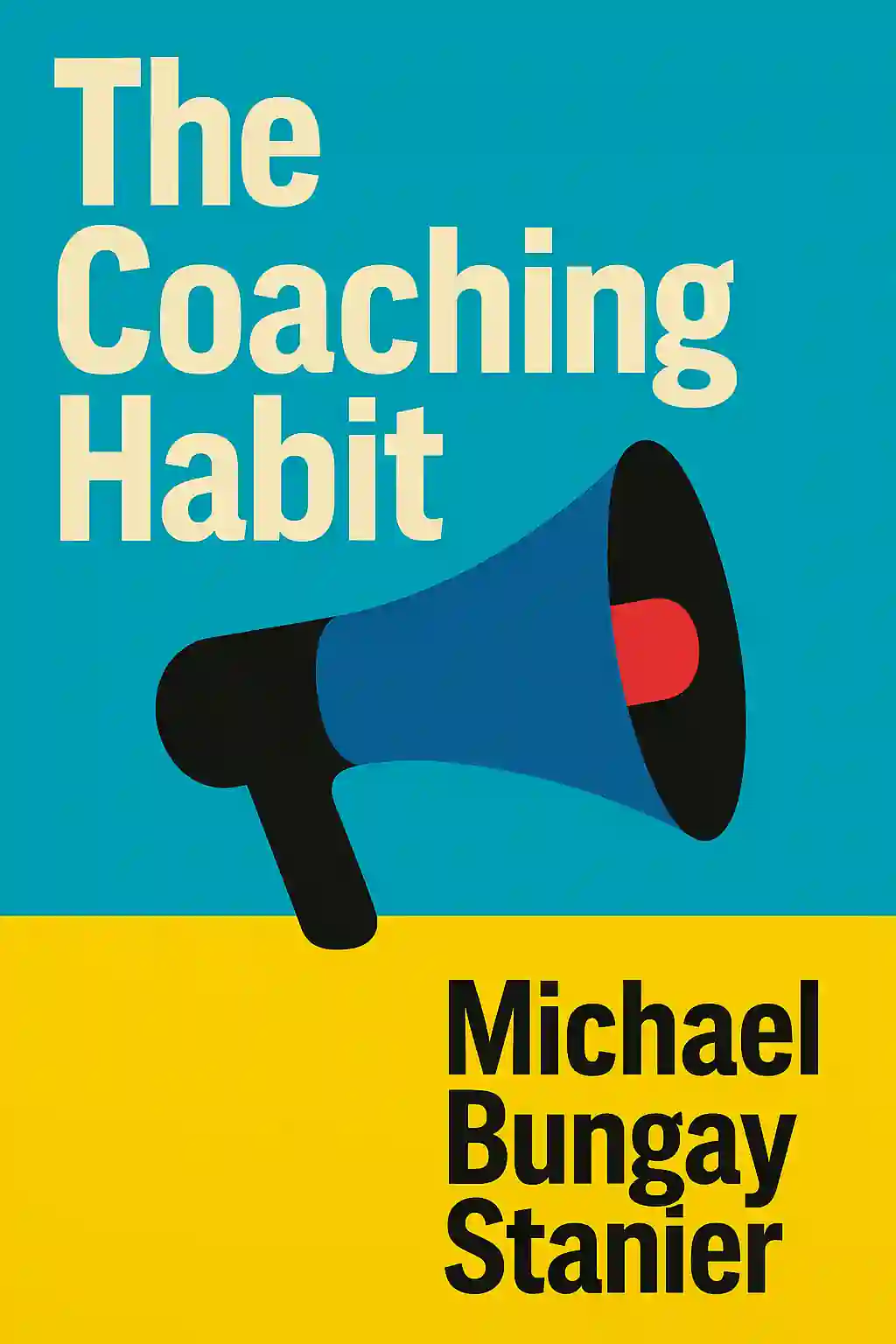
The Coaching Habit: 7 Questions to Lead Better
Stop giving advice and start asking questions. Learn how to tame your inner advice monster and use curiosity to build a more independent, focused team.

Best quote from The Coaching Habit: 7 Questions to Lead Better
The secret to impactful leadership isn't having better answers—it's about staying curious a little bit longer, saying less, and asking more.

This audio lesson was created by a BeFreed community member
Create a deep lesson of the Michael Bungay Stanier's "The Coaching Habit" and the 7 questions

Frequently Asked Questions
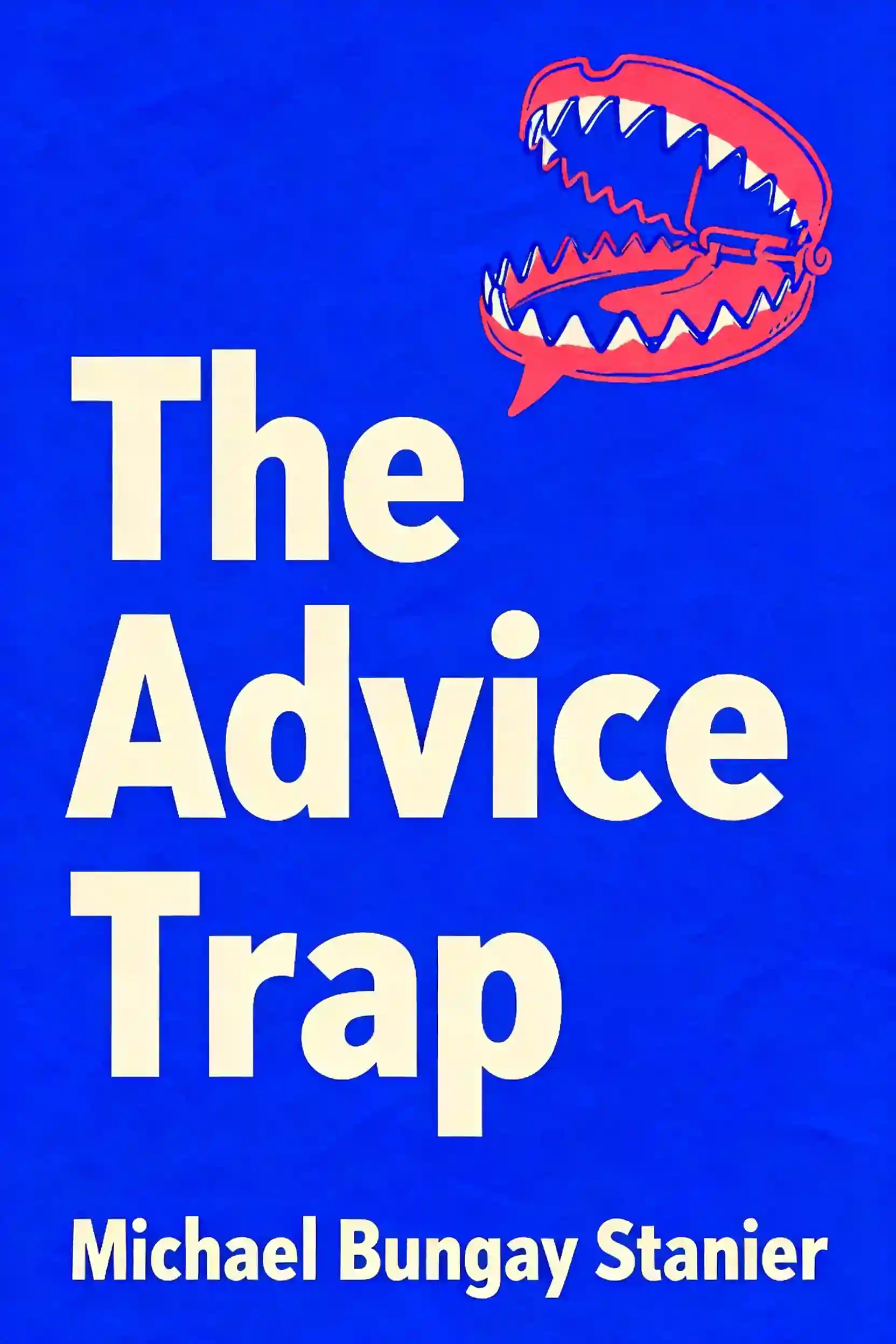
The Advice Monster is a metaphorical term for the natural reflex leaders have to provide immediate solutions and orders when someone presents a problem. While it feels helpful, this behavior creates a "vicious circle" of over-dependence where team members stop thinking for themselves and the leader becomes overwhelmed by being the sole problem solver. Taming this monster requires staying curious longer and resisting the urge to offer advice prematurely.
This question, known as the AWE question, is powerful because the first challenge someone mentions is rarely the actual root issue; it is usually just the "vanguard" problem that is easiest to talk about. By asking "And what else?" multiple times, a leader gives the other person space to explore deeper layers of a situation. This shifts the cognitive load to the team member, training them to think strategically while preventing the leader from wasting time solving the wrong problem.
The Focus Question—"What’s the real challenge here for you?"—acts as a surgical tool to cut through noise and "Small Talk Tangos." By adding the specific phrase "for you," the leader forces the individual to move away from complaining about external systems or other people and instead take ownership of their specific struggle. This helps identify the one thing that, if resolved, would provide the most significant relief and progress.
The Lazy Question is "How can I help?" or the more direct "What do you want from me?" It is considered strategic because it prevents a leader from "jumping in" and doing the work for someone else. By forcing the other person to make a specific request, the leader avoids assuming a role they aren't needed for—such as fixing a budget when the person only needed a quick approval—thereby empowering the employee and protecting the leader's own schedule.
To make learning stick, leaders should use the "Learning Question" at the end of an interaction: "What was most useful for you?" This prompt forces the team member to reflect, retrieve information, and articulate a specific insight, which neuroscience suggests helps wire new information into the brain. It also provides a feedback loop for the leader to understand what resonated most, turning a standard transaction into a transformative learning moment.
Discover more

Lead, Build Habits & Communicate Better
Lead, Build Habits & Communicate Better
This plan bridges the gap between behavioral science and practical leadership for aspiring and current executives. It is ideal for professionals looking to enhance their influence, master their habits, and project a stronger presence in the workplace.

Habits, Biographies & Leadership Guide
Habits, Biographies & Leadership Guide
This guide is designed for aspiring and established leaders who want to bridge the gap between personal discipline and professional excellence. By combining the science of habits with historical wisdom, it provides a comprehensive roadmap for anyone seeking to build a resilient character and effective leadership systems.

Improve my coaching skills
Improve my coaching skills
Effective coaching is one of the most valuable leadership skills in today's workplace, directly impacting team performance, employee engagement, and organizational success. This learning plan is ideal for managers, team leaders, HR professionals, and aspiring professional coaches who want to develop structured, evidence-based coaching abilities that drive real transformation in individuals and teams.

Lead, Improve & Build Habits
Lead, Improve & Build Habits
This learning plan is essential for aspiring and established leaders who want to bridge the gap between strategy and execution. It is designed for professionals seeking to integrate psychological insights with operational systems to build high-performing, adaptable organizations.

Listen and interview better. Ask better.
Listen and interview better. Ask better.
Effective communication is the cornerstone of leadership and professional success. This plan is designed for managers, interviewers, and leaders who need to move beyond surface-level talk to uncover critical insights and build deep trust.
Grow, Build & Mind: Self-Improvement Guide
Grow, Build & Mind: Self-Improvement Guide
In an era of constant distraction, mastering one's internal systems is the ultimate competitive advantage. This guide is designed for ambitious individuals seeking to bridge the gap between their current potential and peak performance through structured habit formation and emotional mastery.
Mastering Pressure, People, and Growth Habits
Mastering Pressure, People, and Growth Habits
This plan is designed for high-performers and emerging leaders who need to balance intense psychological pressure with the nuances of human influence. It provides a blueprint for moving beyond raw willpower to systematic growth and strategic leadership.
Mindfulness, Habits & Self-Improvement
Mindfulness, Habits & Self-Improvement
In an age of constant distraction, mastering your internal landscape is the ultimate competitive advantage. This plan is designed for professionals and individuals seeking to bridge the gap between intention and action through science-based habit formation and emotional mastery.
From Columbia University alumni built in San Francisco
"Instead of endless scrolling, I just hit play on BeFreed. It saves me so much time."


"I never knew where to start with nonfiction—BeFreed’s book lists turned into podcasts gave me a clear path."


"Perfect balance between learning and entertainment. Finished ‘Thinking, Fast and Slow’ on my commute this week."
"Crazy how much I learned while walking the dog. BeFreed = small habits → big gains."
"Reading used to feel like a chore. Now it’s just part of my lifestyle."

"Feels effortless compared to reading. I’ve finished 6 books this month already."
"BeFreed turned my guilty doomscrolling into something that feels productive and inspiring."

"BeFreed turned my commute into learning time. 20-min podcasts are perfect for finishing books I never had time for."
"BeFreed replaced my podcast queue. Imagine Spotify for books — that’s it. 🙌"

"It is great for me to learn something from the book without reading it."
"The themed book list podcasts help me connect ideas across authors—like a guided audio journey."
"Makes me feel smarter every time before going to work"
From Columbia University alumni built in San Francisco
"Instead of endless scrolling, I just hit play on BeFreed. It saves me so much time."
"I never knew where to start with nonfiction—BeFreed’s book lists turned into podcasts gave me a clear path."
"Perfect balance between learning and entertainment. Finished ‘Thinking, Fast and Slow’ on my commute this week."
"Crazy how much I learned while walking the dog. BeFreed = small habits → big gains."
"Reading used to feel like a chore. Now it’s just part of my lifestyle."
"Feels effortless compared to reading. I’ve finished 6 books this month already."
"BeFreed turned my guilty doomscrolling into something that feels productive and inspiring."
"BeFreed turned my commute into learning time. 20-min podcasts are perfect for finishing books I never had time for."
"BeFreed replaced my podcast queue. Imagine Spotify for books — that’s it. 🙌"
"It is great for me to learn something from the book without reading it."
"The themed book list podcasts help me connect ideas across authors—like a guided audio journey."
"Makes me feel smarter every time before going to work"
"Instead of endless scrolling, I just hit play on BeFreed. It saves me so much time."
"I never knew where to start with nonfiction—BeFreed’s book lists turned into podcasts gave me a clear path."
"Perfect balance between learning and entertainment. Finished ‘Thinking, Fast and Slow’ on my commute this week."
"Crazy how much I learned while walking the dog. BeFreed = small habits → big gains."
"Reading used to feel like a chore. Now it’s just part of my lifestyle."
"Feels effortless compared to reading. I’ve finished 6 books this month already."
"BeFreed turned my guilty doomscrolling into something that feels productive and inspiring."
"BeFreed turned my commute into learning time. 20-min podcasts are perfect for finishing books I never had time for."
"BeFreed replaced my podcast queue. Imagine Spotify for books — that’s it. 🙌"
"It is great for me to learn something from the book without reading it."
"The themed book list podcasts help me connect ideas across authors—like a guided audio journey."
"Makes me feel smarter every time before going to work"
"Instead of endless scrolling, I just hit play on BeFreed. It saves me so much time."
"I never knew where to start with nonfiction—BeFreed’s book lists turned into podcasts gave me a clear path."
"Perfect balance between learning and entertainment. Finished ‘Thinking, Fast and Slow’ on my commute this week."
"Crazy how much I learned while walking the dog. BeFreed = small habits → big gains."
"Reading used to feel like a chore. Now it’s just part of my lifestyle."
"Feels effortless compared to reading. I’ve finished 6 books this month already."
"BeFreed turned my guilty doomscrolling into something that feels productive and inspiring."
"BeFreed turned my commute into learning time. 20-min podcasts are perfect for finishing books I never had time for."
"BeFreed replaced my podcast queue. Imagine Spotify for books — that’s it. 🙌"
"It is great for me to learn something from the book without reading it."
"The themed book list podcasts help me connect ideas across authors—like a guided audio journey."
"Makes me feel smarter every time before going to work"


