
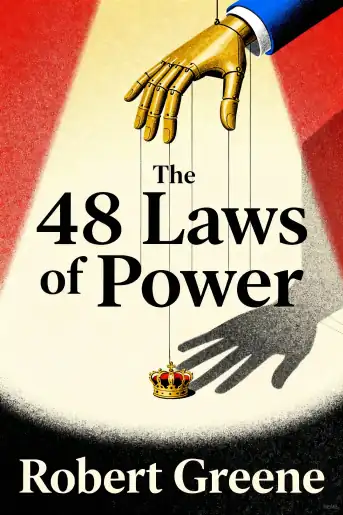
The 48 Laws of Power Decoded
Uncover the controversial strategies history's most powerful leaders used to gain and maintain control. From ancient emperors to modern CEOs, discover the hidden playbook that shapes boardrooms, politics, and digital influence.

Best quote from The 48 Laws of Power Decoded
Power isn't really about being the loudest person in the room or having the fanciest title; it's about understanding the psychology of influence and using it strategically to create perception, because in a world of infinite distractions, invisibility equals irrelevance.

This audio lesson was created by a BeFreed community member
40 rules of power



Discover more

Master Machiavellianism & 48 Laws of Power
Master Machiavellianism & 48 Laws of Power
This plan distills centuries of political philosophy and psychological strategy into actionable professional skills. It is essential for leaders, negotiators, and ambitious professionals who need to navigate complex social hierarchies and protect themselves from manipulation.

Laws of power
Laws of power
This plan bridges the gap between historical statecraft and modern psychological influence, offering a blueprint for navigating competitive environments. It is essential for aspiring leaders and professionals who want to master the art of ethical persuasion and strategic decision-making.

Modern Work Politics: Machiavelli & 48 Laws
Modern Work Politics: Machiavelli & 48 Laws
In high-stakes corporate environments, technical skill alone rarely guarantees advancement. This plan is designed for ambitious professionals who need to master the unspoken rules of influence and power dynamics to secure their seat at the table.
Financial Independence & 48 Laws of Power
Financial Independence & 48 Laws of Power
This plan bridges the gap between wealth accumulation and the strategic influence required to protect and grow it. It is ideal for ambitious professionals and entrepreneurs who want to master both the mechanics of money and the psychology of power.
Master dark psychology to control situations
Master dark psychology to control situations
In a world driven by social dynamics, understanding the hidden mechanics of influence is a vital survival skill. This plan is designed for leaders and negotiators who want to master behavioral analysis and strategic power to navigate complex interpersonal relationships.

Manipulation technique
Manipulation technique
This plan is essential for leaders and professionals who need to navigate complex social landscapes and protect themselves from exploitation. It benefits anyone looking to understand the mechanics of power, from psychological triggers to ethical influence strategies.
Master leadership, power & social influence
Master leadership, power & social influence
In today's complex corporate landscape, technical skill alone is insufficient for high-level success. This curriculum is designed for aspiring and current executives who need to master the subtle art of social dynamics and ethical power to drive meaningful change.
Power and winning
Power and winning
This plan is designed for ambitious professionals and leaders who need to navigate complex competitive landscapes. It provides the psychological tools and strategic framework necessary to command authority and achieve consistent victory in any field.
From Columbia University alumni built in San Francisco
"Instead of endless scrolling, I just hit play on BeFreed. It saves me so much time."


"I never knew where to start with nonfiction—BeFreed’s book lists turned into podcasts gave me a clear path."


"Perfect balance between learning and entertainment. Finished ‘Thinking, Fast and Slow’ on my commute this week."
"Crazy how much I learned while walking the dog. BeFreed = small habits → big gains."
"Reading used to feel like a chore. Now it’s just part of my lifestyle."

"Feels effortless compared to reading. I’ve finished 6 books this month already."
"BeFreed turned my guilty doomscrolling into something that feels productive and inspiring."

"BeFreed turned my commute into learning time. 20-min podcasts are perfect for finishing books I never had time for."
"BeFreed replaced my podcast queue. Imagine Spotify for books — that’s it. 🙌"

"It is great for me to learn something from the book without reading it."
"The themed book list podcasts help me connect ideas across authors—like a guided audio journey."
"Makes me feel smarter every time before going to work"
From Columbia University alumni built in San Francisco
"Instead of endless scrolling, I just hit play on BeFreed. It saves me so much time."
"I never knew where to start with nonfiction—BeFreed’s book lists turned into podcasts gave me a clear path."
"Perfect balance between learning and entertainment. Finished ‘Thinking, Fast and Slow’ on my commute this week."
"Crazy how much I learned while walking the dog. BeFreed = small habits → big gains."
"Reading used to feel like a chore. Now it’s just part of my lifestyle."
"Feels effortless compared to reading. I’ve finished 6 books this month already."
"BeFreed turned my guilty doomscrolling into something that feels productive and inspiring."
"BeFreed turned my commute into learning time. 20-min podcasts are perfect for finishing books I never had time for."
"BeFreed replaced my podcast queue. Imagine Spotify for books — that’s it. 🙌"
"It is great for me to learn something from the book without reading it."
"The themed book list podcasts help me connect ideas across authors—like a guided audio journey."
"Makes me feel smarter every time before going to work"
"Instead of endless scrolling, I just hit play on BeFreed. It saves me so much time."
"I never knew where to start with nonfiction—BeFreed’s book lists turned into podcasts gave me a clear path."
"Perfect balance between learning and entertainment. Finished ‘Thinking, Fast and Slow’ on my commute this week."
"Crazy how much I learned while walking the dog. BeFreed = small habits → big gains."
"Reading used to feel like a chore. Now it’s just part of my lifestyle."
"Feels effortless compared to reading. I’ve finished 6 books this month already."
"BeFreed turned my guilty doomscrolling into something that feels productive and inspiring."
"BeFreed turned my commute into learning time. 20-min podcasts are perfect for finishing books I never had time for."
"BeFreed replaced my podcast queue. Imagine Spotify for books — that’s it. 🙌"
"It is great for me to learn something from the book without reading it."
"The themed book list podcasts help me connect ideas across authors—like a guided audio journey."
"Makes me feel smarter every time before going to work"
"Instead of endless scrolling, I just hit play on BeFreed. It saves me so much time."
"I never knew where to start with nonfiction—BeFreed’s book lists turned into podcasts gave me a clear path."
"Perfect balance between learning and entertainment. Finished ‘Thinking, Fast and Slow’ on my commute this week."
"Crazy how much I learned while walking the dog. BeFreed = small habits → big gains."
"Reading used to feel like a chore. Now it’s just part of my lifestyle."
"Feels effortless compared to reading. I’ve finished 6 books this month already."
"BeFreed turned my guilty doomscrolling into something that feels productive and inspiring."
"BeFreed turned my commute into learning time. 20-min podcasts are perfect for finishing books I never had time for."
"BeFreed replaced my podcast queue. Imagine Spotify for books — that’s it. 🙌"
"It is great for me to learn something from the book without reading it."
"The themed book list podcasts help me connect ideas across authors—like a guided audio journey."
"Makes me feel smarter every time before going to work"


