

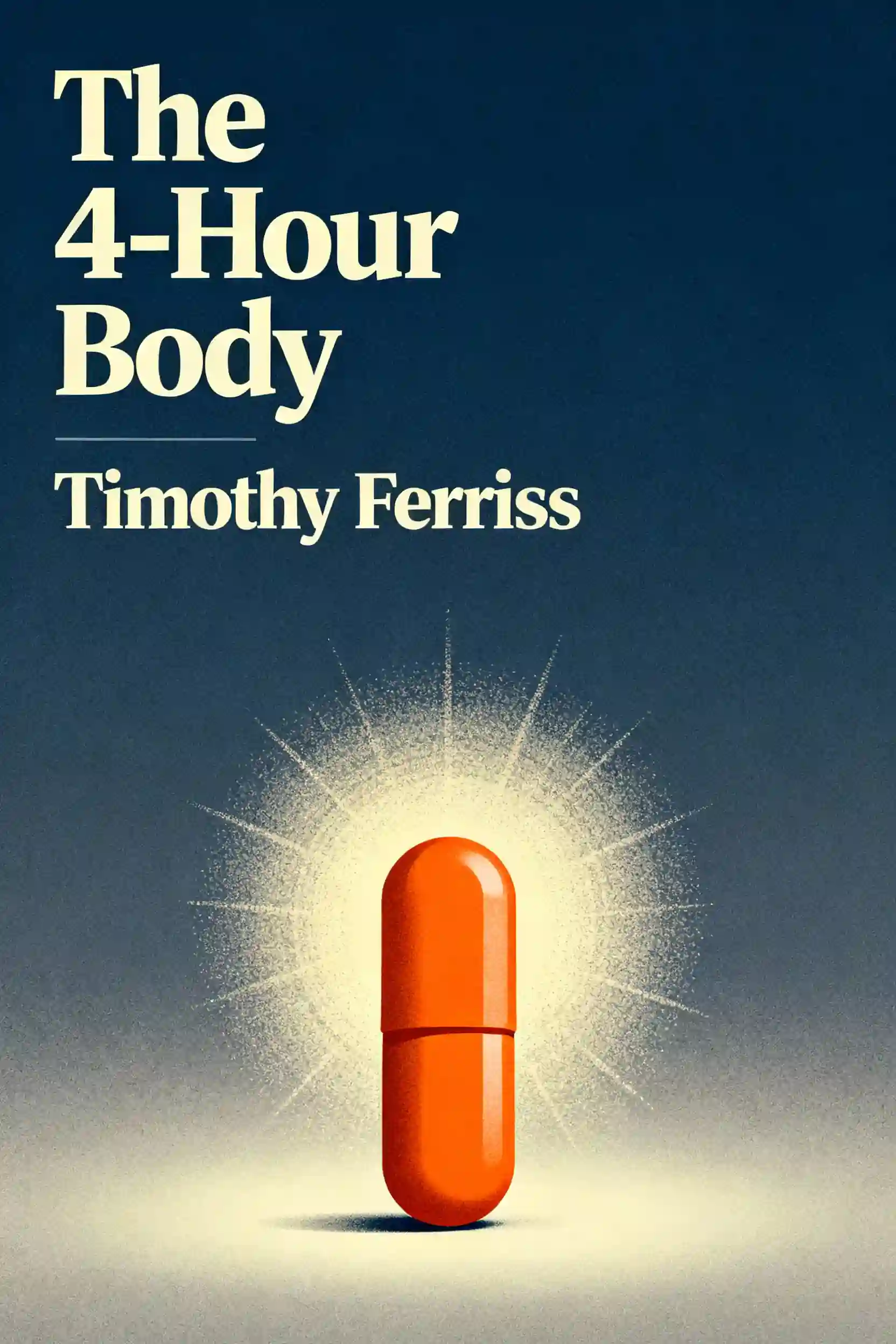
Best quote from The 4-Hour Body: Hacking Your Physical Potential
The 'Minimum Effective Dose' is the absolute tiniest change that produces the biggest results; once you’ve triggered the biological cascade for fat loss or muscle growth, anything extra is just wasting gas.

This audio lesson was created by a BeFreed community member
4 hour body

Frequently Asked Questions
The Slow-Carb Diet is built on five fundamental rules designed to manage insulin and maximize fat loss. First, avoid "white" carbohydrates like bread, rice, cereal, potatoes, and pasta. Second, eat the same few high-protein, high-fiber meals repeatedly to avoid decision fatigue. Third, do not drink calories, sticking primarily to water, coffee, and tea. Fourth, avoid fruit because fructose can pause the fat-loss process. Finally, take one "cheat day" per week to eat whatever you want, which helps prevent your metabolism from slowing down due to a prolonged caloric deficit.
The Minimum Effective Dose is the smallest volume of effort or input required to produce a desired biological outcome. In the context of exercise, the script explains that once a biological "cascade" for muscle growth or fat loss is triggered, additional effort is often wasted and can even hinder recovery. For example, the "Occam’s Protocol" for muscle gain suggests performing just one set to "true failure" using a slow cadence, rather than multiple sets, to trigger the necessary hormonal response for growth without overtaxing the body.
Cold exposure acts as a metabolic hack by activating "Brown Adipose Tissue" (BAT), a type of fat that burns calories to generate body heat. By using ice packs, cold showers, or ice baths, you force your body to work harder to maintain its core temperature, thereby increasing caloric burn. Additionally, cold exposure before bed can improve sleep quality because the body needs its core temperature to drop to initiate deep sleep and REM cycles.
The script suggests that the scale can be misleading because a person might lose fat while simultaneously gaining muscle, resulting in little change in total weight. Instead, the "Total Inches" method is recommended, which involves measuring the circumference of the arms, waist, hips, and legs to get a more accurate picture of body composition changes. Tracking variables like sleep cycles and food intake allows individuals to treat their bodies like a laboratory, making it easier to identify which specific "hacks" are actually yielding results.
Damage control refers to specific tactics used on a weekly cheat day to ensure that the massive influx of calories is directed toward muscle cells rather than being stored as fat. This is primarily achieved through "GLUT-4 recruitment," which involves performing 60 to 90 seconds of physical movement, such as air squats or wall presses, immediately before and after a large meal. These brief bursts of exercise open the "gates" to muscle cells, allowing them to absorb glucose more efficiently.
Discover more

Optimize Body, Sleep, Fitness & Nutrition
Optimize Body, Sleep, Fitness & Nutrition
This plan bridges the gap between biological science and daily habits for peak human performance. It is ideal for high achievers and health enthusiasts looking to systematically upgrade their sleep, nutrition, and physical resilience.

Body, Tech, Science & Self-Improvement focus
Body, Tech, Science & Self-Improvement focus
This plan bridges the gap between biological science and modern technology for those seeking a data-driven approach to health. It is ideal for high-performers and tech-enthusiasts who want to leverage neuroscience and biohacking to achieve peak physical and mental states.
Optimize Fitness, Habits & Self-Improvement
Optimize Fitness, Habits & Self-Improvement
This plan bridges the gap between scientific theory and practical lifestyle application for high-performers. It is ideal for individuals seeking to replace willpower with sustainable systems by integrating fitness, nutrition, and behavioral psychology.

Fit, Tech, Nutrition & Neuroscience
Fit, Tech, Nutrition & Neuroscience
This plan bridges the gap between biological science and modern technology to unlock peak human potential. It is ideal for high-achievers, athletes, and biohackers looking to integrate metabolism, neuroscience, and tech-driven optimization into a single, cohesive performance system.
Mind, Body & Habit Optimization
Mind, Body & Habit Optimization
This learning plan bridges the gap between neuroscience and daily performance for high achievers and professionals. It is designed for anyone seeking to master their biology and behavior through evidence-based systems rather than fleeting motivation.
Lose fat
Lose fat
This plan is designed for individuals tired of fad diets who want a science-based approach to body transformation. It combines nutritional mastery, strategic exercise, and behavioral psychology to help anyone achieve and maintain a leaner physique regardless of their starting point.
Lead a Healthy Lifestyle
Lead a Healthy Lifestyle
In an era of conflicting health advice, this plan provides a science-backed framework for total body optimization. It is ideal for busy professionals or health-conscious individuals looking to bridge the gap between basic fitness and long-term longevity mastery.
Develop my superhuman skills
Develop my superhuman skills
This plan is essential for high achievers and innovators looking to push the boundaries of human capability. It combines cutting-edge neuroscience with practical biohacking to help anyone transform their physical and mental performance into a competitive advantage.
From Columbia University alumni built in San Francisco
"Instead of endless scrolling, I just hit play on BeFreed. It saves me so much time."


"I never knew where to start with nonfiction—BeFreed’s book lists turned into podcasts gave me a clear path."


"Perfect balance between learning and entertainment. Finished ‘Thinking, Fast and Slow’ on my commute this week."
"Crazy how much I learned while walking the dog. BeFreed = small habits → big gains."
"Reading used to feel like a chore. Now it’s just part of my lifestyle."

"Feels effortless compared to reading. I’ve finished 6 books this month already."
"BeFreed turned my guilty doomscrolling into something that feels productive and inspiring."

"BeFreed turned my commute into learning time. 20-min podcasts are perfect for finishing books I never had time for."
"BeFreed replaced my podcast queue. Imagine Spotify for books — that’s it. 🙌"

"It is great for me to learn something from the book without reading it."
"The themed book list podcasts help me connect ideas across authors—like a guided audio journey."
"Makes me feel smarter every time before going to work"
From Columbia University alumni built in San Francisco
"Instead of endless scrolling, I just hit play on BeFreed. It saves me so much time."
"I never knew where to start with nonfiction—BeFreed’s book lists turned into podcasts gave me a clear path."
"Perfect balance between learning and entertainment. Finished ‘Thinking, Fast and Slow’ on my commute this week."
"Crazy how much I learned while walking the dog. BeFreed = small habits → big gains."
"Reading used to feel like a chore. Now it’s just part of my lifestyle."
"Feels effortless compared to reading. I’ve finished 6 books this month already."
"BeFreed turned my guilty doomscrolling into something that feels productive and inspiring."
"BeFreed turned my commute into learning time. 20-min podcasts are perfect for finishing books I never had time for."
"BeFreed replaced my podcast queue. Imagine Spotify for books — that’s it. 🙌"
"It is great for me to learn something from the book without reading it."
"The themed book list podcasts help me connect ideas across authors—like a guided audio journey."
"Makes me feel smarter every time before going to work"
"Instead of endless scrolling, I just hit play on BeFreed. It saves me so much time."
"I never knew where to start with nonfiction—BeFreed’s book lists turned into podcasts gave me a clear path."
"Perfect balance between learning and entertainment. Finished ‘Thinking, Fast and Slow’ on my commute this week."
"Crazy how much I learned while walking the dog. BeFreed = small habits → big gains."
"Reading used to feel like a chore. Now it’s just part of my lifestyle."
"Feels effortless compared to reading. I’ve finished 6 books this month already."
"BeFreed turned my guilty doomscrolling into something that feels productive and inspiring."
"BeFreed turned my commute into learning time. 20-min podcasts are perfect for finishing books I never had time for."
"BeFreed replaced my podcast queue. Imagine Spotify for books — that’s it. 🙌"
"It is great for me to learn something from the book without reading it."
"The themed book list podcasts help me connect ideas across authors—like a guided audio journey."
"Makes me feel smarter every time before going to work"
"Instead of endless scrolling, I just hit play on BeFreed. It saves me so much time."
"I never knew where to start with nonfiction—BeFreed’s book lists turned into podcasts gave me a clear path."
"Perfect balance between learning and entertainment. Finished ‘Thinking, Fast and Slow’ on my commute this week."
"Crazy how much I learned while walking the dog. BeFreed = small habits → big gains."
"Reading used to feel like a chore. Now it’s just part of my lifestyle."
"Feels effortless compared to reading. I’ve finished 6 books this month already."
"BeFreed turned my guilty doomscrolling into something that feels productive and inspiring."
"BeFreed turned my commute into learning time. 20-min podcasts are perfect for finishing books I never had time for."
"BeFreed replaced my podcast queue. Imagine Spotify for books — that’s it. 🙌"
"It is great for me to learn something from the book without reading it."
"The themed book list podcasts help me connect ideas across authors—like a guided audio journey."
"Makes me feel smarter every time before going to work"


