
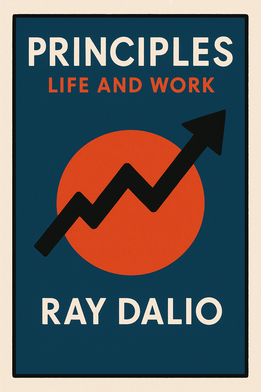
Ray Dalio's Principles for Life and Work
Stop hiding from mistakes and start using them as data. Learn how to turn pain into progress using a five-step loop for better decision-making.

Best quote from Ray Dalio's Principles for Life and Work
Pain plus Reflection equals Progress. It turns a bad day into a mechanical process for getting better by viewing life and work like a machine that we can actually re-engineer.

This audio lesson was created by a BeFreed community member
Principles life and work dalio summarizes and actions takeaway’s takeaways

Frequently Asked Questions
The core formula presented is Pain plus Reflection equals Progress. This approach suggests that instead of hiding from mistakes or feeling like a failure, individuals should treat painful errors as data points or "gems" embedded in a puzzle. By stepping back as a detached observer to reflect on why a mistake happened, you can identify the cause-and-effect relationships at play and re-engineer your personal "machine" to produce better outcomes in the future.
The process consists of five distinct steps that must be completed one at a time: setting clear goals, identifying problems that stand in the way of those goals, diagnosing those problems to find their root causes, designing a plan to get around the problems, and finally, executing the tasks with determination. A key insight of this loop is that if you are failing to reach a goal, you can use these steps as a diagnostic tool to identify exactly which part of your "machine" is broken.
Believability-weighting is a system used in an "idea meritocracy" where not all opinions are treated as equal. Instead, more weight is given to the opinions of "believable" people—those who have a proven track record of successfully accomplishing the task at hand and can clearly explain the reasoning behind their conclusions. This method moves away from traditional autocracy or simple democracy, aiming to raise the probability of making a correct decision by focusing on the most reliable expertise.
These are two physiological hurdles that prevent people from seeing reality clearly. The Ego Barrier is the brain's subliminal defense mechanism, where the amygdala treats criticism or the admission of a mistake as a physical attack, triggering a fight-or-flight response. The Blind Spot Barrier refers to the fact that everyone is wired differently; some people are naturally big-picture thinkers while others are detail-oriented. Failing to recognize these inherent limitations prevents people from seeking help from others who are strong where they are weak.
A practical starting point is to keep a "Pain plus Reflection" journal to document setbacks and the lessons learned from them. Additionally, individuals can identify their single biggest weakness and design a way to compensate for it, such as using a specific tool or partnering with someone who has a complementary skill set. In a team setting, implementing an "issue log" where mistakes are recorded without blame allows the entire group to diagnose root causes and update procedures to prevent repeat errors.
Discover more

Mastering Life, Mind, Wealth & Innovation
Mastering Life, Mind, Wealth & Innovation
This comprehensive roadmap is designed for high-achievers looking to bridge the gap between potential and peak performance. It integrates the essential pillars of personal mastery, cognitive agility, and financial strategy to help ambitious professionals build a life of impact and independence.

Stop Overthinking and Take Action
Stop Overthinking and Take Action
Overthinking traps millions in endless loops of analysis that prevent meaningful progress and cause unnecessary stress. This learning plan equips anyone struggling with decision paralysis or procrastination with practical tools to break free from mental gridlock and take consistent, purposeful action.
Live life without excuses
Live life without excuses
This plan is essential for high-performers and individuals feeling stuck in cycles of procrastination or external blame. It provides a structured path to reclaim agency and build the internal systems necessary for long-term resilience and leadership.

Learn life principles and expand perspective
Learn life principles and expand perspective
This plan is designed for individuals seeking a deeper sense of direction and moral clarity in an increasingly complex world. It is ideal for lifelong learners who want to move beyond surface-level knowledge to build a rigorous philosophical foundation for their personal and professional lives.
Build confidence, bravery, and decisiveness
Build confidence, bravery, and decisiveness
This plan is essential for professionals and individuals stalled by overthinking or a lack of self-belief. It provides a structured path to transition from passive hesitation to proactive, decisive leadership by addressing the root causes of fear.

Self-Improvement, Science & Life Mastery
Self-Improvement, Science & Life Mastery
This plan bridges the gap between psychological theory and practical life application for those seeking a data-driven approach to excellence. It is ideal for high achievers, lifelong learners, and professionals who want to optimize their cognitive output and master the art of deliberate practice.

Live by values, not by fear
Live by values, not by fear
This learning plan is essential for anyone who feels stuck in patterns of avoidance, people-pleasing, or making decisions based on anxiety rather than authenticity. It's particularly valuable for those experiencing transitions, feeling disconnected from their purpose, or seeking to build more meaningful relationships and a life aligned with what truly matters to them.
Become a better decision maker.
Become a better decision maker.
Decision-making is the most fundamental skill that affects every aspect of your professional and personal life, yet most people rely on intuition and unconscious patterns that often lead them astray. This learning plan is essential for professionals, leaders, entrepreneurs, and anyone who wants to make better choices consistently—whether navigating career moves, business strategy, investments, or everyday life decisions. By combining insights from psychology, behavioral economics, and strategic thinking, you'll develop a systematic approach to judgment that compounds in value throughout your life.
From Columbia University alumni built in San Francisco
"Instead of endless scrolling, I just hit play on BeFreed. It saves me so much time."


"I never knew where to start with nonfiction—BeFreed’s book lists turned into podcasts gave me a clear path."


"Perfect balance between learning and entertainment. Finished ‘Thinking, Fast and Slow’ on my commute this week."
"Crazy how much I learned while walking the dog. BeFreed = small habits → big gains."
"Reading used to feel like a chore. Now it’s just part of my lifestyle."

"Feels effortless compared to reading. I’ve finished 6 books this month already."
"BeFreed turned my guilty doomscrolling into something that feels productive and inspiring."

"BeFreed turned my commute into learning time. 20-min podcasts are perfect for finishing books I never had time for."
"BeFreed replaced my podcast queue. Imagine Spotify for books — that’s it. 🙌"

"It is great for me to learn something from the book without reading it."
"The themed book list podcasts help me connect ideas across authors—like a guided audio journey."
"Makes me feel smarter every time before going to work"
From Columbia University alumni built in San Francisco
"Instead of endless scrolling, I just hit play on BeFreed. It saves me so much time."
"I never knew where to start with nonfiction—BeFreed’s book lists turned into podcasts gave me a clear path."
"Perfect balance between learning and entertainment. Finished ‘Thinking, Fast and Slow’ on my commute this week."
"Crazy how much I learned while walking the dog. BeFreed = small habits → big gains."
"Reading used to feel like a chore. Now it’s just part of my lifestyle."
"Feels effortless compared to reading. I’ve finished 6 books this month already."
"BeFreed turned my guilty doomscrolling into something that feels productive and inspiring."
"BeFreed turned my commute into learning time. 20-min podcasts are perfect for finishing books I never had time for."
"BeFreed replaced my podcast queue. Imagine Spotify for books — that’s it. 🙌"
"It is great for me to learn something from the book without reading it."
"The themed book list podcasts help me connect ideas across authors—like a guided audio journey."
"Makes me feel smarter every time before going to work"
"Instead of endless scrolling, I just hit play on BeFreed. It saves me so much time."
"I never knew where to start with nonfiction—BeFreed’s book lists turned into podcasts gave me a clear path."
"Perfect balance between learning and entertainment. Finished ‘Thinking, Fast and Slow’ on my commute this week."
"Crazy how much I learned while walking the dog. BeFreed = small habits → big gains."
"Reading used to feel like a chore. Now it’s just part of my lifestyle."
"Feels effortless compared to reading. I’ve finished 6 books this month already."
"BeFreed turned my guilty doomscrolling into something that feels productive and inspiring."
"BeFreed turned my commute into learning time. 20-min podcasts are perfect for finishing books I never had time for."
"BeFreed replaced my podcast queue. Imagine Spotify for books — that’s it. 🙌"
"It is great for me to learn something from the book without reading it."
"The themed book list podcasts help me connect ideas across authors—like a guided audio journey."
"Makes me feel smarter every time before going to work"
"Instead of endless scrolling, I just hit play on BeFreed. It saves me so much time."
"I never knew where to start with nonfiction—BeFreed’s book lists turned into podcasts gave me a clear path."
"Perfect balance between learning and entertainment. Finished ‘Thinking, Fast and Slow’ on my commute this week."
"Crazy how much I learned while walking the dog. BeFreed = small habits → big gains."
"Reading used to feel like a chore. Now it’s just part of my lifestyle."
"Feels effortless compared to reading. I’ve finished 6 books this month already."
"BeFreed turned my guilty doomscrolling into something that feels productive and inspiring."
"BeFreed turned my commute into learning time. 20-min podcasts are perfect for finishing books I never had time for."
"BeFreed replaced my podcast queue. Imagine Spotify for books — that’s it. 🙌"
"It is great for me to learn something from the book without reading it."
"The themed book list podcasts help me connect ideas across authors—like a guided audio journey."
"Makes me feel smarter every time before going to work"


