
Quantum Mechanics: Decoding the Spooky Science of Reality
Demystify the strange world of quantum physics, from the double-slit experiment to entanglement. Learn how the ghostly behavior of subatomic particles powers your modern technology and challenges everything you know about reality.

Best quote from Quantum Mechanics: Decoding the Spooky Science of Reality
The universe is 'pixelated' at the smallest scale, and at that fundamental level, nature isn't a clock; it's a dice game where information doesn't even exist until a measurement is made.

This audio lesson was created by a BeFreed community member
I want learn more about quantum mechanics. Understand what it is as someone who is new in this domain.

Frequently Asked Questions
The double-slit experiment is considered the "heart of quantum mechanics" because it demonstrates that subatomic particles, like electrons, do not behave like solid "bullets" in a predictable way. When electrons are fired at two slits, they don't just form two piles behind the openings; instead, they create an interference pattern of stripes, which is a hallmark of wave behavior. This proves wave-particle duality, suggesting that particles travel as "waves of probability" or a ripple of "maybes" rather than following a single, deterministic path.
In the quantum world, the presence of an observer or a measurement device fundamentally changes the behavior of the system, a phenomenon known as the "Measurement Problem." If a detector is placed at the slits to see which path an electron takes, the wave-like interference pattern vanishes, and the electrons return to behaving like classical particles. This suggests that the act of measurement "collapses" the wave function, forcing a system of multiple possibilities into a single, definite reality.
Heisenberg’s Uncertainty Principle is a fundamental law of nature stating that it is impossible to know certain pairs of properties, such as a particle's position and its momentum, with perfect precision simultaneously. This is not a limitation of technology but a result of the "fuzziness" of reality. For example, to measure an electron's position, you must hit it with a photon, but that interaction inevitably changes the electron's speed. This principle effectively ended the idea of a "clockwork universe" where the future could be perfectly predicted if one knew the state of every atom.
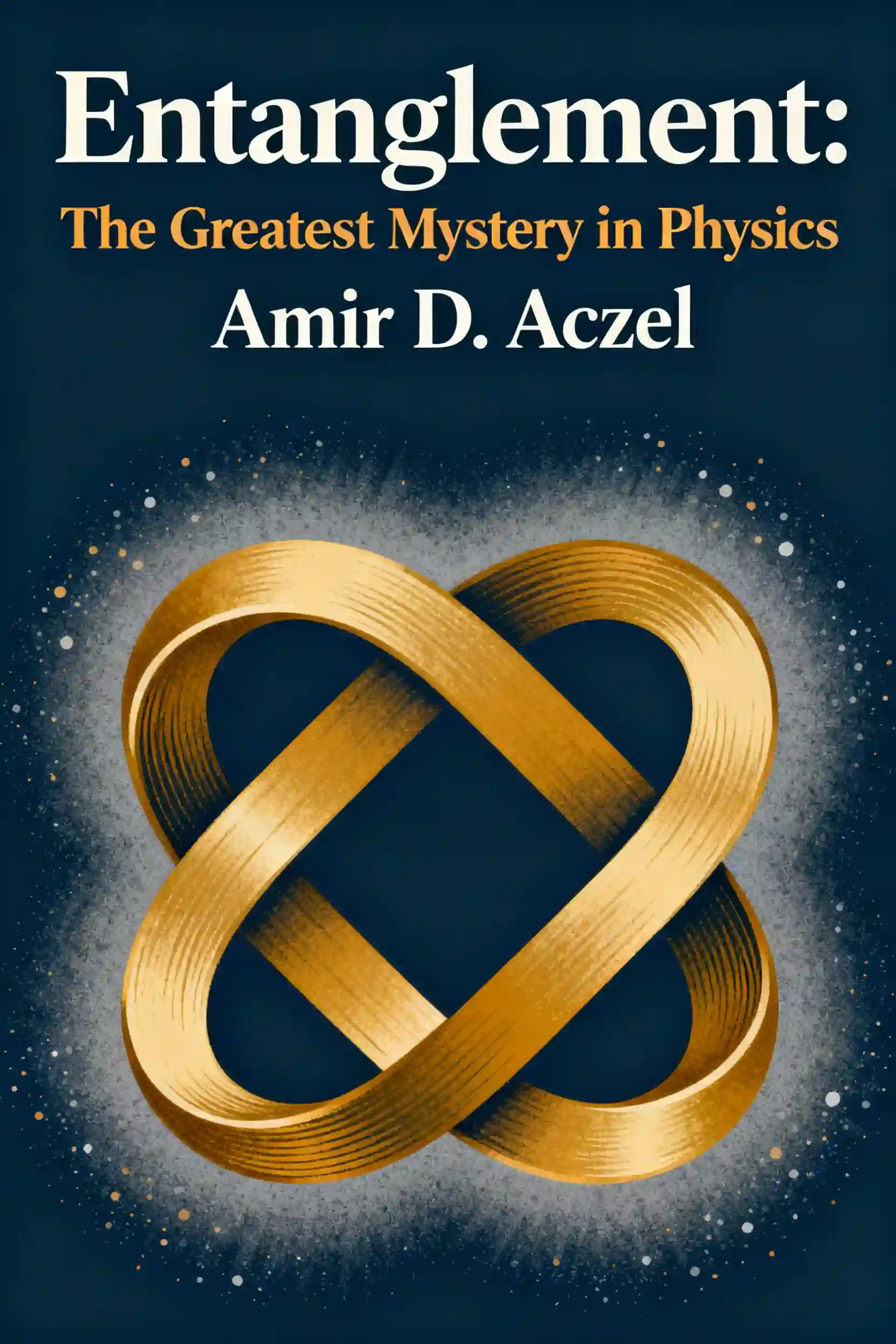
Entanglement occurs when two particles become linked so that they act as a single quantum system, regardless of the distance between them. If you measure one entangled particle, its partner "instantly" collapses into a corresponding state, even if it is on the other side of the galaxy. While this "spooky action at a distance" is real and has been proven by experiments, it cannot be used to send messages faster than light. Because the result of each measurement is random, there is no way to manipulate the particles to carry specific information instantaneously.
Quantum mechanics is the foundation for much of modern technology, including smartphones, lasers, and MRI machines. Transistors in computer chips rely on the wave nature of electrons and the phenomenon of quantum tunneling to function. Lasers work through "stimulated emission," where photons are forced to march in perfect lockstep, a behavior governed by quantum spin. Additionally, the precision of GPS depends on atomic clocks that measure the quantum vibrations of atoms to keep time to a billionth of a second.
Discover more

Understand quantum physics
Understand quantum physics
This plan demystifies the most counterintuitive branch of science for curious minds and aspiring physicists. It bridges the gap between basic concepts and advanced technological applications like quantum computing.

Study quantum entanglement without delaying
Study quantum entanglement without delaying
This plan is designed for curious minds and tech enthusiasts who want to grasp the most counterintuitive phenomenon in physics. It bridges the gap between abstract theory and cutting-edge applications, making it ideal for those seeking a deep yet practical understanding of quantum reality.

To know quantum mechanics
To know quantum mechanics
This learning plan is essential for anyone seeking to understand the fundamental laws governing our universe beyond classical intuition. It is ideal for science enthusiasts, students, or professionals looking to bridge the gap between basic physics and advanced quantum theory.
Quantum Physics & Esoteric Soul Dissertation
Quantum Physics & Esoteric Soul Dissertation
This curriculum bridges the gap between empirical science and spiritual philosophy, offering a rigorous exploration of how reality is constructed. It is ideal for researchers, philosophers, and seekers looking to integrate quantum physics with ancient esoteric traditions.

Physics & Math for Quantum Computing R&D
Physics & Math for Quantum Computing R&D
As quantum technology transitions from theory to industry, mastering the underlying physics and mathematics is essential for any serious researcher. This plan is designed for engineers and scientists looking to bridge the gap between classical computation and cutting-edge quantum R&D.

Deep Dive: Strange Realities & Consciousness
Deep Dive: Strange Realities & Consciousness
This learning plan bridges the gap between hard science and metaphysical inquiry, offering a comprehensive look at how we perceive existence. It is ideal for deep thinkers, science enthusiasts, and seekers looking to understand the profound connection between the human mind and the quantum universe.
Trippy physics and Buddhist stuff
Trippy physics and Buddhist stuff
This plan is designed for curious minds seeking to bridge the gap between hard science and spiritual philosophy. It is ideal for those interested in how quantum mechanics and neuroscience validate ancient Buddhist concepts of consciousness and reality.
Physics, Astronomy, Math
Physics, Astronomy, Math
This comprehensive guide bridges the gap between abstract mathematics and the physical reality of our universe. It is ideal for curious learners and students seeking to understand the fundamental laws governing everything from planetary motion to quantum behavior.
From Columbia University alumni built in San Francisco
"Instead of endless scrolling, I just hit play on BeFreed. It saves me so much time."


"I never knew where to start with nonfiction—BeFreed’s book lists turned into podcasts gave me a clear path."


"Perfect balance between learning and entertainment. Finished ‘Thinking, Fast and Slow’ on my commute this week."
"Crazy how much I learned while walking the dog. BeFreed = small habits → big gains."
"Reading used to feel like a chore. Now it’s just part of my lifestyle."

"Feels effortless compared to reading. I’ve finished 6 books this month already."
"BeFreed turned my guilty doomscrolling into something that feels productive and inspiring."

"BeFreed turned my commute into learning time. 20-min podcasts are perfect for finishing books I never had time for."
"BeFreed replaced my podcast queue. Imagine Spotify for books — that’s it. 🙌"

"It is great for me to learn something from the book without reading it."
"The themed book list podcasts help me connect ideas across authors—like a guided audio journey."
"Makes me feel smarter every time before going to work"
From Columbia University alumni built in San Francisco
"Instead of endless scrolling, I just hit play on BeFreed. It saves me so much time."
"I never knew where to start with nonfiction—BeFreed’s book lists turned into podcasts gave me a clear path."
"Perfect balance between learning and entertainment. Finished ‘Thinking, Fast and Slow’ on my commute this week."
"Crazy how much I learned while walking the dog. BeFreed = small habits → big gains."
"Reading used to feel like a chore. Now it’s just part of my lifestyle."
"Feels effortless compared to reading. I’ve finished 6 books this month already."
"BeFreed turned my guilty doomscrolling into something that feels productive and inspiring."
"BeFreed turned my commute into learning time. 20-min podcasts are perfect for finishing books I never had time for."
"BeFreed replaced my podcast queue. Imagine Spotify for books — that’s it. 🙌"
"It is great for me to learn something from the book without reading it."
"The themed book list podcasts help me connect ideas across authors—like a guided audio journey."
"Makes me feel smarter every time before going to work"
"Instead of endless scrolling, I just hit play on BeFreed. It saves me so much time."
"I never knew where to start with nonfiction—BeFreed’s book lists turned into podcasts gave me a clear path."
"Perfect balance between learning and entertainment. Finished ‘Thinking, Fast and Slow’ on my commute this week."
"Crazy how much I learned while walking the dog. BeFreed = small habits → big gains."
"Reading used to feel like a chore. Now it’s just part of my lifestyle."
"Feels effortless compared to reading. I’ve finished 6 books this month already."
"BeFreed turned my guilty doomscrolling into something that feels productive and inspiring."
"BeFreed turned my commute into learning time. 20-min podcasts are perfect for finishing books I never had time for."
"BeFreed replaced my podcast queue. Imagine Spotify for books — that’s it. 🙌"
"It is great for me to learn something from the book without reading it."
"The themed book list podcasts help me connect ideas across authors—like a guided audio journey."
"Makes me feel smarter every time before going to work"
"Instead of endless scrolling, I just hit play on BeFreed. It saves me so much time."
"I never knew where to start with nonfiction—BeFreed’s book lists turned into podcasts gave me a clear path."
"Perfect balance between learning and entertainment. Finished ‘Thinking, Fast and Slow’ on my commute this week."
"Crazy how much I learned while walking the dog. BeFreed = small habits → big gains."
"Reading used to feel like a chore. Now it’s just part of my lifestyle."
"Feels effortless compared to reading. I’ve finished 6 books this month already."
"BeFreed turned my guilty doomscrolling into something that feels productive and inspiring."
"BeFreed turned my commute into learning time. 20-min podcasts are perfect for finishing books I never had time for."
"BeFreed replaced my podcast queue. Imagine Spotify for books — that’s it. 🙌"
"It is great for me to learn something from the book without reading it."
"The themed book list podcasts help me connect ideas across authors—like a guided audio journey."
"Makes me feel smarter every time before going to work"


