
Problem interviews and the art of customer discovery
Skipping discovery is the fastest way to build a product nobody wants. Learn how to run effective problem interviews and validate your market gap.

Best quote from Problem interviews and the art of customer discovery
Success is how fast you can invalidate bad ideas. Validation isn't about being right; it’s about not being wrong for too long.

This audio lesson was created by a BeFreed community member
Problem interviews, solution interviews, und andere interviewformate im Startup creation prozess

Frequently Asked Questions
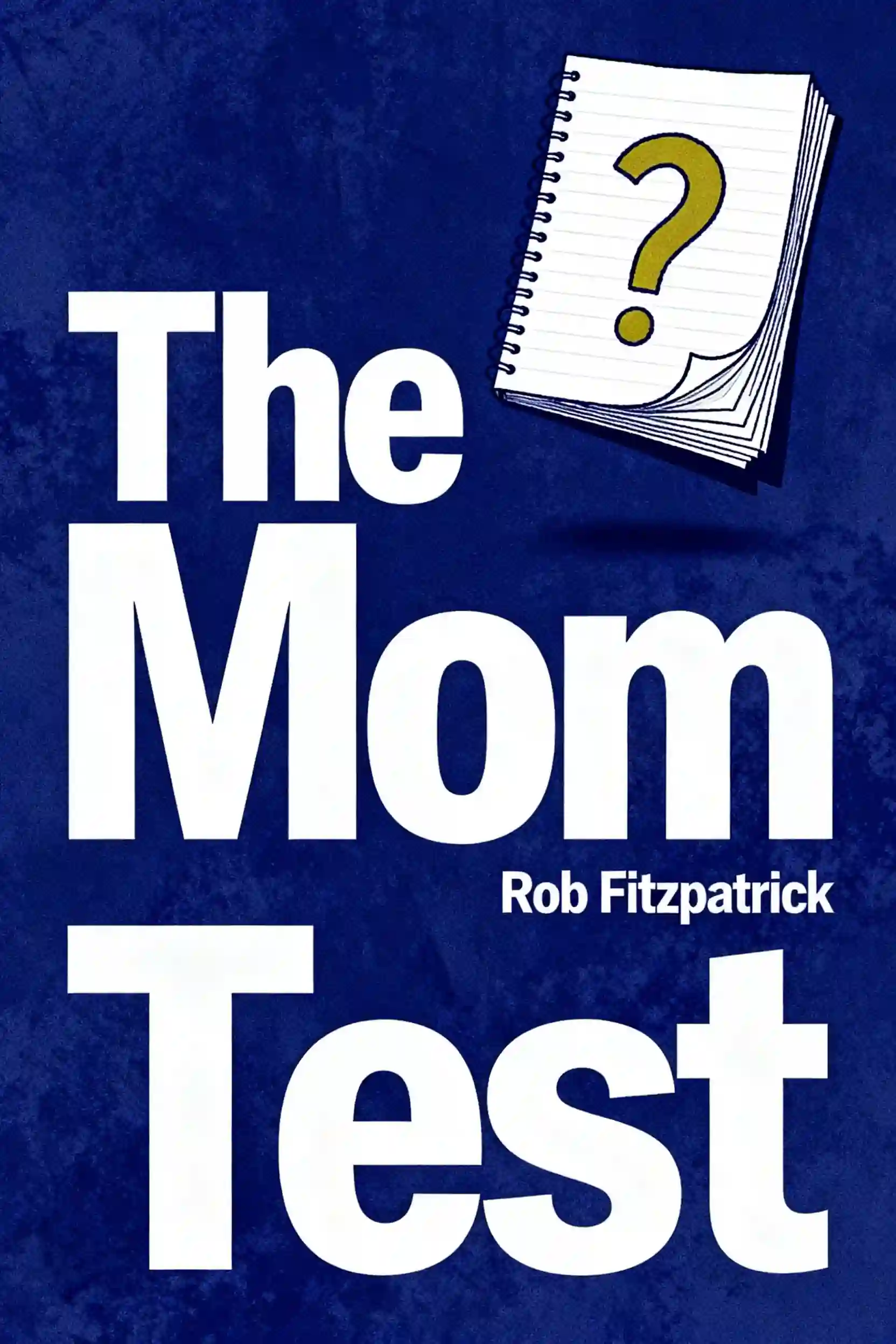
The Mom Test is a framework designed to help founders get honest data by asking about a person’s actual life and past behaviors rather than pitching a future idea. It is named after the concept that your mother loves you and will lie to protect your feelings if you ask for her opinion on an invention. By focusing on specific past actions—such as how someone recently solved a problem or what they spent money on—you prevent "contaminating" the data with polite, optimistic lies or "false positives."
Laddering is a systematic way of asking "why" to move from surface-level functional complaints to deep emotional and social motivations. By digging into the consequences of a problem—such as how a slow process affects a manager’s reputation or leads to lost accounts—you can determine if a product is a "vitamin" (nice to have) or a "painkiller" (essential). This helps identify "hair-on-fire" problems, which are high-magnitude issues that customers are desperate to solve regardless of the cost or aesthetic of the solution.
Solution Verification is an experimental phase where you validate a potential solution with the minimum amount of work possible. Unlike a sales pitch, which tries to convince a user to buy, verification uses "Smoke Tests" or "Concierge MVPs" to see if users actually want the outcome. Examples include manually performing a service before automating it or using a landing page with a "pricing" button to measure real "Willingness to Pay." The goal is to collect "Truth Data," such as email sign-ups or Letters of Intent, rather than just verbal agreements.
Kill Criteria are hard thresholds or benchmarks set before an experiment begins to protect founders from their own optimism and confirmation bias. Because entrepreneurs often suffer from the "Sunk Cost Fallacy," they may continue building a product even when data is negative. By deciding in advance that a project will be pivoted or killed if it doesn't meet a specific metric—like a 15% conversion rate or five pre-orders—founders can ensure they are making data-driven decisions rather than emotional ones.
In the modern landscape, startups can use a hybrid approach by employing AI-moderated interviews to gain "Quantitative Breadth" across hundreds of participants while maintaining 10 to 15 deep, personal "Problem Interviews." While AI is a powerful "Learning Accelerator" that can identify patterns and summaries, human conversations are still required to capture empathy, nuance, and the emotional "why" behind a customer's frustration. This balance allows a company to stay close to the customer's pain while moving at a high "Validation Velocity."
Discover more

read mom test
read mom test
The Mom Test methodology helps entrepreneurs and product builders avoid the common pitfall of receiving false validation for their ideas. This learning plan teaches practical skills for conducting effective customer interviews that reveal genuine needs and problems, essential for anyone developing products or services who wants to minimize risk and maximize market fit.

Four Steps to the Epiphany - Steve Blank
Four Steps to the Epiphany - Steve Blank
This learning plan is essential for entrepreneurs and product managers who want to eliminate the guesswork from startup growth. It provides a rigorous, evidence-based roadmap for transforming a vision into a scalable business by focusing on customer validation over intuition.

Identify Pain Points to Sell Better
Identify Pain Points to Sell Better
This learning plan is essential for sales professionals and entrepreneurs who want to move beyond surface-level pitching and drive deeper engagement. It combines psychological insights with practical frameworks like Jobs-to-Be-Done to transform how you identify and solve customer problems.

Build rapport for merchant needs discovery
Build rapport for merchant needs discovery
This learning plan is essential for sales professionals and account managers looking to move beyond transactional interactions. It provides the psychological and strategic framework needed to foster genuine merchant partnerships and master the art of consultative discovery.
Learn Market and UX Research
Learn Market and UX Research
This learning plan bridges the gap between raw data and human behavior, providing a comprehensive toolkit for evidence-based decision making. It is ideal for aspiring researchers, product managers, and designers who want to create products that resonate deeply with users and drive business success.
Learn about product design
Learn about product design
Product design is the cornerstone of creating solutions that truly resonate with users while achieving business objectives. This learning plan equips professionals with the essential skills to create intuitive, innovative products through user-centered methodologies and strategic thinking.
Prepare for a job interview
Prepare for a job interview
In today's competitive market, technical skills alone aren't enough to land a dream role. This plan is essential for professionals at any level who want to transform their interview performance from a nerve-wracking hurdle into a strategic career advantage.

I want to learn how to build a viral product
I want to learn how to build a viral product
This learning plan is essential for entrepreneurs and product managers who want to move beyond luck and use engineering principles to drive growth. It bridges the gap between psychological science and practical product development to help builders create self-sustaining viral engines.
From Columbia University alumni built in San Francisco
"Instead of endless scrolling, I just hit play on BeFreed. It saves me so much time."


"I never knew where to start with nonfiction—BeFreed’s book lists turned into podcasts gave me a clear path."


"Perfect balance between learning and entertainment. Finished ‘Thinking, Fast and Slow’ on my commute this week."
"Crazy how much I learned while walking the dog. BeFreed = small habits → big gains."
"Reading used to feel like a chore. Now it’s just part of my lifestyle."

"Feels effortless compared to reading. I’ve finished 6 books this month already."
"BeFreed turned my guilty doomscrolling into something that feels productive and inspiring."

"BeFreed turned my commute into learning time. 20-min podcasts are perfect for finishing books I never had time for."
"BeFreed replaced my podcast queue. Imagine Spotify for books — that’s it. 🙌"

"It is great for me to learn something from the book without reading it."
"The themed book list podcasts help me connect ideas across authors—like a guided audio journey."
"Makes me feel smarter every time before going to work"
From Columbia University alumni built in San Francisco
"Instead of endless scrolling, I just hit play on BeFreed. It saves me so much time."
"I never knew where to start with nonfiction—BeFreed’s book lists turned into podcasts gave me a clear path."
"Perfect balance between learning and entertainment. Finished ‘Thinking, Fast and Slow’ on my commute this week."
"Crazy how much I learned while walking the dog. BeFreed = small habits → big gains."
"Reading used to feel like a chore. Now it’s just part of my lifestyle."
"Feels effortless compared to reading. I’ve finished 6 books this month already."
"BeFreed turned my guilty doomscrolling into something that feels productive and inspiring."
"BeFreed turned my commute into learning time. 20-min podcasts are perfect for finishing books I never had time for."
"BeFreed replaced my podcast queue. Imagine Spotify for books — that’s it. 🙌"
"It is great for me to learn something from the book without reading it."
"The themed book list podcasts help me connect ideas across authors—like a guided audio journey."
"Makes me feel smarter every time before going to work"
"Instead of endless scrolling, I just hit play on BeFreed. It saves me so much time."
"I never knew where to start with nonfiction—BeFreed’s book lists turned into podcasts gave me a clear path."
"Perfect balance between learning and entertainment. Finished ‘Thinking, Fast and Slow’ on my commute this week."
"Crazy how much I learned while walking the dog. BeFreed = small habits → big gains."
"Reading used to feel like a chore. Now it’s just part of my lifestyle."
"Feels effortless compared to reading. I’ve finished 6 books this month already."
"BeFreed turned my guilty doomscrolling into something that feels productive and inspiring."
"BeFreed turned my commute into learning time. 20-min podcasts are perfect for finishing books I never had time for."
"BeFreed replaced my podcast queue. Imagine Spotify for books — that’s it. 🙌"
"It is great for me to learn something from the book without reading it."
"The themed book list podcasts help me connect ideas across authors—like a guided audio journey."
"Makes me feel smarter every time before going to work"
"Instead of endless scrolling, I just hit play on BeFreed. It saves me so much time."
"I never knew where to start with nonfiction—BeFreed’s book lists turned into podcasts gave me a clear path."
"Perfect balance between learning and entertainment. Finished ‘Thinking, Fast and Slow’ on my commute this week."
"Crazy how much I learned while walking the dog. BeFreed = small habits → big gains."
"Reading used to feel like a chore. Now it’s just part of my lifestyle."
"Feels effortless compared to reading. I’ve finished 6 books this month already."
"BeFreed turned my guilty doomscrolling into something that feels productive and inspiring."
"BeFreed turned my commute into learning time. 20-min podcasts are perfect for finishing books I never had time for."
"BeFreed replaced my podcast queue. Imagine Spotify for books — that’s it. 🙌"
"It is great for me to learn something from the book without reading it."
"The themed book list podcasts help me connect ideas across authors—like a guided audio journey."
"Makes me feel smarter every time before going to work"


