
Power Laws and why hard work isn't enough
Hard work alone doesn't guarantee success. Learn how managing perceptions and awareness can help you stop being a pawn and start gaining influence.

Best quote from Power Laws and why hard work isn't enough
Power is a social and psychological game, and ignoring the rules actually makes you a pawn in someone else’s game. It’s about strategic awareness rather than naive idealism.

This audio lesson was created by a BeFreed community member
Can you summaries the 21 law of power


Frequently Asked Questions
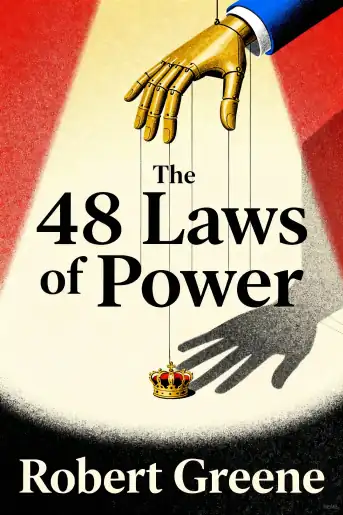
The script argues that power is primarily a social and psychological game governed by perception rather than just raw talent. According to Robert Greene’s research, simply doing great work is often not enough because if no one notices that work, you remain powerless. Law 6 suggests "courting attention at all costs" because being ignored makes you a pawn in someone else's game, whereas visibility allows you to control the narrative of your own effectiveness.
Strategic opacity is the practice of not revealing the full scope of your plans or capabilities to others. Unlike blatant lying, it is about maintaining a "smoke screen" of vagueness or silence to prevent others from predicting your moves or finding your weaknesses. By saying less than necessary, you create a vacuum that others fill with their own nervous chatter, often revealing their own secrets while you maintain psychological leverage.
To build an "architecture of dependency," a person must move beyond being merely good at their job to holding unique value that cannot be easily replaced. This involves identifying a "thumbscrew" or a specific organizational need that only you can fill, such as owning a key client relationship or understanding the unwritten rules of executive decision-making. The goal is to ensure that others feel they cannot function or succeed without your specific contribution.
Boldness creates its own authority and can actually hide a person's underlying deficiencies. When you act with total nerve and confidence, people are less likely to question your legitimacy or look for "rats" in your plan. Timidity, conversely, invites pushback and makes your execution look weak. By entering action boldly, you put others on the defensive and project a "royal" aura that commands respect.
The Mirror Effect involves mimicking the behavior, values, and emotions of the person you are dealing with. This strategy works because people are naturally drawn to those who reflect their own image back at them, leading them to feel a deep, albeit manufactured, connection. While they are distracted by this sense of rapport, their guard drops, allowing you to influence them or discover their intentions without meeting resistance.
Discover more

Laws of power
Laws of power
This plan bridges the gap between historical statecraft and modern psychological influence, offering a blueprint for navigating competitive environments. It is essential for aspiring leaders and professionals who want to master the art of ethical persuasion and strategic decision-making.
Master Discipline, Autonomy & Power Laws
Master Discipline, Autonomy & Power Laws
This plan is designed for high-achievers and aspiring leaders who feel hindered by external pressures or inefficient habits. It provides a blueprint for mastering internal control and navigating social hierarchies to maximize personal impact.

Financial Independence & 48 Laws of Power
Financial Independence & 48 Laws of Power
This plan bridges the gap between wealth accumulation and the strategic influence required to protect and grow it. It is ideal for ambitious professionals and entrepreneurs who want to master both the mechanics of money and the psychology of power.
Power and winning
Power and winning
This plan is designed for ambitious professionals and leaders who need to navigate complex competitive landscapes. It provides the psychological tools and strategic framework necessary to command authority and achieve consistent victory in any field.

Surpass All: Peak Power & Influence Master
Surpass All: Peak Power & Influence Master
In a competitive landscape, technical skills are secondary to the ability to influence and lead with authority. This plan is designed for ambitious professionals and aspiring leaders who want to master the psychological and strategic frameworks of power to achieve extraordinary results.
Build Influence Without Formal Authority
Build Influence Without Formal Authority
In modern flat organizations, the ability to drive results without a formal title is a critical career differentiator. This plan is designed for emerging leaders and individual contributors who need to mobilize teams, win stakeholder support, and lead through relational rather than positional power.

Work hard, communicate & learn biz/philosophy
Work hard, communicate & learn biz/philosophy
In an era of constant distraction, the ability to combine rigorous work ethic with strategic business acumen and philosophical grounding is a rare competitive advantage. This plan is designed for aspiring leaders and entrepreneurs who want to achieve peak performance without sacrificing their values or mental clarity.
Motivation
Motivation
In an era of constant distraction, relying on raw willpower is a losing strategy for long-term success. This plan is essential for professionals and students who want to transition from erratic bursts of energy to a sustainable, system-based approach to achieving their most ambitious goals.
From Columbia University alumni built in San Francisco
"Instead of endless scrolling, I just hit play on BeFreed. It saves me so much time."


"I never knew where to start with nonfiction—BeFreed’s book lists turned into podcasts gave me a clear path."


"Perfect balance between learning and entertainment. Finished ‘Thinking, Fast and Slow’ on my commute this week."
"Crazy how much I learned while walking the dog. BeFreed = small habits → big gains."
"Reading used to feel like a chore. Now it’s just part of my lifestyle."

"Feels effortless compared to reading. I’ve finished 6 books this month already."
"BeFreed turned my guilty doomscrolling into something that feels productive and inspiring."

"BeFreed turned my commute into learning time. 20-min podcasts are perfect for finishing books I never had time for."
"BeFreed replaced my podcast queue. Imagine Spotify for books — that’s it. 🙌"

"It is great for me to learn something from the book without reading it."
"The themed book list podcasts help me connect ideas across authors—like a guided audio journey."
"Makes me feel smarter every time before going to work"
From Columbia University alumni built in San Francisco
"Instead of endless scrolling, I just hit play on BeFreed. It saves me so much time."
"I never knew where to start with nonfiction—BeFreed’s book lists turned into podcasts gave me a clear path."
"Perfect balance between learning and entertainment. Finished ‘Thinking, Fast and Slow’ on my commute this week."
"Crazy how much I learned while walking the dog. BeFreed = small habits → big gains."
"Reading used to feel like a chore. Now it’s just part of my lifestyle."
"Feels effortless compared to reading. I’ve finished 6 books this month already."
"BeFreed turned my guilty doomscrolling into something that feels productive and inspiring."
"BeFreed turned my commute into learning time. 20-min podcasts are perfect for finishing books I never had time for."
"BeFreed replaced my podcast queue. Imagine Spotify for books — that’s it. 🙌"
"It is great for me to learn something from the book without reading it."
"The themed book list podcasts help me connect ideas across authors—like a guided audio journey."
"Makes me feel smarter every time before going to work"
"Instead of endless scrolling, I just hit play on BeFreed. It saves me so much time."
"I never knew where to start with nonfiction—BeFreed’s book lists turned into podcasts gave me a clear path."
"Perfect balance between learning and entertainment. Finished ‘Thinking, Fast and Slow’ on my commute this week."
"Crazy how much I learned while walking the dog. BeFreed = small habits → big gains."
"Reading used to feel like a chore. Now it’s just part of my lifestyle."
"Feels effortless compared to reading. I’ve finished 6 books this month already."
"BeFreed turned my guilty doomscrolling into something that feels productive and inspiring."
"BeFreed turned my commute into learning time. 20-min podcasts are perfect for finishing books I never had time for."
"BeFreed replaced my podcast queue. Imagine Spotify for books — that’s it. 🙌"
"It is great for me to learn something from the book without reading it."
"The themed book list podcasts help me connect ideas across authors—like a guided audio journey."
"Makes me feel smarter every time before going to work"
"Instead of endless scrolling, I just hit play on BeFreed. It saves me so much time."
"I never knew where to start with nonfiction—BeFreed’s book lists turned into podcasts gave me a clear path."
"Perfect balance between learning and entertainment. Finished ‘Thinking, Fast and Slow’ on my commute this week."
"Crazy how much I learned while walking the dog. BeFreed = small habits → big gains."
"Reading used to feel like a chore. Now it’s just part of my lifestyle."
"Feels effortless compared to reading. I’ve finished 6 books this month already."
"BeFreed turned my guilty doomscrolling into something that feels productive and inspiring."
"BeFreed turned my commute into learning time. 20-min podcasts are perfect for finishing books I never had time for."
"BeFreed replaced my podcast queue. Imagine Spotify for books — that’s it. 🙌"
"It is great for me to learn something from the book without reading it."
"The themed book list podcasts help me connect ideas across authors—like a guided audio journey."
"Makes me feel smarter every time before going to work"


