
Understanding Doughnut Economics: Key Concepts by Kate Raworth
Explore the core principles of Doughnut Economics by Kate Raworth. Learn how to balance the social foundation and ecological ceiling for a sustainable future.

Best quote from Understanding Doughnut Economics: Key Concepts by Kate Raworth
Instead of a line that needs to grow regardless of whether we thrive, we need an economy that makes us thrive regardless of whether it grows.

This audio lesson was created by a BeFreed community member
I to understand the concepts in the book doughnut economics

Frequently Asked Questions
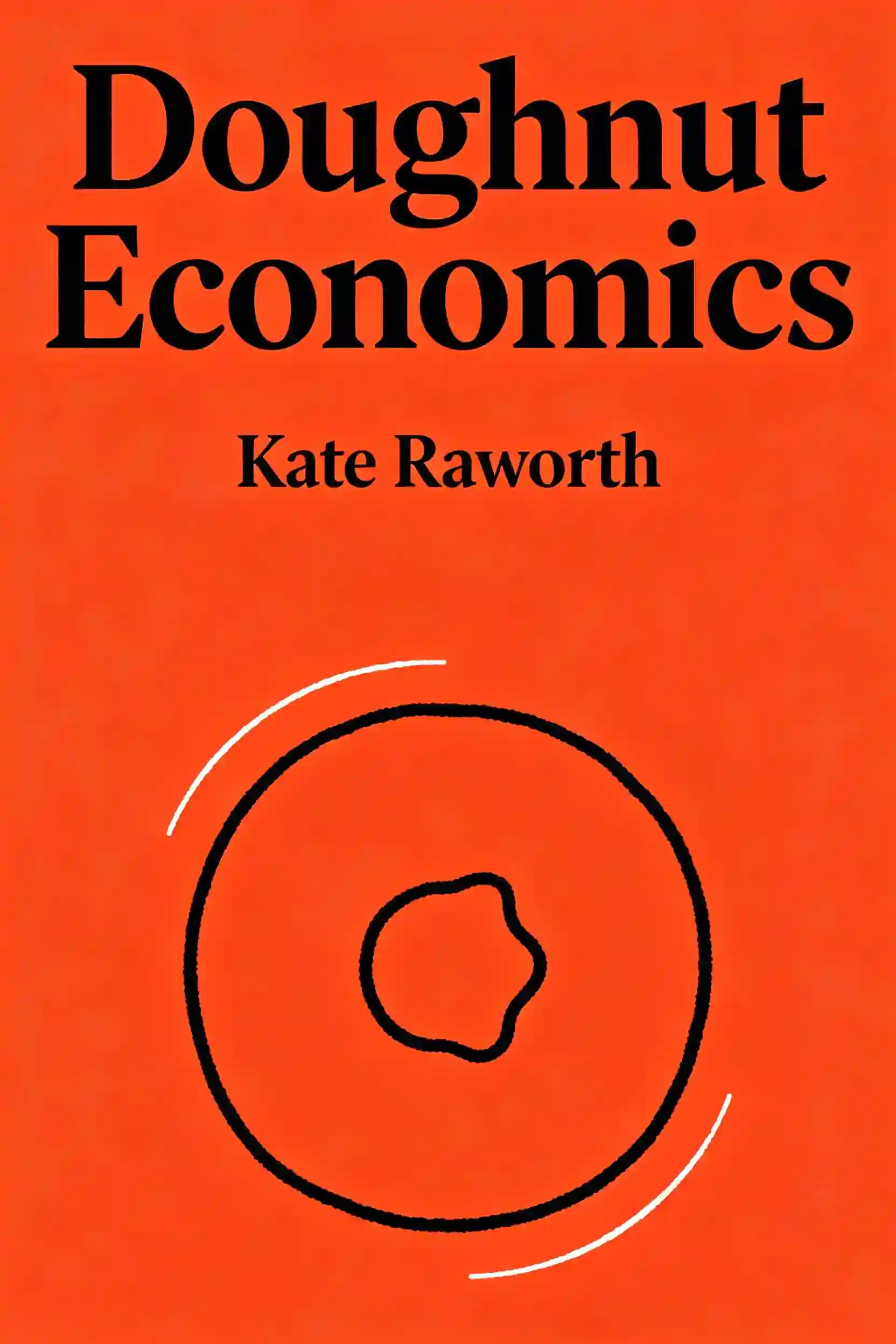
Doughnut Economics, a framework developed by Kate Raworth, proposes a shift from endless GDP growth to a balanced economic model. The 'doughnut' shape represents a safe and just space for humanity, located between a social foundation of essential human rights and an ecological ceiling of planetary boundaries. This theory encourages us to design economies that are distributive and regenerative by default, ensuring no one falls short on life's essentials while we avoid overshooting Earth's life-support systems.
Kate Raworth is a renegade economist and the author of 'Doughnut Economics: Seven Ways to Think Like a 21st-Century Economist.' Her work is significant because it challenges traditional 20th-century economic theories that prioritize linear growth over environmental and social health. By introducing regenerative design and sustainable economics into the mainstream, Raworth provides a practical compass for policy makers and activists to address modern crises like climate change and extreme inequality through a holistic lens.
The social foundation and ecological ceiling are the two boundaries that define the 'doughnut.' The social foundation consists of twelve basic needs, such as food, water, and housing, derived from the UN Sustainable Development Goals. The ecological ceiling represents the nine planetary boundaries, including climate change and biodiversity loss, that we must not cross to protect the environment. Staying within these two boundaries allows for a sustainable economy that supports both human well-being and the health of the planet.
Discover more

Growth, Habits, Finance & Economic Freedom
Growth, Habits, Finance & Economic Freedom
This comprehensive guide is designed for individuals seeking to bridge the gap between psychological growth and financial success. It provides a roadmap for anyone wanting to transform their daily routines and financial habits into a system for long-term wealth and freedom.

Growth, Business, Economics & Investing
Growth, Business, Economics & Investing
This comprehensive track bridges the gap between entrepreneurial execution and long-term financial mastery. It is designed for aspiring founders and professionals who want to build scalable companies while simultaneously growing personal wealth through sound economic logic.

Creativity, Econ, Growth & Habits
Creativity, Econ, Growth & Habits
This learning plan bridges the gap between creative intuition and rigorous economic strategy. It is designed for entrepreneurs and professionals who want to master the behavioral psychology and operational systems required for sustainable growth.
Growth, Finance, Tech & Human Behavior
Growth, Finance, Tech & Human Behavior
This multidisciplinary roadmap is designed for entrepreneurs and leaders who want to master the intersection of business logic and human psychology. It provides the essential toolkit for navigating modern markets where financial literacy and technological agility are no longer optional.

Books on production-consumption disconnect
Books on production-consumption disconnect
This learning plan reveals how our separation from production processes drives mindless overconsumption and environmental harm. It's ideal for conscious consumers, sustainability advocates, and anyone seeking to develop more intentional relationships with material goods.
The growth beyond limit
The growth beyond limit
This learning plan is designed for high-achievers and visionaries who feel plateaued by conventional growth strategies. It provides a roadmap for shifting from linear progress to exponential expansion by integrating mindset shifts with systems thinking.
Explore Science, Culture, Wealth & Growth
Explore Science, Culture, Wealth & Growth
This plan bridges the gap between historical evolution, scientific logic, and modern economic theory. It is ideal for lifelong learners and professionals seeking to understand the deep-seated forces that drive human progress and financial systems.

Maximize downtime for growth
Maximize downtime for growth
This learning plan is designed for ambitious professionals, entrepreneurs, and lifelong learners who want to maximize every moment without burning out. It addresses the critical challenge of turning rest periods and free time into growth opportunities while maintaining sustainable energy levels. Perfect for anyone feeling stuck in reactive patterns who wants to intentionally design their downtime for continuous improvement and meaningful progress.
From Columbia University alumni built in San Francisco
"Instead of endless scrolling, I just hit play on BeFreed. It saves me so much time."


"I never knew where to start with nonfiction—BeFreed’s book lists turned into podcasts gave me a clear path."


"Perfect balance between learning and entertainment. Finished ‘Thinking, Fast and Slow’ on my commute this week."
"Crazy how much I learned while walking the dog. BeFreed = small habits → big gains."
"Reading used to feel like a chore. Now it’s just part of my lifestyle."

"Feels effortless compared to reading. I’ve finished 6 books this month already."
"BeFreed turned my guilty doomscrolling into something that feels productive and inspiring."

"BeFreed turned my commute into learning time. 20-min podcasts are perfect for finishing books I never had time for."
"BeFreed replaced my podcast queue. Imagine Spotify for books — that’s it. 🙌"

"It is great for me to learn something from the book without reading it."
"The themed book list podcasts help me connect ideas across authors—like a guided audio journey."
"Makes me feel smarter every time before going to work"
From Columbia University alumni built in San Francisco
"Instead of endless scrolling, I just hit play on BeFreed. It saves me so much time."
"I never knew where to start with nonfiction—BeFreed’s book lists turned into podcasts gave me a clear path."
"Perfect balance between learning and entertainment. Finished ‘Thinking, Fast and Slow’ on my commute this week."
"Crazy how much I learned while walking the dog. BeFreed = small habits → big gains."
"Reading used to feel like a chore. Now it’s just part of my lifestyle."
"Feels effortless compared to reading. I’ve finished 6 books this month already."
"BeFreed turned my guilty doomscrolling into something that feels productive and inspiring."
"BeFreed turned my commute into learning time. 20-min podcasts are perfect for finishing books I never had time for."
"BeFreed replaced my podcast queue. Imagine Spotify for books — that’s it. 🙌"
"It is great for me to learn something from the book without reading it."
"The themed book list podcasts help me connect ideas across authors—like a guided audio journey."
"Makes me feel smarter every time before going to work"
"Instead of endless scrolling, I just hit play on BeFreed. It saves me so much time."
"I never knew where to start with nonfiction—BeFreed’s book lists turned into podcasts gave me a clear path."
"Perfect balance between learning and entertainment. Finished ‘Thinking, Fast and Slow’ on my commute this week."
"Crazy how much I learned while walking the dog. BeFreed = small habits → big gains."
"Reading used to feel like a chore. Now it’s just part of my lifestyle."
"Feels effortless compared to reading. I’ve finished 6 books this month already."
"BeFreed turned my guilty doomscrolling into something that feels productive and inspiring."
"BeFreed turned my commute into learning time. 20-min podcasts are perfect for finishing books I never had time for."
"BeFreed replaced my podcast queue. Imagine Spotify for books — that’s it. 🙌"
"It is great for me to learn something from the book without reading it."
"The themed book list podcasts help me connect ideas across authors—like a guided audio journey."
"Makes me feel smarter every time before going to work"
"Instead of endless scrolling, I just hit play on BeFreed. It saves me so much time."
"I never knew where to start with nonfiction—BeFreed’s book lists turned into podcasts gave me a clear path."
"Perfect balance between learning and entertainment. Finished ‘Thinking, Fast and Slow’ on my commute this week."
"Crazy how much I learned while walking the dog. BeFreed = small habits → big gains."
"Reading used to feel like a chore. Now it’s just part of my lifestyle."
"Feels effortless compared to reading. I’ve finished 6 books this month already."
"BeFreed turned my guilty doomscrolling into something that feels productive and inspiring."
"BeFreed turned my commute into learning time. 20-min podcasts are perfect for finishing books I never had time for."
"BeFreed replaced my podcast queue. Imagine Spotify for books — that’s it. 🙌"
"It is great for me to learn something from the book without reading it."
"The themed book list podcasts help me connect ideas across authors—like a guided audio journey."
"Makes me feel smarter every time before going to work"


