
Childhood wonder and why we unlearn it
Adulthood often trades raw imagination for efficiency. Learn how neural pruning shapes your brain and how to reclaim the curiosity you never truly lost.

Best quote from Childhood wonder and why we unlearn it
We’ve traded the raw, high-definition error of the child for the smoothed-out, low-resolution certainty of the adult. Our adult 'mastery' is really just a collection of efficient filters that tell us which data to ignore.

This audio lesson was created by a BeFreed community member
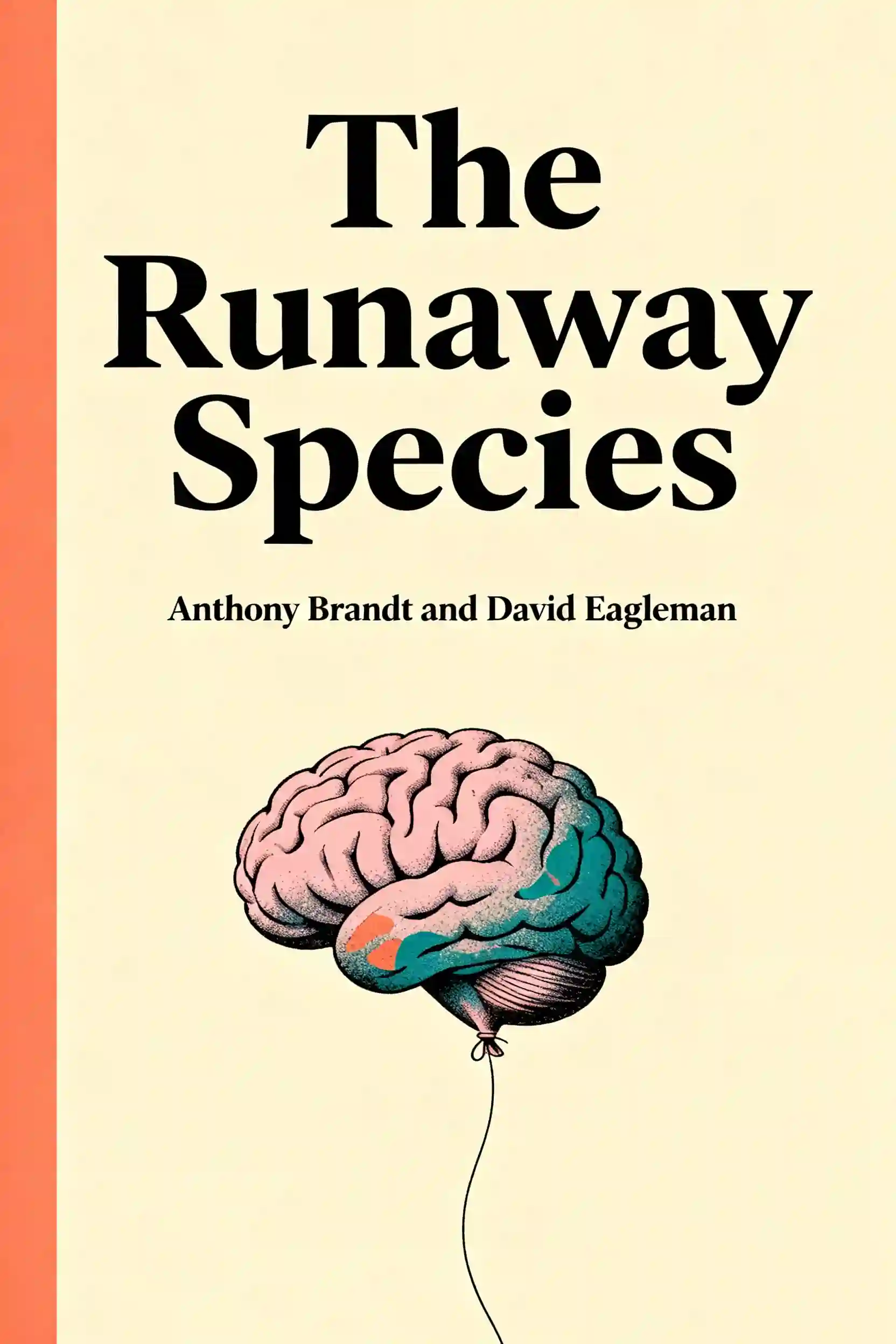
Explore, with both philosophy and research, what young children seem to naturally possess that adults often unlearn: imagination, wonder, curiosity, emotional honesty, openness to ambiguity, and nonlinear thinking. Explain how development, neural pruning, predictive processing, schooling, and social conditioning shape this shift, what is gained, what is lost, and whether these capacities disappear or are merely suppressed.

Frequently Asked Questions
The infant brain operates as a prediction engine with low precision and a shallow depth of field. Unlike adults, who have a vast database of past experiences to "explain away" sensory input, infants have no history and live entirely in the "now." In an infant's brain, "prediction errors"—the discrepancy between what is expected and what is actually perceived—are weighted much more heavily than the predictions themselves. This makes infants incredibly flexible and open to the messy, nonlinear reality of the world, whereas adults often use "efficient filters" to smooth out sensory data into certainties.
Neural pruning is a biological process of "subtraction" where the brain removes redundant synaptic connections to increase efficiency. Around age two or three, the brain reaches peak synaptic density, but it begins to prune these connections to pave the "roads" that are used most frequently. While this allows adults to perform complex tasks like speaking or catching a ball with incredible speed and precision, it comes at a cost. We trade the "universal potential" of a child—the ability to perceive any nuance or learn any language—for "local mastery" of our specific environment and culture.
The Goldilocks effect refers to the infant brain's tendency to seek out a specific level of surprise or "prediction error" that is neither too simple nor too chaotic. If a sequence is too predictable, the infant loses interest; if it is too fragmented or complex, the prediction engine stalls. This effect thrives within a "secure perimeter" of patterns, often facilitated by caregivers through "joint attention." This social scaffolding helps the child move from perceiving raw sensory data to understanding high-level concepts, such as recognizing that a red smudge is actually a bouncing ball.
High-intensity, fragmented digital media can overstimulate the visual cortex while bypassing higher-order areas of the brain. Because screens do not respond to a child’s gaze or actions, the child becomes a passive "bystander" rather than an active participant. This disrupts the "action-outcome" loop that builds a sense of agency. Research suggests this can lead to an accelerated but "brittle" maturation, pruning curiosity pathways before the child has had the chance to map the real, three-dimensional world through active exploration.
Adults can invite the child back in by deliberately "lowering the precision" of their expectations and seeking out "structure learning" rather than just incremental updates. This involves practicing "active exposure" to environments where current mental models fail—such as through art, travel, or deep play—and sitting with the resulting ambiguity. Additionally, embracing "intentional waste" by spending time on nonlinear, non-goal-oriented activities allows the brain's "R&D department" to function, keeping the generative model of the world flexible rather than rigid.
Discover more

Adulthood, neurodevelopment
Adulthood, neurodevelopment
This learning plan is essential for anyone looking to understand the biological evolution of the mind from young adulthood through the senior years. It is particularly beneficial for individuals in transitional life stages or those seeking to preserve long-term cognitive health.

Explore Mind, Science, Creativity & Wisdom
Explore Mind, Science, Creativity & Wisdom
In an era of information overload, mastering the intersection of cognitive science and practical philosophy is essential for personal growth. This plan is designed for lifelong learners and professionals seeking to sharpen their intellect, boost creativity, and navigate life's complexities with seasoned wisdom.

Your Brain is Cooked: How to Unf*ck Your Brainrot
Breaking free from brainrot isn’t about willpower—it’s about understanding how overstimulation rewires your brain.
BeFreed Team

Rewire Your 20s Brain: Science & Expert Tips
Rewire Your 20s Brain: Science & Expert Tips
The twenties are a unique neurological window where the brain is highly adaptable but still maturing. This plan is essential for young adults looking to harness neuroplasticity to build a high-performance foundation for their career and personal lives.
Be open-minded to new things
Be open-minded to new things
In an ever-changing world, the ability to unlearn old patterns and embrace the unknown is a critical competitive advantage. This plan is ideal for professionals and lifelong learners who feel stuck in their routines and want to cultivate the mental agility required to thrive in diverse environments.
Learn something simple andi nteresting
Learn something simple andi nteresting
In a world of information overload, rediscovering genuine curiosity and wonder is increasingly valuable. This learning plan helps anyone who wants to see the world with fresh eyes, making everyday life more intellectually stimulating and meaningful.
Learn to be fun
Learn to be fun
In our achievement-focused world, many adults lose touch with genuine playfulness and the ability to create fun. This learning plan helps anyone who feels they've become too serious, socially anxious, or predictable to rediscover their natural capacity for joy and develop practical skills for bringing lightness to everyday interactions.

Satisfy my curiosity
Satisfy my curiosity
This learning plan is essential for anyone seeking to reignite their natural sense of wonder and become a more engaged, innovative thinker. It's particularly valuable for professionals feeling stuck in routine thinking, students wanting to deepen their learning approach, and anyone who wants to maintain intellectual vitality throughout their life. By understanding and nurturing curiosity systematically, learners gain a competitive advantage in an ever-changing world that rewards adaptability and creative problem-solving.
From Columbia University alumni built in San Francisco
"Instead of endless scrolling, I just hit play on BeFreed. It saves me so much time."


"I never knew where to start with nonfiction—BeFreed’s book lists turned into podcasts gave me a clear path."


"Perfect balance between learning and entertainment. Finished ‘Thinking, Fast and Slow’ on my commute this week."
"Crazy how much I learned while walking the dog. BeFreed = small habits → big gains."
"Reading used to feel like a chore. Now it’s just part of my lifestyle."

"Feels effortless compared to reading. I’ve finished 6 books this month already."
"BeFreed turned my guilty doomscrolling into something that feels productive and inspiring."

"BeFreed turned my commute into learning time. 20-min podcasts are perfect for finishing books I never had time for."
"BeFreed replaced my podcast queue. Imagine Spotify for books — that’s it. 🙌"

"It is great for me to learn something from the book without reading it."
"The themed book list podcasts help me connect ideas across authors—like a guided audio journey."
"Makes me feel smarter every time before going to work"
From Columbia University alumni built in San Francisco
"Instead of endless scrolling, I just hit play on BeFreed. It saves me so much time."
"I never knew where to start with nonfiction—BeFreed’s book lists turned into podcasts gave me a clear path."
"Perfect balance between learning and entertainment. Finished ‘Thinking, Fast and Slow’ on my commute this week."
"Crazy how much I learned while walking the dog. BeFreed = small habits → big gains."
"Reading used to feel like a chore. Now it’s just part of my lifestyle."
"Feels effortless compared to reading. I’ve finished 6 books this month already."
"BeFreed turned my guilty doomscrolling into something that feels productive and inspiring."
"BeFreed turned my commute into learning time. 20-min podcasts are perfect for finishing books I never had time for."
"BeFreed replaced my podcast queue. Imagine Spotify for books — that’s it. 🙌"
"It is great for me to learn something from the book without reading it."
"The themed book list podcasts help me connect ideas across authors—like a guided audio journey."
"Makes me feel smarter every time before going to work"
"Instead of endless scrolling, I just hit play on BeFreed. It saves me so much time."
"I never knew where to start with nonfiction—BeFreed’s book lists turned into podcasts gave me a clear path."
"Perfect balance between learning and entertainment. Finished ‘Thinking, Fast and Slow’ on my commute this week."
"Crazy how much I learned while walking the dog. BeFreed = small habits → big gains."
"Reading used to feel like a chore. Now it’s just part of my lifestyle."
"Feels effortless compared to reading. I’ve finished 6 books this month already."
"BeFreed turned my guilty doomscrolling into something that feels productive and inspiring."
"BeFreed turned my commute into learning time. 20-min podcasts are perfect for finishing books I never had time for."
"BeFreed replaced my podcast queue. Imagine Spotify for books — that’s it. 🙌"
"It is great for me to learn something from the book without reading it."
"The themed book list podcasts help me connect ideas across authors—like a guided audio journey."
"Makes me feel smarter every time before going to work"
"Instead of endless scrolling, I just hit play on BeFreed. It saves me so much time."
"I never knew where to start with nonfiction—BeFreed’s book lists turned into podcasts gave me a clear path."
"Perfect balance between learning and entertainment. Finished ‘Thinking, Fast and Slow’ on my commute this week."
"Crazy how much I learned while walking the dog. BeFreed = small habits → big gains."
"Reading used to feel like a chore. Now it’s just part of my lifestyle."
"Feels effortless compared to reading. I’ve finished 6 books this month already."
"BeFreed turned my guilty doomscrolling into something that feels productive and inspiring."
"BeFreed turned my commute into learning time. 20-min podcasts are perfect for finishing books I never had time for."
"BeFreed replaced my podcast queue. Imagine Spotify for books — that’s it. 🙌"
"It is great for me to learn something from the book without reading it."
"The themed book list podcasts help me connect ideas across authors—like a guided audio journey."
"Makes me feel smarter every time before going to work"


