
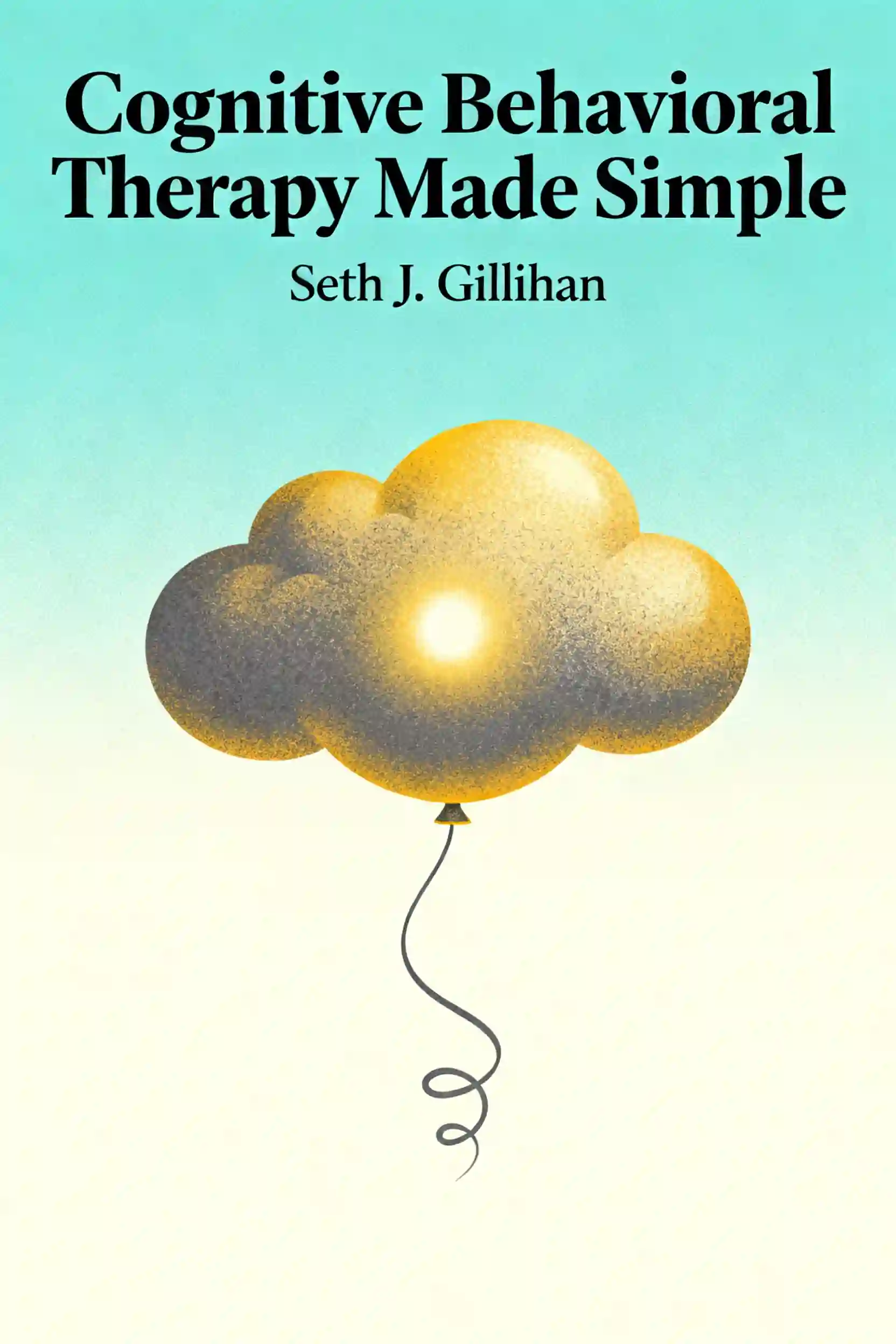
CBT Made Simple: Book Overview, Summary, and Discussion
Explore a comprehensive summary and discussion of CBT Made Simple. Learn essential Cognitive Behavioral Therapy techniques and psychotherapy resources in this guide.

Best quote from CBT Made Simple: Book Overview, Summary, and Discussion
CBT says feelings are signals, but they aren't always accurate news reports. It helps you move the thought from being 'who I am' to 'something my brain is doing,' allowing you to become an active participant in how your moods are maintained rather than a victim of them.

This audio lesson was created by a BeFreed community member
A comprehensive overview, summary and discussion of the book "CBT made simple"


Frequently Asked Questions
The book CBT Made Simple serves as a comprehensive resource for understanding the core principles of Cognitive Behavioral Therapy. It provides a structured overview of how clinicians and individuals can apply therapy techniques to address various psychological challenges. By breaking down complex psychotherapy resources into manageable steps, the book aims to make the practice of CBT accessible and effective for both beginners and experienced practitioners looking for a refresher.
This summary provides a detailed look at the essential concepts discussed in the book, focusing on the most impactful therapy techniques. It covers the fundamental relationship between thoughts, feelings, and behaviors, which is the cornerstone of Cognitive Behavioral Therapy. Readers will gain a clear understanding of the book's methodology, helping them decide how to integrate these evidence-based strategies into their professional practice or personal development journey.
CBT Made Simple is highly regarded because it simplifies the often-dense theory behind Cognitive Behavioral Therapy into actionable insights. This discussion highlights how the book bridges the gap between clinical theory and practical application. As a psychotherapy resource, it offers clear guidance on implementing specific interventions, making it an indispensable tool for those seeking to master therapy techniques in a straightforward and efficient manner.
Discover more

CBT mental health
CBT mental health
Cognitive Behavioral Therapy is one of the most researched and effective approaches for managing mental health challenges. This learning plan is ideal for anyone seeking practical, evidence-based tools to improve their mental wellbeing, whether dealing with anxiety and depression or simply wanting to develop healthier thought patterns and emotional resilience.

CBT, DBT & Self-Help Skills
CBT, DBT & Self-Help Skills
This plan bridges clinical frameworks with practical self-help to provide a comprehensive toolkit for mental health. It is ideal for individuals looking to manage intense emotions, reduce stress, and build lasting psychological resilience through actionable strategies.

Depression
Depression
This plan offers a comprehensive roadmap for anyone struggling with low mood or seeking to support others. It combines clinical understanding with actionable cognitive and mindfulness tools to foster lasting mental health recovery.
Change my mindset 
Change my mindset 
This learning plan is essential for anyone feeling stuck in self-limiting beliefs or repetitive negative cycles. It provides a science-backed framework for professionals and individuals seeking to build the emotional resilience and identity-based habits necessary for long-term personal growth.

Study Mind, Behavior & Habit Improvement
Study Mind, Behavior & Habit Improvement
This learning plan bridges the gap between psychological theory and practical application for anyone looking to master their mental patterns. It is ideal for professionals, students, or lifelong learners who want to move beyond surface-level productivity and understand the neuroscience of lasting change.
Stop overthinking negative thoughts
Stop overthinking negative thoughts
This plan is essential for anyone struggling with persistent worry or the paralyzing effects of a loud inner critic. It combines clinical cognitive tools with mindfulness and neuroscience to help professionals and individuals regain control over their mental well-being.

Boost mindset & confidence
Boost mindset & confidence
This learning plan is essential for anyone feeling stuck by self-doubt, negative thinking, or inconsistent performance. Whether you're navigating career transitions, leadership challenges, or personal growth, mastering your mindset is the foundation for lasting success. Ideal for professionals, entrepreneurs, and anyone ready to break through mental barriers and unlock their full potential.
Boost confidence in cognitive abilities
Boost confidence in cognitive abilities
This plan is essential for professionals and students who feel held back by self-doubt regarding their mental sharpness. It combines neuroscience with actionable training to help anyone transition from a fixed mindset to high-performance cognitive mastery.
From Columbia University alumni built in San Francisco
"Instead of endless scrolling, I just hit play on BeFreed. It saves me so much time."


"I never knew where to start with nonfiction—BeFreed’s book lists turned into podcasts gave me a clear path."


"Perfect balance between learning and entertainment. Finished ‘Thinking, Fast and Slow’ on my commute this week."
"Crazy how much I learned while walking the dog. BeFreed = small habits → big gains."
"Reading used to feel like a chore. Now it’s just part of my lifestyle."

"Feels effortless compared to reading. I’ve finished 6 books this month already."
"BeFreed turned my guilty doomscrolling into something that feels productive and inspiring."

"BeFreed turned my commute into learning time. 20-min podcasts are perfect for finishing books I never had time for."
"BeFreed replaced my podcast queue. Imagine Spotify for books — that’s it. 🙌"

"It is great for me to learn something from the book without reading it."
"The themed book list podcasts help me connect ideas across authors—like a guided audio journey."
"Makes me feel smarter every time before going to work"
From Columbia University alumni built in San Francisco
"Instead of endless scrolling, I just hit play on BeFreed. It saves me so much time."
"I never knew where to start with nonfiction—BeFreed’s book lists turned into podcasts gave me a clear path."
"Perfect balance between learning and entertainment. Finished ‘Thinking, Fast and Slow’ on my commute this week."
"Crazy how much I learned while walking the dog. BeFreed = small habits → big gains."
"Reading used to feel like a chore. Now it’s just part of my lifestyle."
"Feels effortless compared to reading. I’ve finished 6 books this month already."
"BeFreed turned my guilty doomscrolling into something that feels productive and inspiring."
"BeFreed turned my commute into learning time. 20-min podcasts are perfect for finishing books I never had time for."
"BeFreed replaced my podcast queue. Imagine Spotify for books — that’s it. 🙌"
"It is great for me to learn something from the book without reading it."
"The themed book list podcasts help me connect ideas across authors—like a guided audio journey."
"Makes me feel smarter every time before going to work"
"Instead of endless scrolling, I just hit play on BeFreed. It saves me so much time."
"I never knew where to start with nonfiction—BeFreed’s book lists turned into podcasts gave me a clear path."
"Perfect balance between learning and entertainment. Finished ‘Thinking, Fast and Slow’ on my commute this week."
"Crazy how much I learned while walking the dog. BeFreed = small habits → big gains."
"Reading used to feel like a chore. Now it’s just part of my lifestyle."
"Feels effortless compared to reading. I’ve finished 6 books this month already."
"BeFreed turned my guilty doomscrolling into something that feels productive and inspiring."
"BeFreed turned my commute into learning time. 20-min podcasts are perfect for finishing books I never had time for."
"BeFreed replaced my podcast queue. Imagine Spotify for books — that’s it. 🙌"
"It is great for me to learn something from the book without reading it."
"The themed book list podcasts help me connect ideas across authors—like a guided audio journey."
"Makes me feel smarter every time before going to work"
"Instead of endless scrolling, I just hit play on BeFreed. It saves me so much time."
"I never knew where to start with nonfiction—BeFreed’s book lists turned into podcasts gave me a clear path."
"Perfect balance between learning and entertainment. Finished ‘Thinking, Fast and Slow’ on my commute this week."
"Crazy how much I learned while walking the dog. BeFreed = small habits → big gains."
"Reading used to feel like a chore. Now it’s just part of my lifestyle."
"Feels effortless compared to reading. I’ve finished 6 books this month already."
"BeFreed turned my guilty doomscrolling into something that feels productive and inspiring."
"BeFreed turned my commute into learning time. 20-min podcasts are perfect for finishing books I never had time for."
"BeFreed replaced my podcast queue. Imagine Spotify for books — that’s it. 🙌"
"It is great for me to learn something from the book without reading it."
"The themed book list podcasts help me connect ideas across authors—like a guided audio journey."
"Makes me feel smarter every time before going to work"


